This blog was written by Carmina Flores Obanil, CRE International Coordinator. Read also « From Buol to Bangkok: bringing grassroots voices to a global advocacy forum« , a blog by our CRE collaborator Fatrisia Ain (spokesperson of Buol Plasma Peasants Forum, Indonesia), to learn about her experience at the UN Responsible Business and Human Rights Forum Asia-Pacific in Bangkok, September 2025.
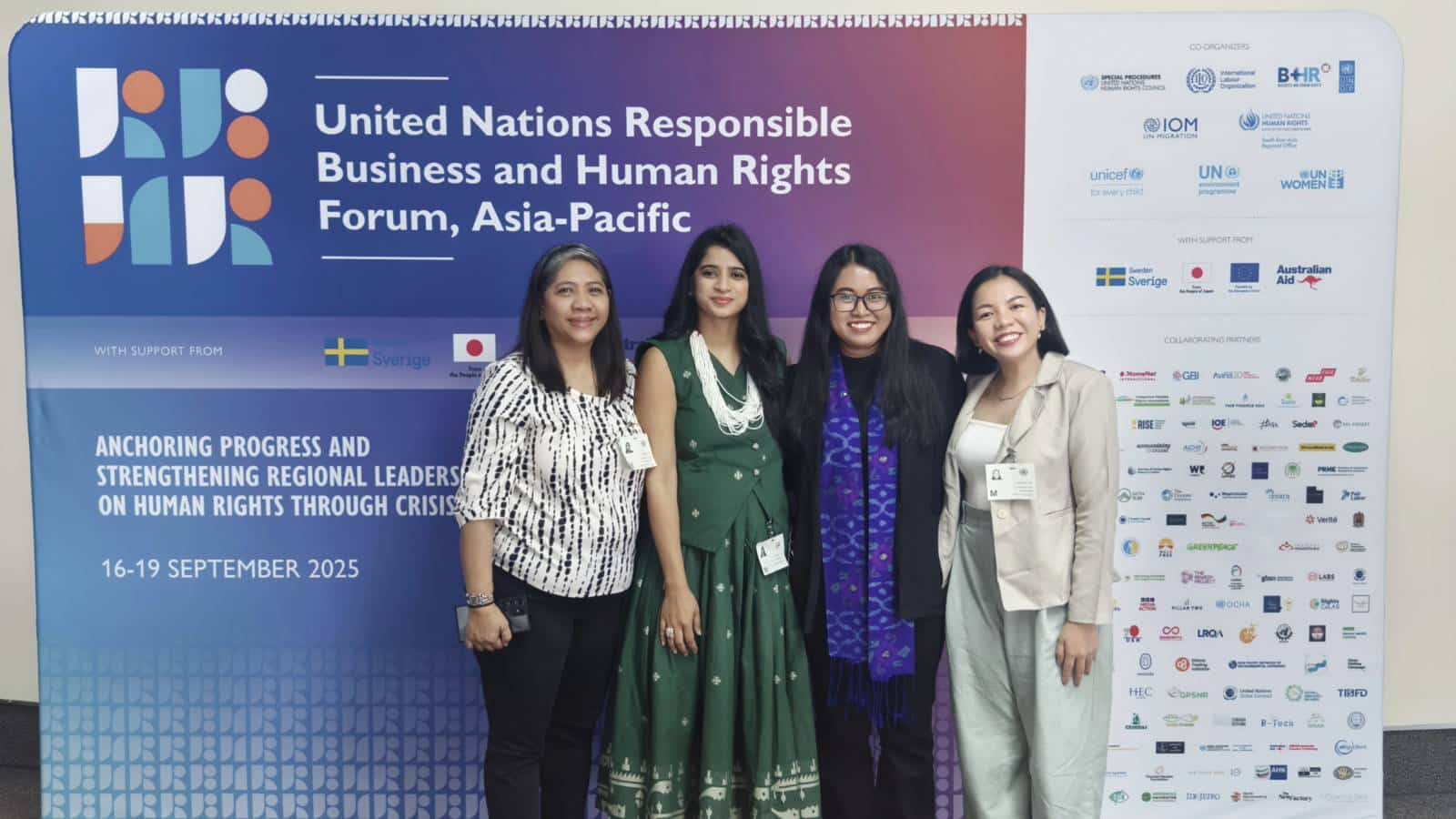
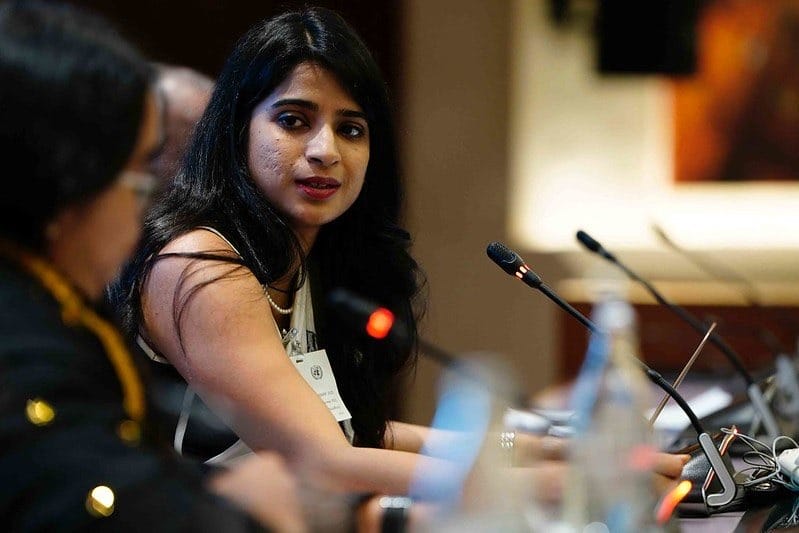
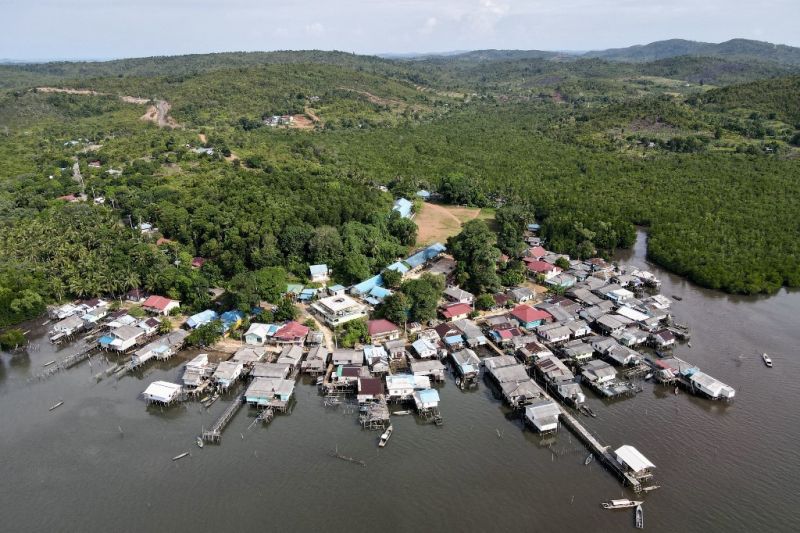
“The United Nations Conference Centre in Bangkok was a place my community and I had only ever seen through YouTube videos—until now. But this time, I was able to see it in person and bring my community’s voices there,” says Fatrisia Ain, one of our Community Resource Exchange (CRE) collaborators and spokesperson of the Indonesian grassroots organization Buol Plasma Peasants Forum (FPPB).
Last September, Fatrisia joined the UN Responsible Business and Human Rights Forum Asia-Pacific (UNRBHRF) in Thailand, an annual regional forum organized by different UN bodies that brings together hundreds of UN representatives, government officials, companies, think-thanks, academics and civil society groups.
This is one of several advocacy spaces in which we have collaborated with our CRE partners to open platforms and create opportunities to elevate the voices of grassroots communities that are too often sidelined or ignored. The goal is to enable them to speak out about their struggles and articulate their demands for recognition of their rights, as well as for remedy, redress, and accountability from those who have caused harm to them and their communities.
“I did not go to the UN Forum carrying policy documents, but the voices of people who are rarely heard,” says Fatrisia.”The voices of farmers, women, youth, and plantation workers whose lives have been changed by unjust development and large-scale business operations”.
But what are the challenges of engaging in such spaces? And what are the opportunities and key takeaways for the activists who join such events?

Key challenges…
A major challenge for civil society activists and community members – that often prevents them from attending international advocacy events – is how to get there. First, because of funding issues. This is why through the CRE we have been seeking to provide financial support for Global South groups, to connect them with potential donors, or to support them in their fundraising efforts.
But even when funding is available, there is a major hurdle: as denounced by Amnesty International, “nationals of the 104 visa-restricted countries and who are in their vast majority racialized as Black, Asian and/or Muslim, continue to encounter huge barriers in obtaining a visa”. In November 2025, for instance, two CRE partners – from Senegal and DRC – were denied their visa and could not join the UN Forum on Business and Human Rights in Geneva, Switzerland, even if they had been invited as speakers for one of the sessions. Similarly, in February last year, our DRC partners could not join the Finance in Common Summit in Cape Town, South Africa. In both cases, they had applied way ahead of schedule and submitted all the required documents, but to no avail.
But another challenge – when funding and visas are secured – are related to the way these spaces are designed, how decisions are made, and who gets to shape the agenda. In the case of the UNBHR forum in Bangkok, for instance, our proposal for a side event was approved. However, most CSO sessions (including ours) were limited to 30 minutes, while large international organizations and businesses were allocated between one and one and a half hours. In such a short timeframe, it was not possible for our partners from India and Indonesia to have a deeper conversation on their cases and to present their demands. Additionally, as the agenda was particularly packed, there were several CSO-led sessions at the same time, limiting opportunities for cross-learning and networking.
Finally, other international forums where we have sought to bring community voices – such as the G20, COP30, or the Finance in Common Summit – are even more challenging and inaccessible. In such spaces, civil society participation often feels tokenistic. For example, our partners who joined the G20 Social Summit noted that “inputs from civil society, which had been carefully crafted and negotiated, appeared in the final declaration in condensed form, creating the sense that the language had been softened to the point of losing its meaning”.
 …and key opportunities

Despite the challenges, our CRE partners are seeking to take the most out of these spaces. In particular, they see these spaces as an opportunity to elevate local issues to regional or global attention, particularly for those cases where national advocacy failed.
“Our session showcased the resilience and strategic leadership of affected communities, particularly women and Indigenous leaders, in the face of severe repression: our participation was a crucial and strategic intervention designed to move the India and Indonesia movements beyond local struggles, and bring them into the global accountability arena”, says our CRE partner from the Anti POSCO and Anti Jindal People’s Movement, who attended the UN Forum in Bangkok last year.
In the case of UN spaces like the forums in Bangkok and Geneva, for example, they have focused on securing bilateral meetings with UN offices and Special Rapporteurs to raise their concerns, seek their support, and explore further advocacy avenues.
In the case of less friendly spaces – such as the Finance in Common Summit or the G20 – our partners appreciate the opportunities to share their stories outside our usual “bubble”, to directly target decision-makers (such as government officials, development banks’ staff or corporations) who have the leverage and power to improve the situation, but who might not be aware of the impacts of development projects on the ground.
These types of international advocacy events are also key spaces to network with other civil society groups and activists, to connect with potential allies (such as research organizations or funders), to share experiences, to learn from each other how to address common challenges (such as shrinking civic space and reprisals), and to build stronger solidarity at the global level. For example, one of our African CRE partners who attended the G20 Social Summit and related events in November 2025 said that the experience created a strong feeling of “solidarity, clarity, and purpose”. While our CRE partner who attended the Bangkok Forum said that “Corporate impunity transcends national borders and sectors, and requires a coordinated, transnational response. By centering our unique case studies from India and Indonesia, the Forum strengthened regional leadership and solidarity in the face of these shared human rights crises.”
Weighing in the pros and cons of attending such events, it is clear that we need to push for changes and for creating more inclusive, participatory platforms, where communities can more easily and effectively engage with decision-makers.