

On 21 August and 17 October 2025, the Community Resource Exchange organized a two-part community exchange inviting around 30 collaborators from Asia and Africa to share their experiences on community mobilization and strategies to defend their rights and environment, with a focus on women human rights defenders. In this blog, our intern Diego Pravikoff shares some key takeaways from the sessions.
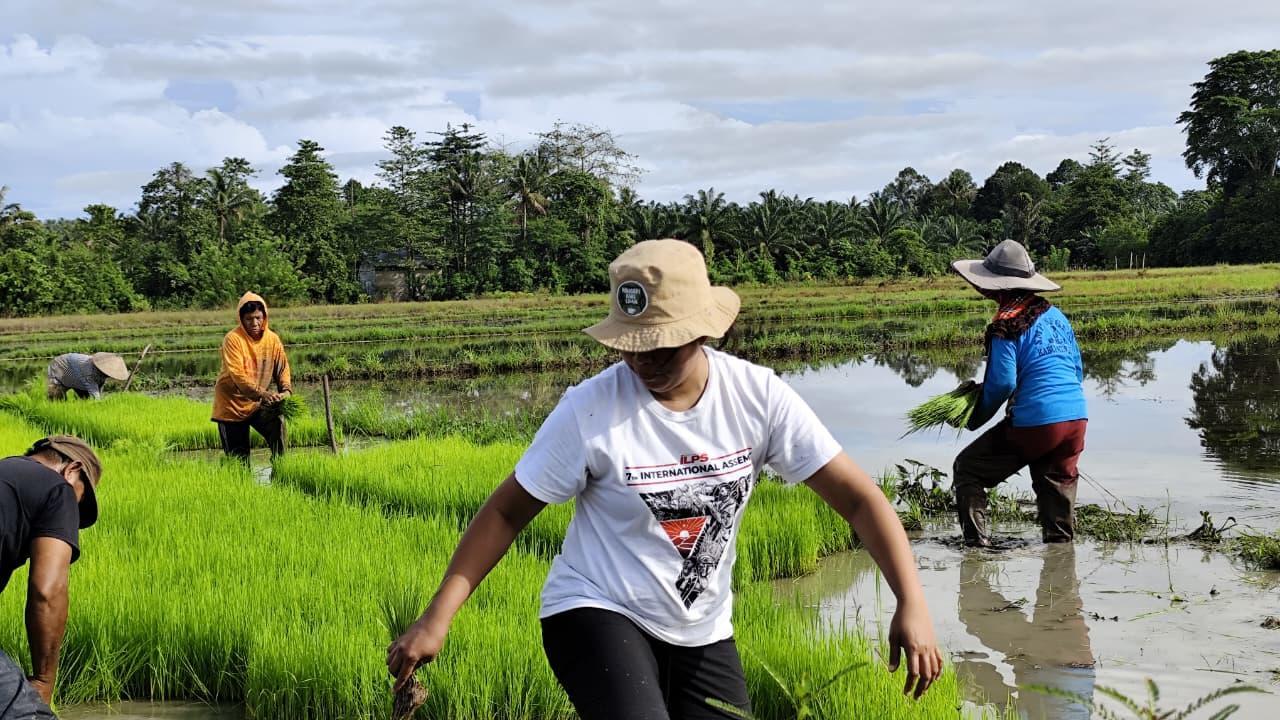
“There are many experiences that show how to fight injustice across different arenas. These stories encourage and empower us to take action based on others’ experiences. We see harmful developments in our own countries, and we also see the negative influence of global decisions shaping our governments’ choices and opening our countries to damaging investments. That’s why we need to exchange, share, and connect with one another. Without solidarity and collaboration, we cannot confront these challenges in our own communities.”
(Titi Soentoro, Aksi! for gender, social and ecological justice | Indonesia)
From Asia to Africa, communities, environmental activists and human rights defenders are resisting the destruction of their environments, homes, rivers and rights. They mobilize, take action and reclaim their power. They build solidarity networks that stretch from small villages to international platforms. Women are often at the heart of these movements, leading “underground” strategies that transform everyday survival into political resistance. And in doing so, they are disrupting the dominant top-down development model.
The Community Resource Exchange is supporting cross-regional learning circles to strengthen these efforts, with activists confronting energy or agribusiness projects in Asia exchanging lessons with other communities leading similar struggles elsewhere.
Strategies developed in one context can be adapted in another, turning isolated struggles into collective resistance. At a glance, these may seem like incremental steps – from tracking a single investor and organizing local trainings to mobilizing mass action and engaging in global forums. Yet these “small drops,” choosing to organize rather than retreat, accumulate into a force capable of redefining what progress and development look like.
The struggle against an unjust development model
A development model that marginalizes the people it claims to help is deceitful and cannot sustain itself. Yet, this model is widespread across the Global South, from Asia to Africa. In Kenya’s Rift Valley, for example, the Menengai geothermal project – despite being presented as a green, sustainable solution advancing a “just” energy transition – is causing serious noise, air, and environmental pollution, while negatively impacting communities living near the construction area. In South Sulawesi, Indonesia, ancient forests and traditional crops have been replaced by palm oil monocultures. These plantations, promoted by multinational companies and the Indonesian government, have left communities facing food shortages, debt, and the constant threat of floods. In India, the Assam Solar Project is threatening to forcibly displace thousands of Indigenous people and destroy their agricultural land. And these are just some cases among countless examples.
The idea of development seems to promise opportunities, modernization, and shared prosperity. Yet lived realities – especially for rural, Indigenous, and marginalized communities – are often dramatically different. Behind polished briefs and statements lies a persistent pattern: land taken without consent, livelihoods disrupted, women’s leadership sidelined, and public institutions aligning more closely with investors than with the people they are meant to protect.
Communities have no other choice but to push back. They fight for their rights, their lives and their environment. They fight for their future. But this does not mean they are rejecting progress. Rather, they are demanding the right to define how progress and development should be. Through research, community mobilization and collective learning, they are seeking accountability and promoting a vision of development that improves their lives and protects the environment, rather than destroying them. Across regions, while confronting a powerful system of capital, governance and greed, communities and local leaders insist on a development model that is inclusive, fair, accountable and participatory.
A deep power imbalance [Read More]
The deep power imbalance between affected communities and the institutions shaping their futures is embedded in how large-scale projects are conceived, financed and approved. Long before construction begins, decisions move through corporate and government channels without informing or involving the affected communities. This is not simply a lack of information or a failure of communication: it is a structural issue. The system is designed to exclude communities from decision-making over their land and livelihoods. By the time machinery arrives and construction begins, communities realize that decisions about their lives have already been made by institutions that they will never meet, and cannot meaningfully engage with.
Additionally, communities struggle to understand who is behind the projects. Corporations and development banks operate through webs of subsidiaries and financiers, with obscure ownership and dispersed responsibility. Financing arrangements stretch across borders, diverted through commercial lenders, development banks, state-owned enterprises and private equity firms.
On paper, development projects require consultations with affected communities. Yet, often consultations become just a box-ticking exercise and a space to deliver information instead of gathering it. Communities get invited only to be told what has already been decided about their homes, lives, health and environment. And often, project proponents – backed by governments and development banks – use these spaces to pit community members against each other.
To secure private investments and demonstrate growth, government agencies often align with project proponents rather than affected communities. Loan timelines and performance metrics incentivize governments to fast-track permits, bypassing safeguards and consultations. Often, enforcement replaces participation, with police and military forces repressing dissent. In Uganda, for example, communities organized protests and legal actions to resist oil projects, and their resistance was met with militarization, criminalization and threats.
“Activists and communities operate in an authoritarian and crony capitalist system where laws are manipulated and they face structural coercion, physical confrontation, constant police harassment, division of communities, and character assassination propaganda.”
(Pranab Dooley, environmental and human rights defender | India)
These structural inequalities are not experienced evenly. Women are often positioned at the sharpest edge of their consequences. As farmers, water gatherers, caregivers, and stewards of communal resources, women experience the impacts of land loss and environmental degradation first and most acutely.
Women’s leadership is routinely constrained. They are excluded from official consultations, dismissed in male-dominated forums, and erased from impact assessments despite their central role in managing land, water, and household economies. Some are discouraged from attending meetings, and others face retaliation precisely because their leadership disrupts established power relations. Inequality and structural violence devalue women’s roles and silence their leadership.
“For women, the burden is much heavier. In addition to everything else, they are expected to maintain their households, as this is seen as their primary responsibility. They must comfort their traumatized children in the face of violations happening on the ground. At the same time, they speak out on the frontlines, confronting security forces from both government and corporations. Although women are often the most vulnerable, they are also the ones who keep the spirit of the movement steadfast. Many initiatives are led by peasant women, who develop underground strategies and guide collective action. The repression is real: the authorities are complicit with human rights violations, including physical, emotional, mental, and sexual abuse. But none of this has stopped our struggle or our movement. Instead, it strengthens our resolve and affirms that our struggle is the right one. Those who make policies and promote false “development” try to silence us. But strengthening the struggle is the right thing to do. Women and men, elders and youth, we must stand together to strengthen the struggles of communities most impacted by so-called ‘development.’ To survive, we must bring our issues to the streets and to international conferences. It is a long and tiring process, and we must develop multiple strategies to sustain ourselves.”
(Fatrisia Ain, spokesperson of Buol Plasma Peasants Forum (FPPB) | Indonesia)

Resistance strategies
Across the Global South, CRE community collaborators are reclaiming their agency, mobilizing, and building their capacity to be better equipped to advance their struggles. Below, we present some of the key strategies discussed during the learning circles.
Mobilization, network-building and solidarity
“Communities’ strength and ability to survive come from the networks and solidarity maintained locally, nationally, and globally. The shared experiences underscored that having robust networks and global solidarity is crucial for survival, as isolation makes it very difficult to endure the systemic pressures.”
(Pranab Doley, environmental and human rights defender | India)
In Uganda, for example, grassroots communities opposing the Tilenga and Kingfisher oil projects and the East Africa Crude Oil Pipeline organized through the EACOP Host Communities Network. Through sustained mass mobilization and international advocacy, they delayed oil development for nearly seven years despite intimidation and repression. This is a clear example of shifting power, even if incrementally.
In many territories, women are at the forefront of these struggles. While navigating restrictive environments, women build networks locally and internationally through shared labor spaces, religious groups, and mutual aid circles. These spaces foster connection, solidarity, and care, and they can also become sites of political organizing.
In Kenya’s Mount Suswa region, women community leaders from the pastoralist communities who are resisting the development of a geothermal project are organizing Free, Prior, and Informed Consent (FPIC) training, mobilizing women’s groups, and doing systematic documentation of all the meetings and consultations.
“Being a woman in a pastoralist community means that traditionally you should always be submissive, but we learned we need to fight for our rights, we can’t be silent, we need this space. We’re going through a lot of challenges and it’s a difficult struggle, but we have had an impact and we’ve managed to bring the community together. A key lesson learned is that women are very willing to work on these issues, but they need information. This is why we focused on giving information to the community: information is power”.
(Penina Nailantei, feminist and community leader from Narok, Sotua Ang Community Based Organisation | Kenya)
In Central Sulawesi, Indonesia, women-led organizing emerged in response to palm oil concessions that displaced communities and degraded land, with women documenting violations, mapping investors, and strengthening their capacity to engage in legal and public advocacy.
“Support from regional and international networks helps us know we are not alone. From a small village on the island of Sulawesi, our voices now echo onto the global stage. Having a strong network of solidarity can help strengthen the efforts at the community level.”
(Fatrisia Ain, Buol Plasma Peasants Forum (FPPB) | Indonesia)
Solidarity is not just about empathy and sharing kind words. Rather, it is about exchanging knowledge and strategies, amplifying voices, and joining forces in collective actions, advocacy, and mobilization.
Documentation and financial research
A key strategy to complement advocacy and legal strategy is to document the project’s impacts and to gather evidence on the human rights violations.
“We supported victims in collecting evidence (e.g. testimonies, videos, photos, etc) and provided training on how to safely document abuses. Collecting evidence is a key strategy to then proceed with legal cases, but it’s also a strategy to increase our protection, as it can be useful when facing strategic lawsuits against public participation (SLAPPs) or false charges. When we document human rights violations, we also ask the relevant authorities to conduct their own investigations, as this can help move forward with legal cases. And we set separate, safe meetings with women to document the impacts they were facing: despite women being the most impacted and being on the frontlines, often their aspirations and concerns tend to be sidelined during deliberations.”
(Fatrisia Ain | Indonesia)
Through the CRE, many community collaborators have engaged in training on “follow the money” methodologies, using platforms such as the Early Warning System or Open Supply Hub, to understand corporate structures, supply chains, and financial flows. This type of research is key to tracking ownership, identifying financiers, mapping responsibility, and seeking accountability. Community leaders can then use the data to inform and mobilize communities. And once communities know who is involved, they know where to apply pressure, and who to approach for support and solidarity. Additionally, it is key to proactively seek and access as much information about the project and its financiers as possible.
“We realised that it was important to join any meeting about the project. Initially, I was alone but, as we started the capacity building activities, more women started to join the meetings to raise their concerns. We document everything being said in the meetings and who attends, we take pictures and videos, to have evidence of what was happening. And if there is any info we don’t have, we write to the company on behalf of the community (asking everyone to sign), even though they tend not to respond.”
(Penina Nailantei | Kenya)
Outreach and visibility
Another key strategy is to engage in public campaigns to counter the project proponents’ false promises, to raise awareness about the project’s risks or impacts, and to amplify the voices of grassroots communities who are generally sidelined and ignored. Visibility is a double-edged sword: in some cases, higher visibility can escalate risks for those speaking out. In other cases, however, visibility can also serve as a protection tool.
“We have focused on public campaigns that centre community voices, by publishing reports in accessible formats, utilizing social media, and producing movies and podcasts. We often face backlash on these same platforms, but these are key to disseminating information.We’ve been receiving broader attention and this has given more confidence in our struggle, as we know that many groups and people support us. This has also reduced the level of intimidation and threats, as the company knows that community members are monitoring the situation and speaking out, and that they are not alone. Our struggle has also boosted the morale of people in other places.”
(Fatrisia Ain | Indonesia)

Community-led solutions
“For us agroecology is about farmers controlling the seeds, learning together, taking collective decisions, owning the resources, and pursuing food sovereignty. Here in Cambodia, where the majority of the population are farmers, agroecology is not something theoretical: it is a practical tool that can empower farmers, and that needs to be preserved as the big agribusiness companies are grabbing our land and threatening old, sustainable practices.”
(Chanra Keo, Rural Women’s Association for Agroecology | Cambodia)
Grassroots communities – with women at the forefront – are also resisting by stewarding the natural resources of their territories and preserving their everyday practices. For instance, CRE collaborators in Kenya, Indonesia and Cambodia are involved in agroecology projects and communal farming. Agroecological practices represent a collective approach to empower peasants, women farmers, and Indigenous Peoples to protect their land and natural resources from corporate control and industrial agriculture. As a sustainable food system solution, agroecology advances food sovereignty and serves as a key strategy to address climate change.
“We have set up pesticide-free communal farming areas, to show the company what a truly sustainable model – that truly benefits people and nature – should look like. We’re building a sustainable resource management system, which reinforces our tradition of communal farming that was being lost because of industrial, large-scale farming. We need support to continue developing initiatives that are not only export-oriented, but that protect our land rights, women’s rights and the right to health.”
(Fatrisia Ain | Indonesia)
From documenting violations and tracing financial flows, to mobilizing women’s networks and building agroecological alternatives, communities are not merely opposing imposed projects and voicing their concerns. Their testimonies show that they are also proposing and practicing different visions of development, rooted in care, collective ownership and dignity.