 Known as the “river people,” the Indigenous Majhi community has lived for centuries along the banks of Koshi and other rivers of Nepal. From birth to death, they maintain a deep and sacred relationship with the rivers, which is intricately woven into their culture, language, religion, traditions, and practices. This bond is often likened to the close relationship between a maternal uncle and his nephews.
The Majhis celebrate every important ceremony along the riverbanks or within the river itself: the naming ceremony at birth (Nwaran); wedding rituals; funerals and rituals to remember the ancestors (Shraddha); and the Ladi Puja, an important festival observed by the Majhis on the first Tuesday of the eleventh Nepali month (Falgun). In all of these rituals, the use of fish is essential.
The river is also vital for their livelihoods. The Majhis traditionally rely heavily on fishing, boat building, and ferrying people and goods. Their ancestors even used river sand as bedding and stones as pillows. Rivers are deeply interwoven with every aspect of their life: the Majhi’s very existence depends on them.
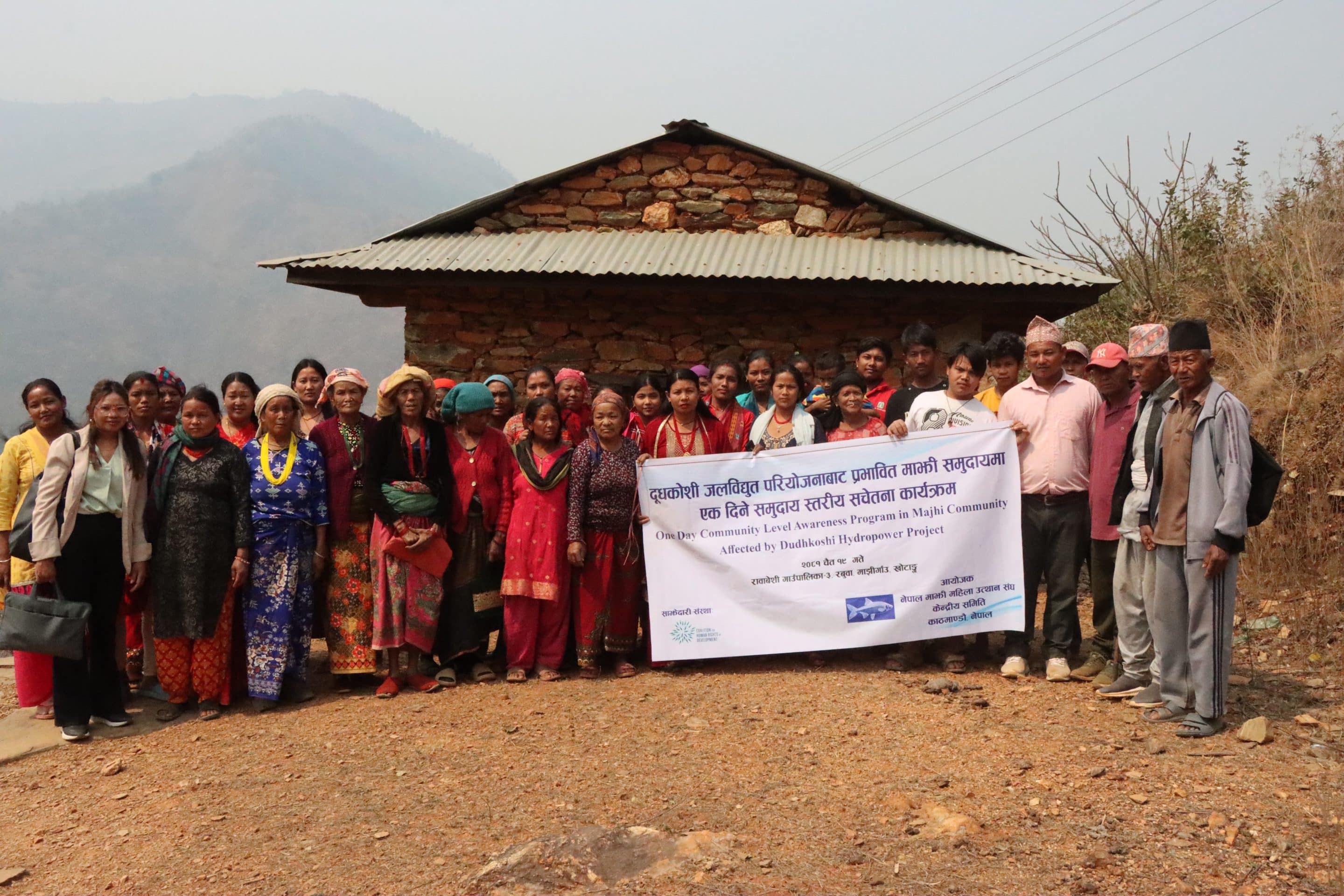
- Nepal has over 6,000 rivers crossing lands of various Indigenous Peoples, but many of these rivers are now under threat. In recent years, the Nepalese government — with financial support from public development banks (such as the World Bank and the Asian Development Bank), along with other international financiers — has increasingly promoted the construction of large-scale dams.
Hydropower already contributes 90% of the country’s energy production, with surplus energy being exported to India and Bangladesh during the wet season. The government continues to propose new projects, particularly for supply in the dry months. Under the slogan of the “energy transition”, hydropower is being presented as “green” and “sustainable.” Yet, large-scale dams — along with associated infrastructure like roads and transmission lines — are causing destructive impacts, as they are disrupting the lives of local Indigenous communities and harming sensitive ecosystems. And in most of the cases, they are being imposed without adequately consulting affected Indigenous Peoples and ignoring their concerns.
For instance, in eastern Nepal the government is proposing the Sunkoshi-3 Hydropower Project to export electricity to Bangladesh. According to its environmental impact assessment, it will directly inundate lands and houses of around 4,500 households (around 20,000 people), including highly marginalized Indigenous Majhis. The Asian Development Bank initially proposed technical and financial support for the feasibility studies, including impact assessments, but then withdrew its support.
The ADB, however, is financing the feasibility study and impact assessments of another large-scale hydropower project, the Dudhkoshi in far eastern Nepal. This project will impact lands of more than 2,500 households – most of them of various Indigenous groups, including the Majhis.
A key issue is that the impact assessments conducted are underestimating the extent of the impacts on Indigenous communities, including the following:
- Social and cultural impacts – Displacement from their ancestral lands would severely impact Majhi traditions, religious practices, and social cohesion. Since their rituals are conducted communally, dispersal to different locations would make such gatherings difficult. After displacement, passing the Majhi language to children will be harder. Differences in traditional dress may also complicate daily interactions with other communities.
- Economic impacts – Traditional knowledge and occupations linked to the river could vanish, threatening their survival. Women dependent on natural resources for traditional livelihoods — such as fishing, firewood collection, and crafting local goods — will be particularly impacted. Goods such as firewood, fish, nets, local alcohol (jaad, raksi), and baskets, which were previously produced and sold locally, may struggle in broader markets, worsening the economic conditions of Majhi women. Also, activities such as the extraction and sale of river sand, gravel and stones will be jeopardized. The project also threatens to submerge fertile lands upstream, while downstream areas could dry out, reducing agricultural productivity.
- Gender impacts – The influx of outsiders linked to the project’s construction could increase the risk of abuse and violence against Majhi women. Displacement would inflict significant physical and emotional distress, particularly on children, pregnant women, nursing mothers, the elderly, and those with chronic illnesses. As a close-knit community, Majhi women may find it challenging to integrate with new social groups. The influence of dominant communities may suppress the decision-making power of Majhi women. External beliefs — especially those surrounding menstruation and reproductive health — might override traditional practices. Patriarchal norms from other groups could further restrict their freedoms. With limited access to alternative occupations, education, skills training, and capital, many Majhi women may face increased psychological stress in adapting to unfamiliar professions.
- Environmental impacts – Additionally, changes to land structures will impact land use, air and water quality. Construction will produce dust, smoke, and pollution from explosions and materials. Aquatic ecosystems will be disturbed. Deforestation may increase the risk of floods and landslides. Although downstream areas are also affected, the Environmental Impact Assessment (EIA) does not include compensation provisions for them. In times of heavy rainfall, sudden water releases from the dam may flood downstream communities. Finally, as Nepal is prone to earthquakes, structural damage to large-scale dams could have catastrophic consequences.

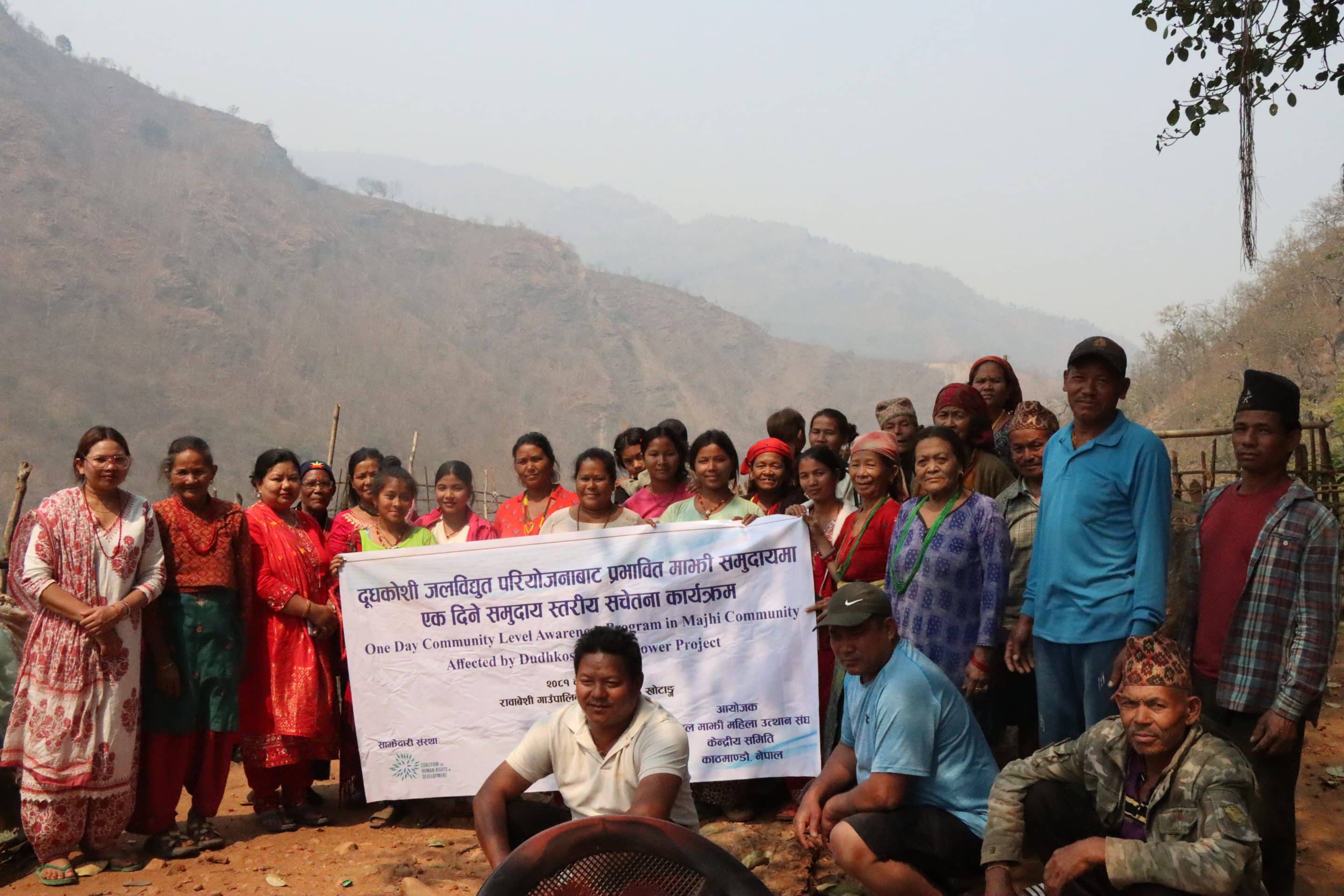
Grassroots organizations – such as the Nepal Majhi Women Upliftment Association – are conducting awareness and mobilization campaigns related to the projects at the local level. As many Majhi communities are isolated, they are not receiving adequate information about the project’s impacts, and they have limited knowledge about their rights. They are also helping to strengthen local leadership, engaging the media, filing complaints and petitions, and conducting advocacy – both with national authorities and through international human rights mechanisms. Despite some challenges, these efforts have increased awareness and mobilization at the local levels, and created alignment of such project affected communities around some key demands as follows:
-
- Project information (including the Environmental Impact Assessment) must be made accessible to affected communities, in understandable languages and formats.
- Meaningful consultations must be held with Majhi and other affected Indigenous communities, to obtain their right to Free, Prior, and Informed Consent. If community consent is not obtained, construction must be halted.
- Fair compensation for the loss of houses, natural resources and land (including communal and unregistered ancestral land) should be determined with effective involvement of the communities’ representatives. Affected families should receive equivalent and adequate land and housing with respect to their preferences. Fair compensation should also be provided for damaged crops and trees.
- Majhi peoples’ special rights over local natural resources must be protected, and they should continue to access local natural resources and land, until the reservoir is created
- Employment guarantees should be provided for one member per household, based on skills and capacity, along with free project-funded skill development training.
- Indigenous Majhi and affected residents must be offered free shares in the project and access to electricity produced. A percentage of project revenue must be allocated for the benefit of affected communities, managed with their participation.
- Funds under the project’s community development program must primarily benefit the affected Indigenous Majhi, with their participation. Model settlements must be developed with proper infrastructure: education, health, transport, electricity, water, and communication. Protective structures must be built for at-risk areas.
- Traditional Majhi skills and livelihoods must be preserved through local tourism and boating initiatives, supported by the government and run by local committees. Special programs must be introduced to support Majhi women, children, and the elderly.
- A cultural impact assessment must be conducted. Majhi religious sites (like boat crossings and ritual places) must be protected. Programs should safeguard Majhi customs, language, attire, and practices. Temples, rest stops (patis/pauwas), and communal areas must be preserved and developed.
- During project implementation, Indigenous Peoples’ rights must be upheld in accordance with international standards, including ILO Convention No. 169.
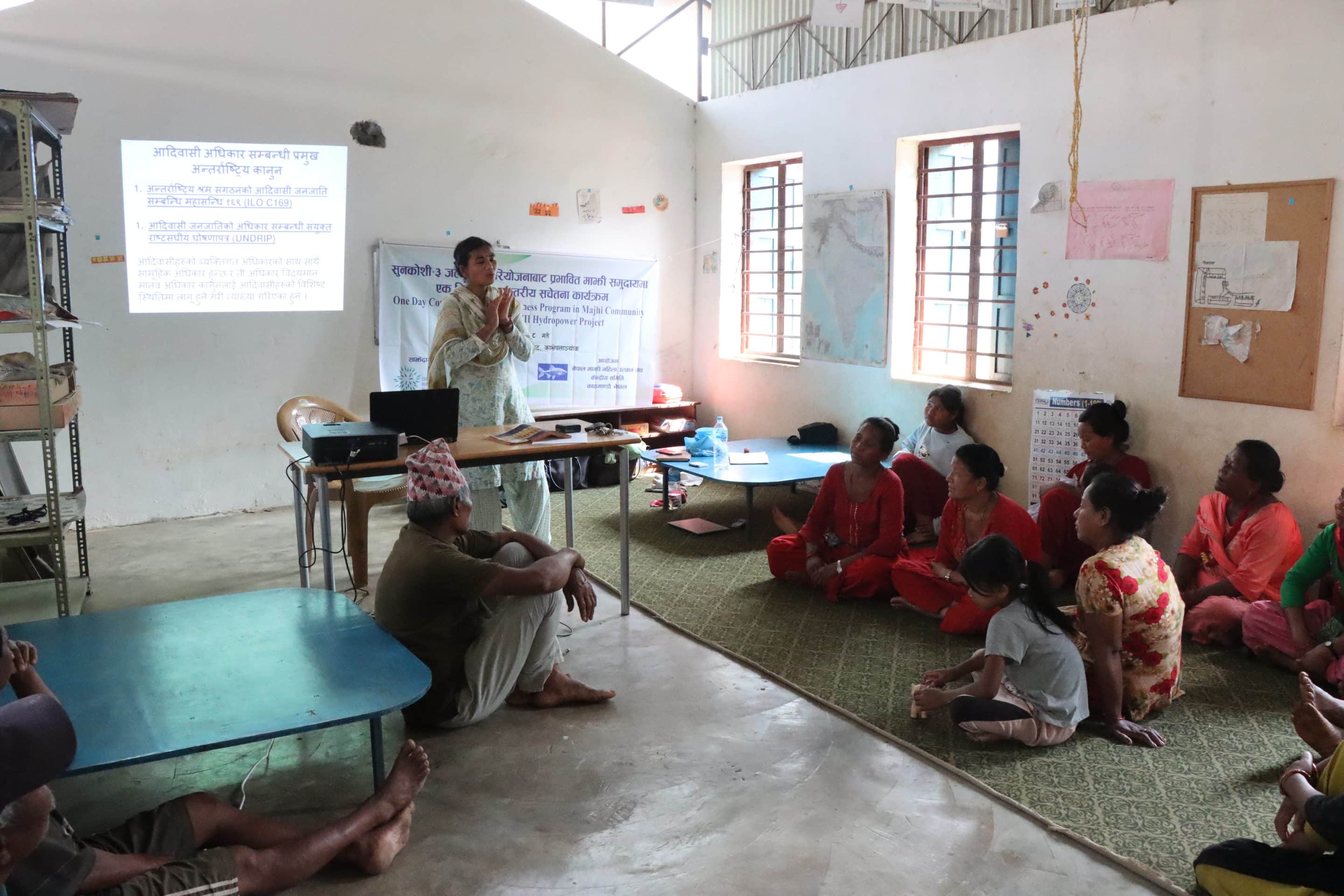
This blog was written by Rita Majhi of Nepal Majhi Women Upliftment Association – one of our community collaborators of the Community Resource Exchange (CRE), and Anusha Shrestha of Community Empowerment and Social Justice Network (CEMSOJ). Through this collaboration, the CRE supported a capacity-building workshop and awareness-raising activities at the local level, as well as international advocacy efforts.
All pictures are taken by the Nepal Majhi Women Upliftment Association (2024), during their awareness-raising and capacity building initiatives.