

On March 28, the Independent Recourse Mechanism (IRM) of the African Development Bank Group (AfDB) released two groundbreaking reports, finding the Bank non-compliant with its own safeguards in the context of two projects in Uganda:
- the water and fishery management LEAF II project in the Lakes Edward and Albert Basin (you can access the complaint presented by Twerwaneho Listeners Club (TLC) in November 2021 here)
- the Wadelai irrigation system in Pakwach district (you can access the complaint presented by some members of the Paten community here)
The two reports indicate that the Bank failed to conduct meaningful consultations, to ensure consent, to adequately conduct an assessment of socio-economic impacts on the local communities, and to address reprisals.
Although the two cases take place in different contexts, there is a clear and worrying pattern. Both projects – despite their stated goals to improve access to livelihoods and their commitments to sustainability – were imposed with a top-down approach. When communities are not even consulted on what’s going to happen in their land and are not involved in the design of the projects, it’s very likely that the project will lead to tensions and grievances. And in a context like Uganda – where security forces are often involved in human rights abuses and violently repressed protests – tensions can quickly escalate. In the context of LEAF II and Wadelai projects, people raising concerns and exercising their right to peacefully express their views faced reprisals, ranging from threats to violence and even killings.
In both cases, the communities – with the support of local and international organizations – have tried to engage with the Bank and the project proponents. They have courageously continued to speak out despite the reprisals they were facing and kept knocking at different doors, to push the Bank to address the reprisals and the human rights violations. But their concerns have been ignored or disregarded. In some cases, people who had experienced human rights violations themselves were told that those violations did not happen. And despite the evidence gathered by the IRM, the AfDB management has reacted to the two reports rejecting the claims of non-compliance to its own safeguards.
Yet, the two IRM reports constitute an important step towards justice. For both cases, moving forward, the AfDB will have to develop a management action plan which should address the recommendations outlined in the IRM’s report.
“Standing in solidarity with the affected communities and human rights defenders, we now hope that AfDB management will ensure accountability and remedy”, says Ony Ratsifandrihamanana, Regional coordinator for Africa at the Coalition for Human Rights in Development. “But remedying harm should always be the last resort: our ultimate hope is that the Bank will learn from these cases and ensure that in current and future projects concrete actions are taken to consult local communities, listen to their voices, involve them in decision-making processes, and prevent reprisals and human rights violations before it’s too late”.
Below, you can read more about the two cases and the struggles led by local communities.
LEAF II
About the project
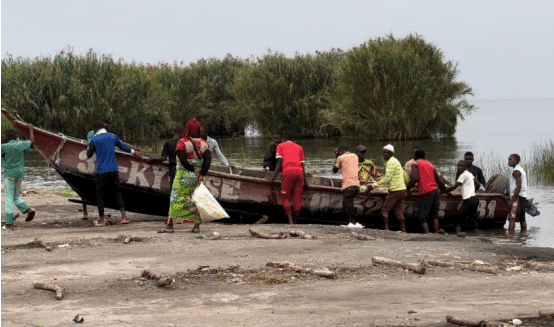 The “Multinational Lakes Edward and Albert Integrated Fisheries and Water Resources Management Project”, also known as LEAF II, is a USD 22 million project. The AfBD approved it in 2015 and closed it in December 2021. It was implemented by the Uganda Ministry of Water and Environment (MWE) in close coordination with the Ministry of Agriculture, Animal Industry and Fisheries (MoAAIF).
Its stated goal was to reduce poverty, improve access to sustainable livelihoods for local fishing communities, and ensure sustainable management of natural resources.
About the human rights violations
The project has resulted in serious human rights abuse, eviction, intimidation of fishing communities, and harassment of human rights defenders. One of the objectives of the LEAF II project was to tackle illegal fishing. However, with the pretext of monitoring activities in the lakes, the Fisheries Protection Unit (FPU) of the Uganda Peoples’ Defense Force (UPDF) have destroyed boats, fishing equipment, and houses of local community members, who have not been compensated for the attacks and the loss of livelihoods. The excessive use of force during monitoring missions led to several killings, with fishermen dying after being shot or drowning while trying to escape. Those speaking out, in particular, have faced threats and violent attacks. There have also been reports of gender-based attacks and sexual violence.
Local activists also report that LEAF II failed to ensure meaningful consultations with the local Indigenous people. Only an extremely small number of fisherfolks was informed about the project and the related restrictions on fishing activities in the lakes.
Moreover, the complaint also noted how the project did not pay special attention to reducing gender inequality and did not deliver on the Project’s gender mainstreaming objectives.
WADELAI
“We now hope that the bank management will address the IRM report recommendations, putting the Paten clan at the centre of the management action plan and the project implementation.”
– Paolyel MP Onencan (Executive Director BIRUDO)

About the project
The Wadelai Irrigation Scheme is one of the four irrigation schemes under the African Development Banks’ Farm Income Enhancement and Forestry Conservation Project (FIEFOC-2). The project intends to improve household incomes, food security, and climate resilience through sustainable natural resources management and agricultural enterprise development. The project is estimated to cost approximately USD 91.7 million from the African Development Bank (USD 76.7 million), the Nordic Development Fund (USD 5.9 million) and the Government of Uganda (USD 9.1 million).
About the human rights violations and the complaint
In October 2021, a group of representatives from the Paten clan raised a complaint with the Independent Recourse Mechanism (IRM) of the African Development Bank. Several local and international organizations supported the community in the complaint and the related advocacy efforts, including Buliisa Initiative for Rural Development Organization (BIRUDO), the Uganda Consortium on Corporate Accountability (UCCA), the International Accountability Project (IAP), and the Coalition for Human Rights in Development.
In the complaint, the community raised concerns around limited consultations by the project team, retaliation against community members who voiced their concerns, and restricted access to community lands, which resulted in loss of livelihoods.
Another key concern is also related to land-grabbing. In the initial consultations the authorities demanded an area of 365 acres. Later on, however, the community found out the authorities had assigned to the project 365 hectares (corresponding to 902 acres).
Attempts to raise their concerns were met with violence. Community members have reported shooting, harassment, and unlawful arrests by government security forces. In August 2021, as reported by the journalist Sofi Lundin who traveled to the Pakwach District to meet with the affected community, security forces attacked people, including pregnant women, with tear gas and gunfire.
In parallel, apart from the IRM complaint process, the community has also engaged in a series of negotiations at the local level (you can read more in this blog by John Mwebe, IAP)
Read more:
- “Heard at last: Project suspended for a community in Uganda to negotiate with government and investors” (By John Mwebe)
- Human Rights Violations in Development Project in Uganda (translation by Kios of an article by Sofi Lundin)
- Human rights violations in the AfDB-funded LEAF project