

About the project
« The projects will submerge their communities and uproot them from the only place they have called home. »
Gened-1 and Gened-2 are two proposed hydroelectric power plants (HPPs) in the Philippines, on the Apayao-Abulug River. They threaten to submerge the land of Indigenous Isnag communities, trigger more flooding downstream, and negatively impact on the country’s biodiversity.
The project is being built by Pan Pacific Renewable Power Philippine Corporation, a conglomerate of San Miguel Corporation. Pan Pacific was among the beneficiaries of the 2016 $3 billion loan agreement signed between the Philippines and China during President Rodrigo Duterte’s state visit to China. The Bank of China, one of the largest state-run financial institutions, funded the deal.
The hydro-power plants would lead to irreversible damage: they will displace thousands of Indigenous peoples and impact hectares of land along the riverbanks where people grow their food, and where there are their burial and sacred grounds, public structures, churches, and schools. Moreover, these projects are being imposed in total disregard of their right to free, prior, and informed consent (FPIC).
According to EJ Atlas « Apayao is one of the remaining key biodiversity areas (KBA) of the country. The dam’s impact area is a home to 105 plant species, and 51 bird species including the Philippine duck, anas luzonica. Eleven species of amphibians and reptiles are also found in the impact area.This project will dispossess the Isnags of their source of food, water, livelihood, and culture.
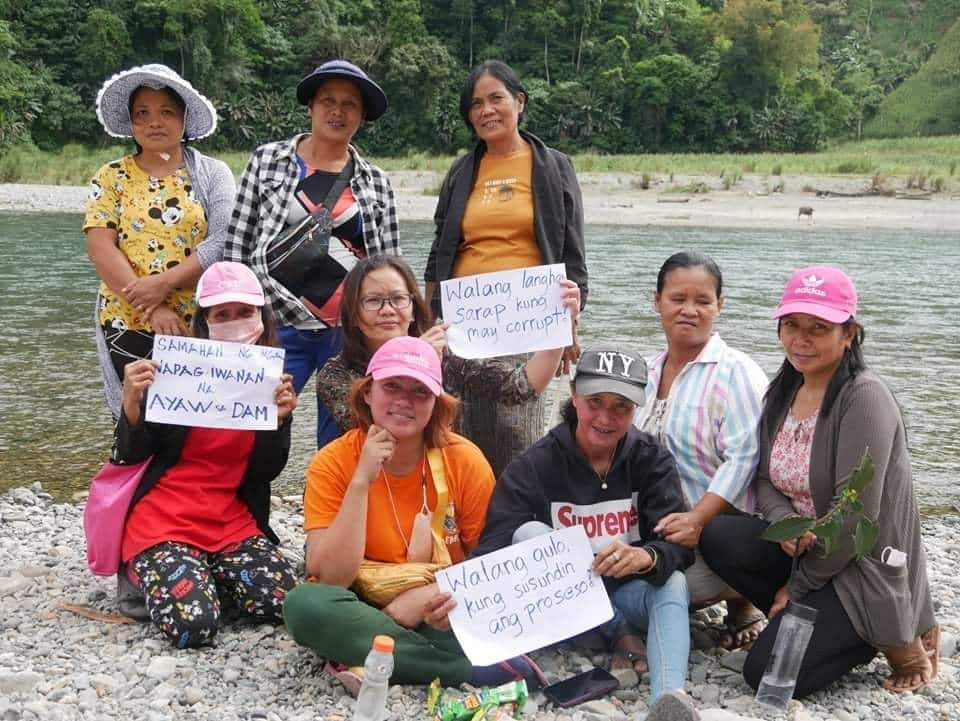
About the community-led struggle
« They call us anti-development, but they fail to listen to how we view development. They belittle our definition of progress, and have tried to sway community members with empty promises of livelihood opportunities and free electricity. » (Jillie Karl Basan, one of the conveners of the Kabugao Youth)
The Kabugao Youth Organization are powerfully voicing their opposition against the proposed Hydro-power plants Gened-1 and Gened-2. The community voted twice on a resolution to reject the project. But, by handpicking a few elders, the company started negotiating only with them. In 2021 they covertly signed a memorandum of agreement, binding the whole ancestral domain into something that local indigenous communities did not consent to. They even falsified some documents, including signatures of people who were deceased. The most vocal members are being threatened, stigmatized, and red-tagged. But despite these attacks, they are resolute in their struggle and they are not giving up.
Further resources
- « The Indigenous communities struggling to save the Apayao river in the Philippines » (Blog by Jillie Karl Basan, one of the conveners of the Kabugao Youth, March 2023)
- GENED-1 Hydroelectric Power Plant in Apayao-Abulug River (EJ Atlas)