

About the Sensunapán River dam
The eighth dam proposed for the Sensunapán River is a highly controversial infrastructure project in Sonsonate, El Salvador. Spearheaded by the Salvadoran energy corporation Sensunapán S.A. de C.V. under the project name « Pequeña Central Hidroeléctrica Nuevo Izalco II », the development has faced fierce legal and social resistance.
The Sensunapán River spans roughly 16 kilometers and already hosts seven operational hydroelectric dams along its course. Environmental defenders and local Indigenous communities are concerned that building this 8th dam would dry up to four kilometers of the river’s flow. The project also threatens to leave an estimated 16,000 people without reliable water access, disrupt local farming, harm native flora and fauna, and dismantle 10 sacred Indigenous ceremonial sites situated along the riverbanks.
At the moment, the project is stalled due to ongoing judicial actions. Environmental courts in El Salvador (such as the Cámara Ambiental de Santa Tecla) have historically issued and extended precautionary measures protecting the river, legally preventing Sensunapán S.A. de C.V. from starting construction.
About the urban development project at the Tacushcalco ceremonial site
Tacushcalco is a sacred pre-Hispanic indigenous ceremonial and archaeological site with over 3,000 years of history, which was declared a protected natural cultural good. In 2017, Fénix S.A. de C.V. began constructing the residential complex, within and adjacent to the archaeological area. Archaeological evaluations revealed that the company proceeded with earthworks and heavy machinery despite lacking the necessary environmental and cultural heritage permits from the Ministry of Environment (MARN) and the Ministry of Culture. The construction directly damaged ancient pre-Hispanic structures, foundations, and buried artifacts. Indigenous leaders, environmental groups, and civil society organizations denounced the literal destruction of ancestral identity and historical memory. Following early damage reports, the Ministry of Culture and environmental courts issued consecutive precautionary measures and immediate halt-construction mandates. However, Fénix S.A. repeatedly defied these orders, continuing construction and actively marketing the homes.
Beyond cultural destruction, the project faced heavy resistance due to its severe hydrological threats. Activists and local irrigation associations protested that the housing complex planned to dump wastewater directly into the Ceniza River (Río Ceniza). This river supplies essential water to thousands of local families, downstream communities, and agricultural crops (primarily sugarcane and local farms).
About the Movimiento de Unificación Indígena de Nahuizalco and their community-led struggles
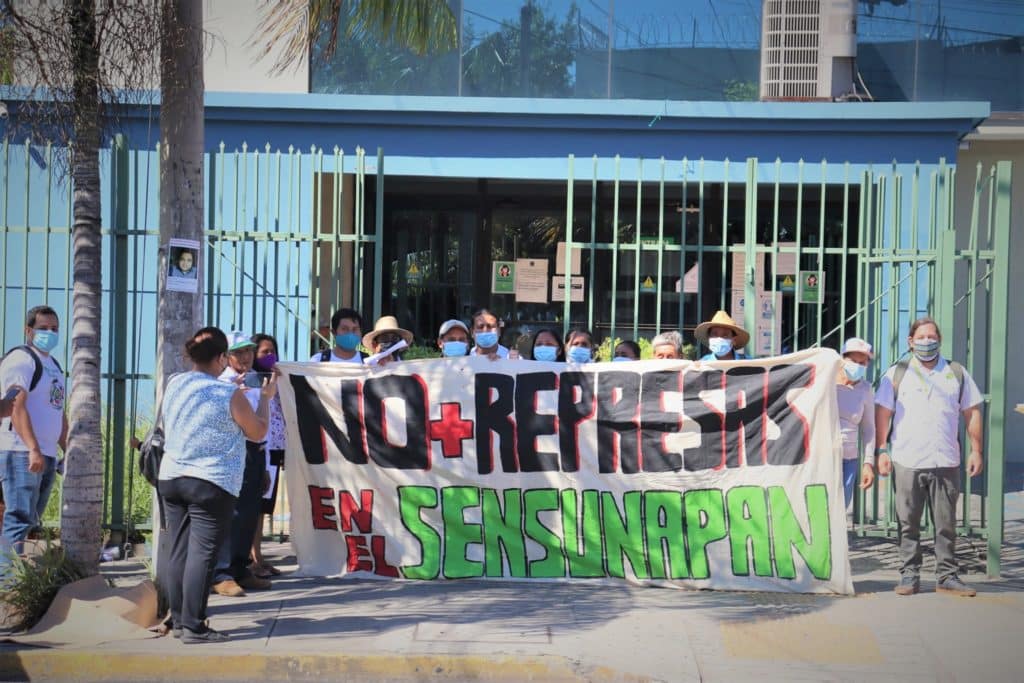
The Nahuizalco Indigenous Unification Movement (MUINA) is opposing the construction of an eighth dam on the Sensunapán River, as well as the expansion of an urban development project by the company Fénix S.A. at the Tacushcalco ceremonial site in Nahuilingo, which has led to the destruction of archaeological and cultural heritage.
The communities that make up MUINA are of Nahua Pipil origin and have historically suffered exclusion, land dispossession and discrimination. They are located in six rural communities in the municipality of Nahuizalco (Anal Abajo, Anal Arriba, Tatalpa, La Guacamaya, Pushtan and Tajcuilujlan), as well as in the Sisimitepet district and nearby areas such as Nahuilingo, where they also face the impacts of urban development projects. The movement works to defend the environmental, cultural and territorial rights of these communities, with an emphasis on water protection, the preservation of sacred sites and the continuation of their ways of life linked to small-scale fishing and the land.
MUINA pursues legal action, such as filing complaints with environmental and magistrates’ courts, as well as organising demonstrations, press conferences and community river clean-up days. Its work combines legal defence with community organisation, assemblies, awareness-raising campaigns and advocacy efforts to halt megaprojects that threaten their culture, territory and natural resources.