


“KfW: Irresponsible banking” — authored by the Coalition for Human Rights in Development and endorsed by 20 civil society organizations — reveals the stark gap between KfW’s human rights commitments and the reality on the ground. In particular, it shows how KfW is failing to take adequate steps to ensure people can freely and safely participate, express their opinions, or oppose its projects.
“KfW – Irresponsible Banking” includes:
- 3 case studies (geothermal project in Indonesia; ammonia plant in Mexico; graphite mine in Tanzania)
- an analysis of KfW policies related to reprisals & participation
- a series of key recommendations
The report is also available in German, download here.
Key Findings
From the analysis of KfW’s environmental and social policies, the following key concerns emerge:
- Weak safeguards: KfW’s social and environmental policies are overly vague and open to interpretation. While its safeguards refer to international standards, they do not specify which standards apply or how compliance is monitored.
- No policy on reprisals: KfW lacks dedicated policies to prevent and address reprisals, and it remains unclear whether the World Bank Group’s standards in this area are considered applicable.
- Reliance on clients: KfW’s safeguards also place excessive reliance on clients to identify environmental and social risks, allowing the Bank to shirk responsibility for harms arising from its projects.
- Lack of transparency: Compared to other major development banks, KfW fails to provide essential, accessible information about its activities. The Bank discloses only minimal details on its direct investments and does not meet international standards on access to information.
- Accountability: The KfW Group as a whole does not have an external independent complaint mechanism.
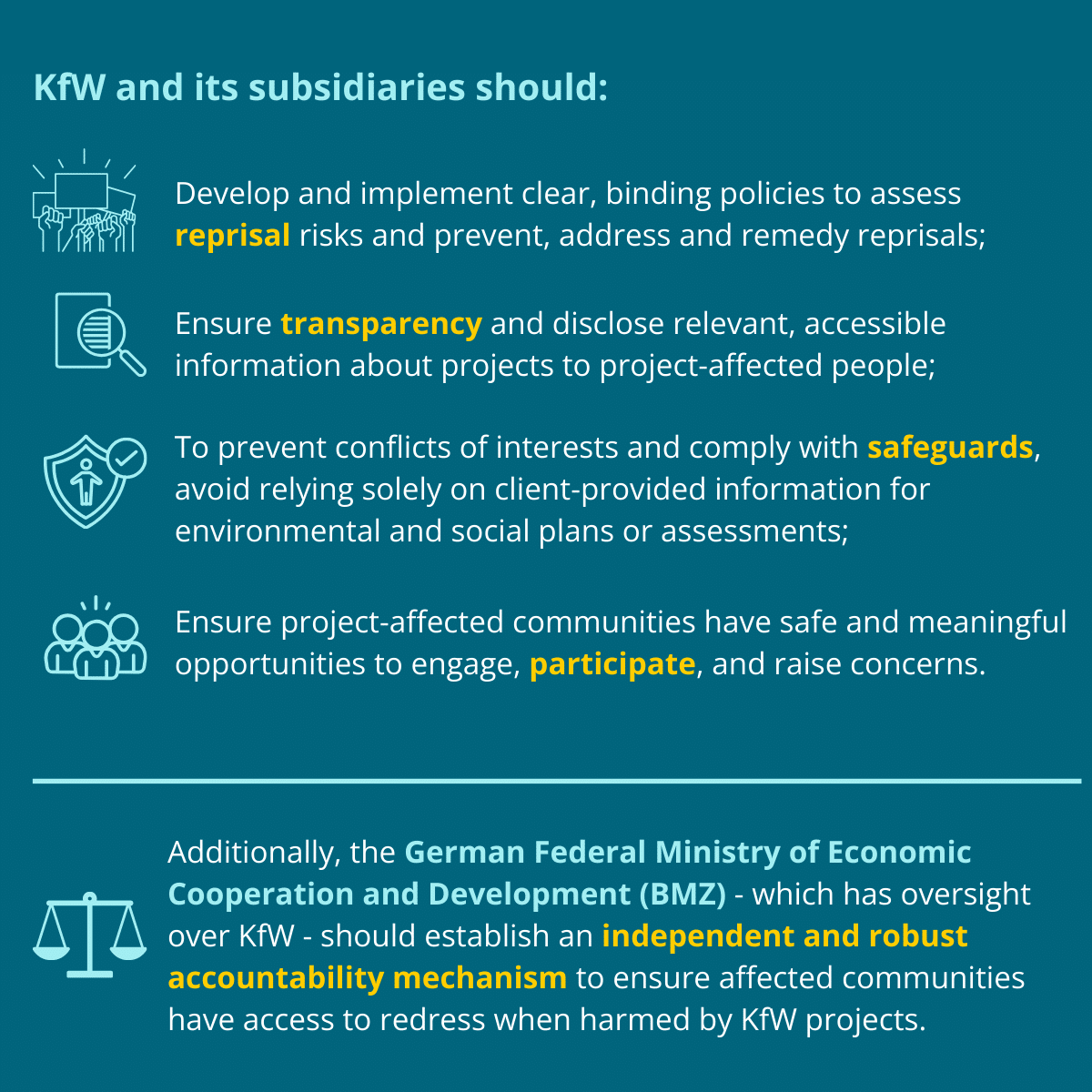
Key Recommendations
Launch event
“This is a project of death. It has torn apart my community and shattered my world, my family, and my life. I fear that if they kill me tomorrow, my struggle will become just a memory, and my children will be left without a mother — simply because I chose to stand up to defend my land and the rights of my people.”
(Claudia Susana Quintero, Mexican Indigenous woman human rights defender from the Mayo-Yoreme Indigenous community and founder of the collective ¡Aquí no!)

Case studies
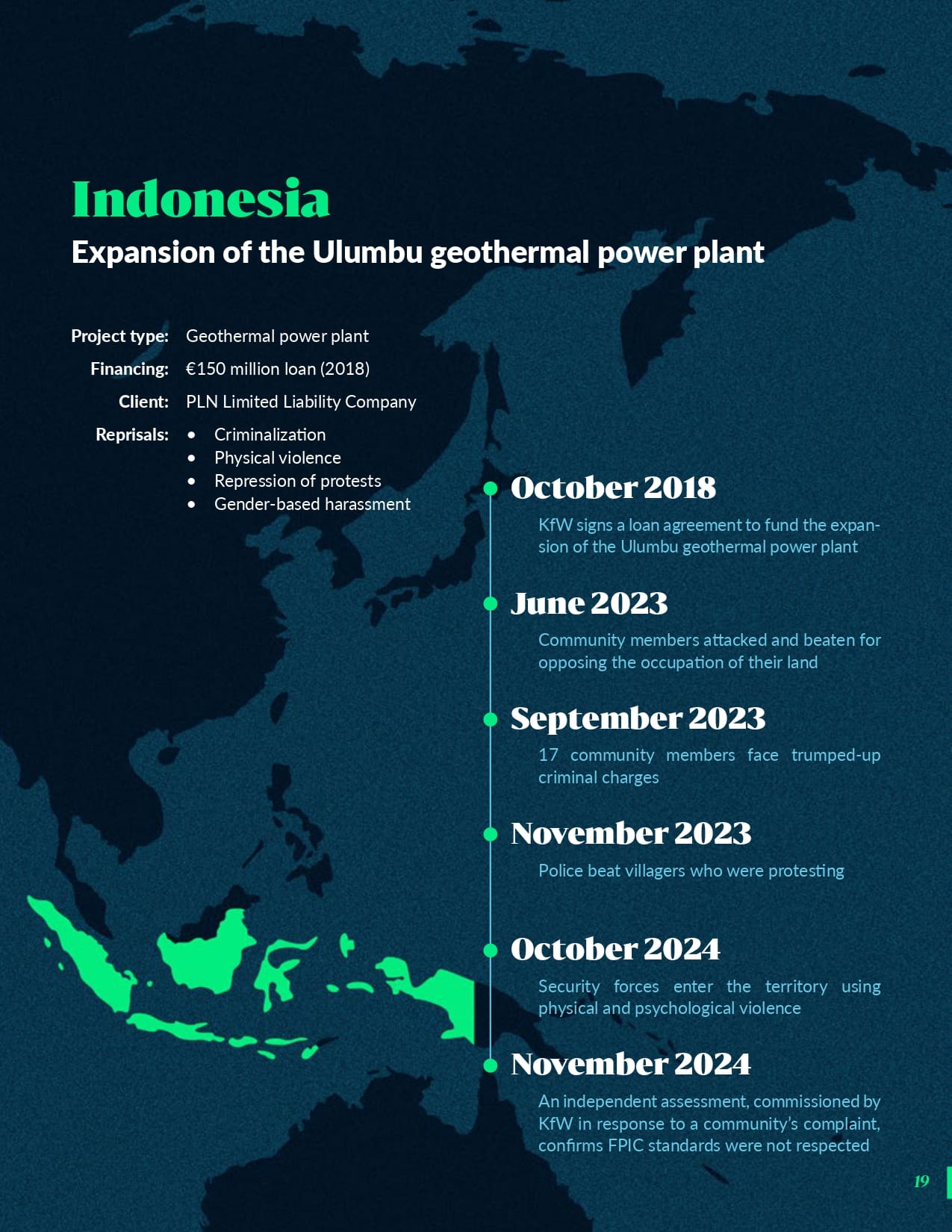
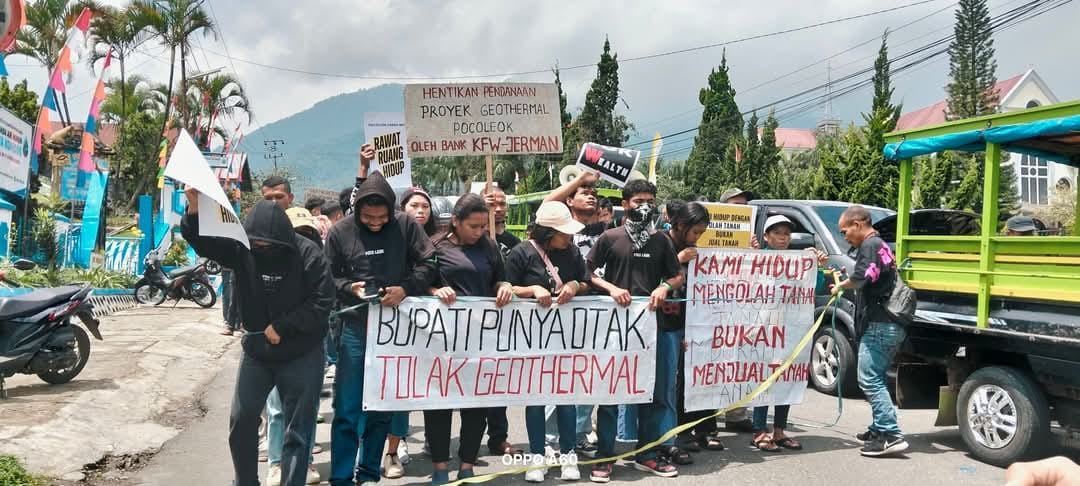
In Poco Leok, Indonesia, KfW is funding a geothermal project that is displacing local Indigenous communities and threatening to destroy their sacred sites, way of life, and environment. The community has voiced strong opposition. In response, police and military forces have violently attacked and criminalized local activists.
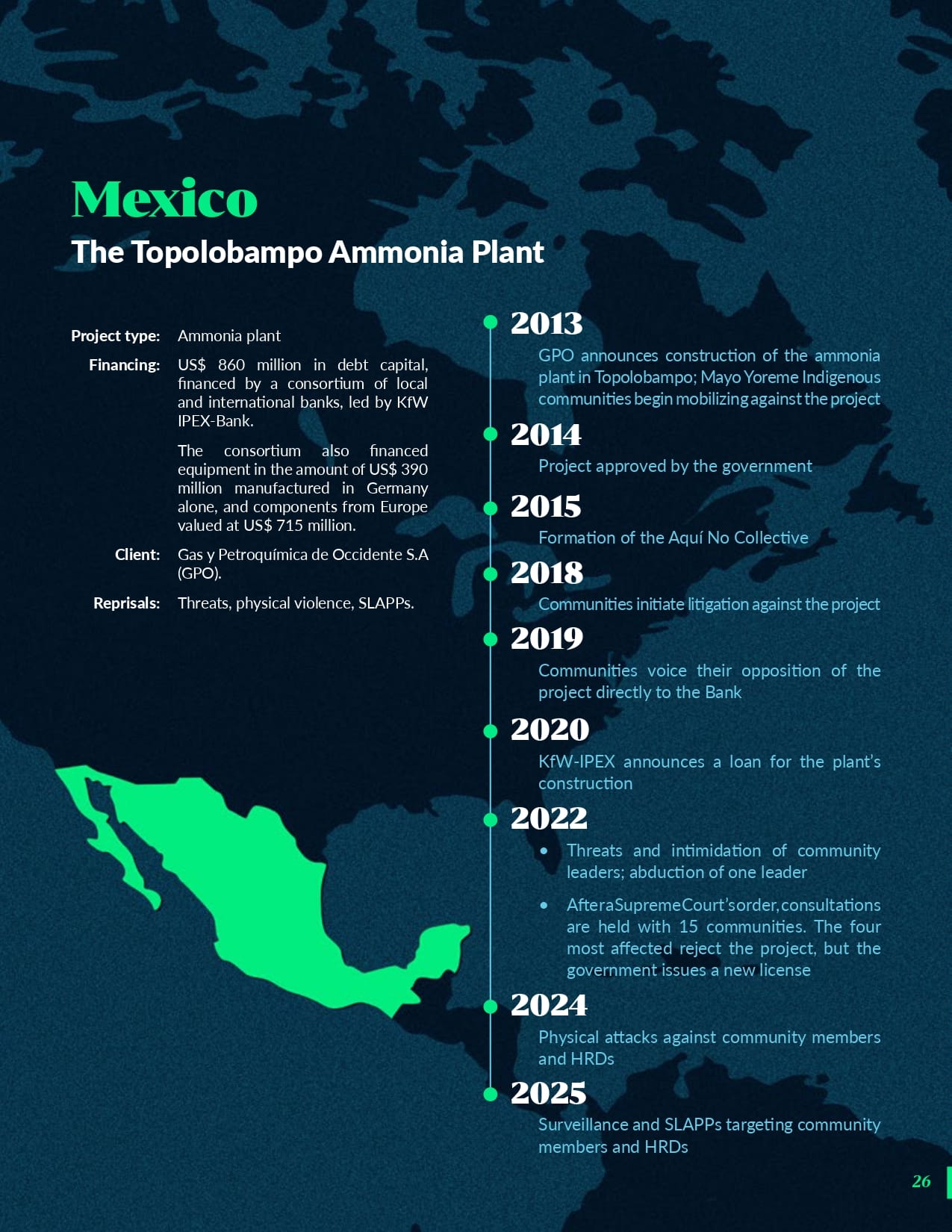
In Sinaloa, Mexico, KfW IPEX-Bank has invested USD 1.5 billion in a controversial ammonia plant, violating the rights of local Indigenous communities by imposing the project without their consent. In a region already plagued by violence and organized crime, the project has further fueled attacks against human rights defenders.

In Tanzania, KfW IPEX-Bank is supporting the construction of a graphite mining project. The community was only informed once decisions had been made, with no clear information about compensation or relocation. Those who attempt to raise concerns face threats and criminalization, leaving many too afraid to speak out.
“By not stopping their financing to the project, KfW is actually complicit in human rights violations in Poco Leok.”
(Jimmy Ginting, local human rights defender who has been supporting the struggle of the Indigenous community in Poco Leo)
“KfW calls it ‘responsible banking’, but it’s using German taxpayers’ money to bankroll projects that displace Indigenous Peoples, destroy ecosystems, and endanger human rights defenders. If KfW wants to demonstrate real responsibility, it needs to listen to local communities and ensure their voices are not silenced.”
(Dalile Antunez, collaborative researcher at the Coalition for Human Rights in Development)
Full report