

In January 2026, Maurice Ouma Odhiambo – Executive Director of our Member Organization Jamaa Resource Initiatives (Kenya) – was appointed as a member of the Civil Society Steering Committee of the European Bank for Reconstruction and Development (EBRD) for 2026–2027. In this blog he shares why he decided to apply and what are his key messages to the Bank.
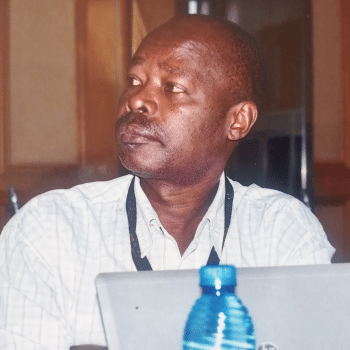 My decision to apply for the EBRD Civil Society Steering Committee is driven by a commitment to fostering meaningful engagement between international financial institutions and the communities they affect. By joining this committee, I seek to ensure that the voices of civil society – particularly those from regions navigating complex development challenges – are integrated into the Bank’s strategic decision-making and project planning. My involvement is expected to bridge the gap between high-level policy and local implementation, with hopes that my tenure will result in enhanced transparency, more robust social safeguards, and a development model that prioritizes human rights and environmental sustainability. Ultimately, my presence on the committee aims to facilitate a more inclusive dialogue that holds the EBRD accountable to its mission of supporting sustainable, community-centered economic growth.
The European Bank for Reconstruction and Development (EBRD) is currently executing a landmark expansion into Sub-Saharan Africa, marking its first major geographic shift since its expansion into the Southern and Eastern Mediterranean in 2011. Following a 2023 charter amendment that became fully operational in mid-2025, the Bank has designated Benin, Côte d’Ivoire, Nigeria, Kenya, and Senegal as its primary countries of operation, with Ghana expected to follow in 2026. For the continent, this transition introduces a “private-sector-first” development model that differs from traditional aid: the EBRD will prioritize direct equity investments and loans to small and medium enterprises (SMEs) rather than just government infrastructure projects. In particular, the EBRD will focus on green transition, digital transformation and economic governance.
However, civil society groups have raised pointed concerns on whether the EBRD’s existing safeguards are sufficient for the unique social and political landscape of the African continent (see for example the article by Megan Pearson at Accountability Counsel, “The EBRD in Sub-Saharan Africa: Expanding Horizons, Expanding Harm?”).
A primary concern centers on community displacement. According to Accountability Counsel research, “To date, roughly 6.5% of complaints about EBRD projects have raised displacement as an issue. Meanwhile, about 32% – nearly one third – of all complaints from Sub-Saharan Africa relate to displacement.” There are significant fears that the Bank’s reliance on client-provided data may lead to inadequate consultation, failing to reach grassroots communities in their local languages or respecting Indigenous People’s right to Free, Prior, and Informed Consent (FPIC).
Furthermore, observers worry about transparency gaps when funds are channeled through local financial intermediaries, making it difficult to track if the final beneficiaries adhere to environmental and human rights standards.
Finally, in regions where civic space is increasingly restricted, there is a deep concern that project-affected people may face retaliation for speaking out, necessitating much more rigorous human rights due diligence than the Bank has historically required.
To ensure that its expansion into Sub-Saharan Africa does not exacerbate existing social and environmental issues, the EBRD must shift from a “compliance-based” model to a proactive, human-rights-centric approach that accounts for the continent’s unique political and social landscape. Central to this is the effective implementation of its 2024 Environmental and Social Policy, which requires the Bank to move beyond client-provided data and perform independent Human Rights Due Diligence that identifies risks such as civic space restrictions and land tenure insecurity before projects are approved. The Bank must also address the high risk of displacement by strictly enforcing “replacement cost” compensation and ensuring that stakeholder engagement is conducted in local languages and through culturally appropriate channels, moving away from the “internet-only” consultation methods that have previously excluded rural populations.
Furthermore, given the rising threats against activists, the EBRD must operationalize its zero-tolerance policy on retaliation by establishing safe, anonymous reporting mechanisms and committing to intervene or even suspend funding if clients or governments harass project critics. Finally, to close the “transparency gap,” the Bank must require Financial Intermediaries to disclose the final beneficiaries of their loans and reinstate referral lists for high risk sub-projects, ensuring that private sector growth does not come at the cost of community well-being or environmental integrity.
As the Executive Director of Jamaa Resource Initiatives, I am expected to leverage my expertise in communal resource management and corporate accountability to advise the Bank on inclusive consultation processes, safety issues, and protection against retaliation for activists. My primary objectives include ensuring that development projects are community-led and self-reliant, reducing dependence on foreign aid by fostering local sustainability, and holding the Bank accountable to high human rights and environmental standards. The expectation for my tenure is that I will act as a critical “bridge” for marginalized groups, helping to shape the EBRD’s annual agenda to reflect the realities of the African continent and advocating for a shift from simple risk mitigation to genuine, positive impact for project-affected people.