

This blog was written by Aryampa Brighton (Youth for Green Communities), a Coalition member, as part of a series we’re launching in 2025 to celebrate our 10-year anniversary.
When with a group of young people we created “Youth for Green Communities”, we had little idea of what it takes and what is required to drive change. But we knew we wanted to make a difference. We were driven by our desire to address the social injustices we were witnessing in our communities in Uganda, and in particular those impacted by oil extraction.
This is why we embarked on a journey to empower and work with other youth, using social media and other communication channels to amplify local communities’ voices, testimonies and aspirations.
As we witnessed and heard stories from the direct victims of oil projects , we could see how their pain was rooted in the disruption of their livelihoods, intricately linked to their ancestral lands, and in their cultural erosion. We saw how the youth and Indigenous communities – excluded from decision-making processes – bore the burdens of displacement, destroyed ecosystems, increased environmental degradation and worsened global climate impacts.
We knew that in standing up against rich profit-making oil corporations supported by our military regime (such as Total Energies or China National Offshore Oil Corporation), the risk was going to be higher and the cost much bigger. But we knew that, if we waited long enough, even the darkest of times would also pass. So we asked ourselves whether it was going to be a case of quietly waiting, until the tide turns. But should we be waiting as victims of the circumstances, instead of taking action? Or should we lead the way into a better future? As Mahatma Gandhi famously said, “You must be the change you want to see in the world.” How could we do this? How could we support our communities? How could we defend our environment and the rights of our communities in the context of development largely supported by multinational companies and our government?
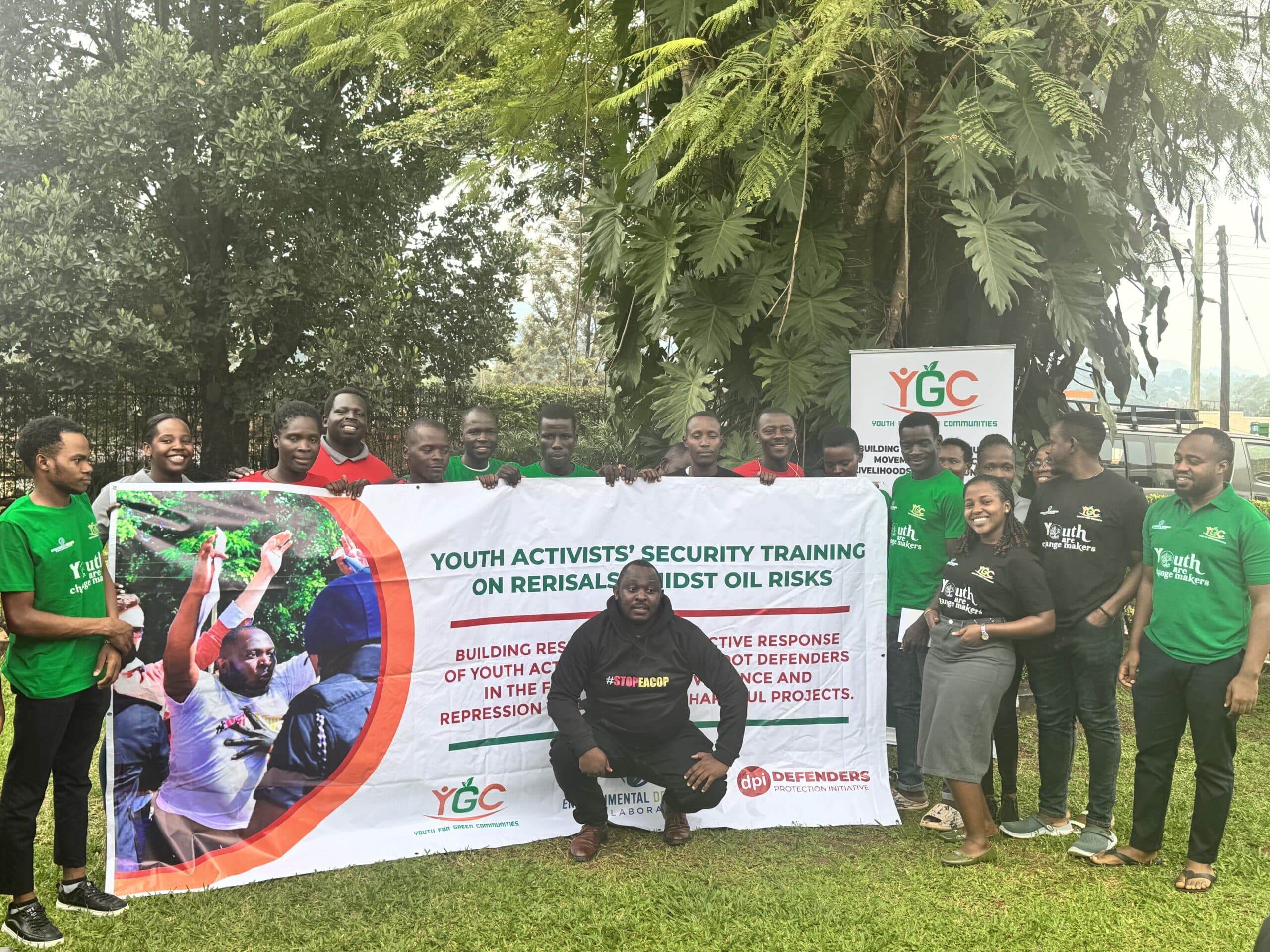
Credit: Youth for Green Communities
It is the history and belief in the power of young people, who transformed nations all over the globe, that gave our team hope. Our mission was to reconnect the youth and local communities, so that together they could hold corporations and governments accountable for the environmental and human rights abuses in the context of development projects. We had to support youth to seek ways to increase their knowledge, imagine new solutions, build networks and connections, while envisioning communities that thrive with nature across generations. This would not come on a bed of roses, and so we started reaching out to the groups that could support our mission.
Initially, it was difficult to mobilise support beyond local groups. However, we persevered and the blessing came around late June 2021, when we submitted our unsolicited support request for a collaboration grant under the Community Resource Exchange (CRE). We were optimistic because the initiative was supporting exactly what we had in mind. We wanted to build and strengthen linkages with the oil-impacted communities, not only to learn about the challenges they were facing and increase awareness, but also to empower them and raise awareness about their rights to land and other natural resources. We never thought that this collaboration would be a child of many opportunities ahead, but the CRE team gave us a space to utter what we wanted to do and achieve. We also worked with the Coalition’s Communication team, to advance our communication campaign. We connected university representatives with oil-impacted communities, and used social media to effectively amplify the voices of those in the frontlines.
In 2024, we also worked closely with the Coalition’s Defenders in Development campaign, as Youth for Green Communities is providing legal support to students activists and human rights defenders who are facing arrests and criminalization, simply because they are standing up against the construction of the EACOP pipeline. As part of this collaboration with the Coalition, we also had an opportunity to present our work during a session at the Human Rights Funders Network festival in Tbilisi, Georgia, and to join the Defenders in Development campaign gathering, where we cross-shared strategies and experiences with other human rights defenders from around the world.
What the caterpillar calls the end of the world, I call a butterfly! In those very moments when nothing was shifting, the Coalition gave us a real chance to reflect and transform into something better and bigger, to connect with other partners and allies, and to advance in our mission in solidarity with oil-affected communities in our country.