

In this blog, John Ian Alenciaga, Coordinator of the Jalaur River for the People’s Movement (JRPM) shares his reflections from their South Korea advocacy trip, where they held a series of meetings to seek justice for the Tumandok Massacre victims and accountability for the ongoing human rights violations linked to the Korean-funded Jalaur Dam in the Philippines.
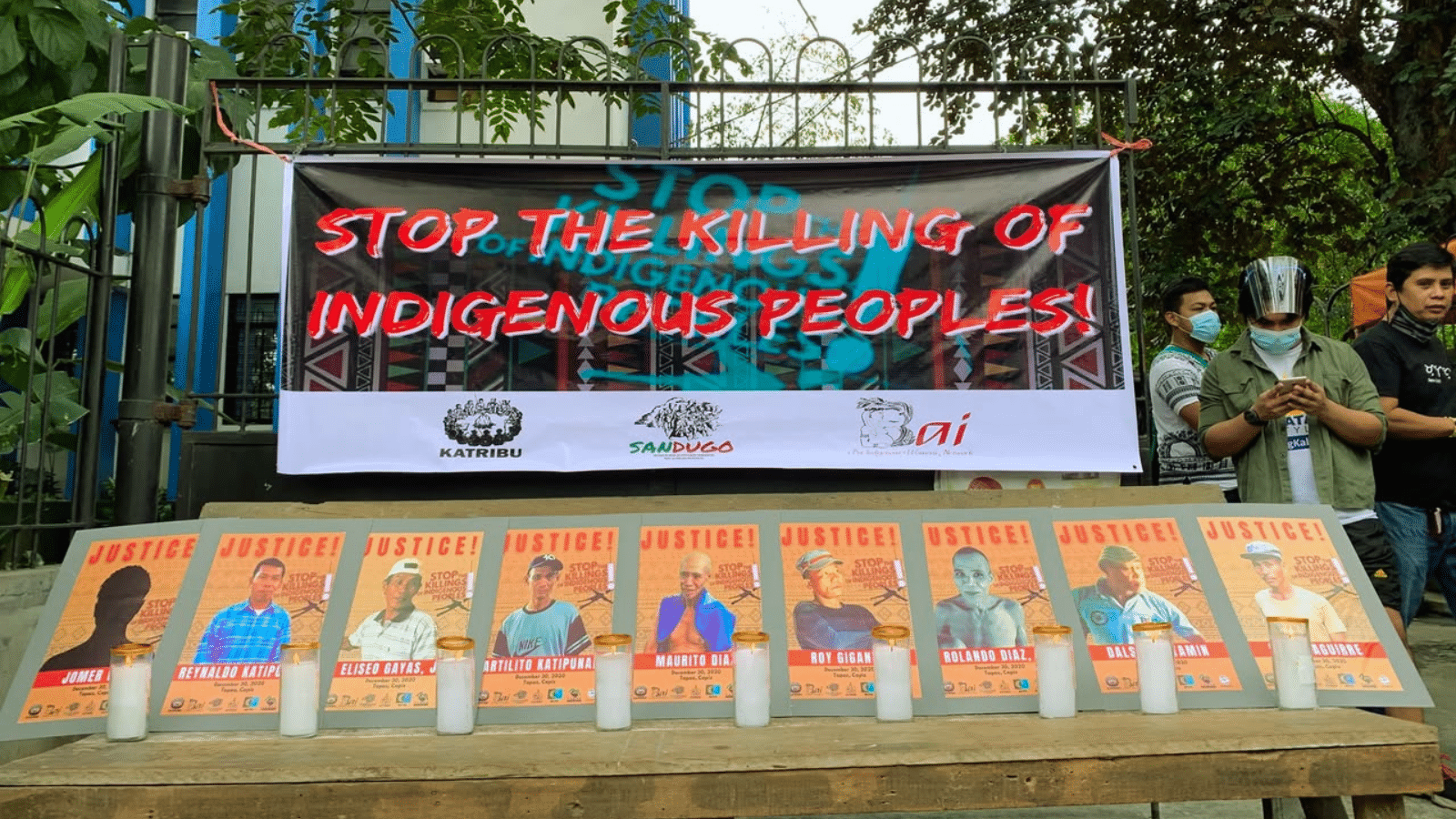
When we left Panay for South Korea last August, we carried with us not just documents and statements, but the stories, pain, and hopes of our Tumandok people. These stories form the foundation of our continuing struggle—for the lives lost, the lands taken, and the livelihoods destroyed by the Jalaur Mega Dam project.
For a week, we brought the voices of the Tumandok to the institutions responsible for their displacement and suffering. The advocacy tour included meetings with key agencies involved in the project and others who we believed could help in the campaign for justice and accountability. The highlight, of course, was the filing of complaints against the funder and contractor whose actions led to serious rights violations—concerns that had already been raised even before the dam’s construction began.
The advocacy meetings
Our meetings varied—some were warm, while one was distinctly cold. The Korean Export-Import Bank met us only out of courtesy, as if acknowledging the effort we made to fly thousands of miles just to be heard. In the end, one of my colleagues was even questioned about whether they were truly Tumandok and if what they said was true.Worst of all, the contractor, Daewoo Engineering and Construction, did not even bother to respond and show up.
In contrast, some members of the Parliament and the National Human Rights Commission welcomed us and listened thoughtfully to our stories. While the outcome remains uncertain, these meetings brought a glimmer of hope—that despite the distance, the message of the Tumandok was delivered, and their struggles and demands were heard.
Even more heartening were the church groups who opened their doors and embraced the Tumandok struggle as their own. Their warmth and commitment to continue sharing the Tumandok’s plea for justice were deeply inspiring.
Filing a complaint against Korea Export-Import Bank and Daewoo
The highlight of the tour was the filing of complaints against the project’s funder, the Korea Export-Import Bank (KEXIM), and the contractor, Daewoo E&C.
The complaint against KEXIM Bank was filed before its Human Rights Management Committee — established in relation to its role in administering the Economic Development Cooperation Fund (EDCF) Safeguard Mechanism — marking the first time such a complaint has been filed with this body. This serves as a test case that challenges the Bank’s integrity and credibility. We will soon see how they make their mechanism work in practice.
For Daewoo E&C, JRPM, and the Tumandok were joined by our partner KTNC Watch in filing a complaint before the Korean National Contact Point for the second time. Our first filing in 2018 was dismissed because the project was “not commercial in nature,” since it was developed by the Philippine government, and that further examination would not serve the purposes of the OECD Guidelines for Multinational Enterprises.
This latest filing is not a mere repetition—it reaffirms that grave violations took place during the construction of the Jalaur Mega Dam and persist even after Daewoo’s contract ended. The environmental and human rights damages are irreparable, and we demand justice and accountability for the victims.
The filing date coincided with the Day of Martyrs and Heroes of Panay, honoring the nine Tumandok leaders and other indigenous rights advocates who dedicated—and in some cases, gave—their lives for the betterment of the Tumandok people.
The Indigenous-led struggle about the Jalaur dam
For years, the Tumandok community has been at the forefront of the resistance against the Jalaur Mega Dam, a large-scale project funded by the Korea Export-Import Bank (KEXIM). The Tumandok people have raised alarm over the project’s destructive impacts — including serious human rights violations, the displacement of Indigenous families, and the threat of catastrophic flooding in downstream communities. But instead of heeding their legitimate concerns, the government has responded with harassment, criminalization, and extrajudicial killings. On the night of December 30, 2020 State forces raided the homes of nine unarmed Indigenous Tumandok leaders and executed them, and then arrested 16 others on fabricated charges.
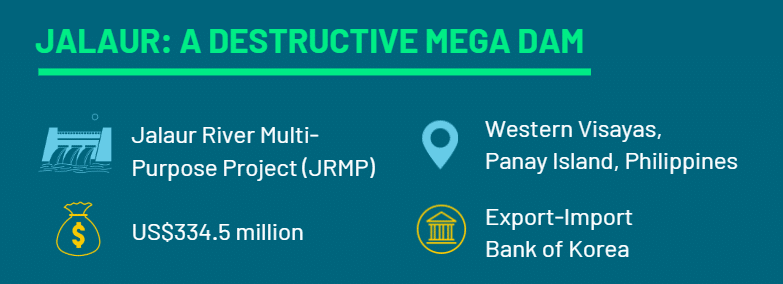
The Tumandok people have lived in the mountainous areas of Panay for centuries. Their life is intrinsically linked to the mighty rivers of Jalaur and Panay: they depend on it to grow their crops, to fish, and to celebrate their sacred rites.
Since the onset of the project, they raised their opposition and concerns about:
- forced displacement
- loss of their ancestral lands
- lack of genuine consultations and violation of their right to Free, Prior, and Informed Consent (FPIC)
- loss of livelihoods
- desecration of burial grounds and sacred sites
- disintegration of their culture and traditional way of life
- environmental risks (deforestation, soil erosion, flooding downstream, loss of biodiversity, etc.)
- risk of collapse (sysmic activities due to fault line).

The warmth of solidarity
The Korean civil society organizations we met were warm and generous, and we truly felt their support despite the short time we spent together. From forums to interviews and even informal educational tours around Seoul, their solidarity was overflowing.
From old friends dating back to 2015 to new allies we met for the first time, they bridged communication barriers with sincerity and compassion. They offered various forms of support—from advocacy and education to amplifying our stories through social media. These small but meaningful gestures mean a lot, especially amid the state’s efforts to silence our voices.
Despite the hardships and military presence in their communities, the Tumandok continue to stand firm in their fight for justice and accountability. With our collective effort, we can help amplify their silenced voices.
The struggle continues—not only against the Jalaur Mega Dam being built on their ancestral lands, but also against another, even larger and more expensive dam being planned in Tapaz, only about 10 kilometers away. After the trauma the Tumandok have endured, the government has used fear to suppress their opposition.

What Lies Ahead
We face a future marked by continuing attacks and the relentless push for destructive projects—projects that serve not the people, but those seeking to fatten their pockets. Amid record-breaking corruption scandals, our collective strength is needed now more than ever.
From the grassroots to international allies, we must show how so-called “investment projects” have become tools of repression rather than development, whose promised benefits are often minimal or never realized at all.
From Panay to Seoul, let our voices echo those who have been silenced, whose movements are restricted, and whose lives are controlled by the very institutions meant to protect them. Let us continue to tell the stories of the Tumandok—their pain, their courage, and their enduring hope for a future where their rights are respected and their self-determination is realized.
In the pictures: Mobilizations to demand justice for the Tumandok Indigenous leaders and to resist against the Jalaur dams. (Photo courtesy of JRPM)
Read more
- “Filipino indigenous people travel 2,600 km to protest Korea’s support for dam construction” (Naver News)
- “Justice for the Tumandoks: Complaints filed in South Korea over Jalaur megadam funding, builder” (Daily Guardian)
- “Korean bank, contractor charged with rights abuses, environmental destruction” (Panay News)
- “Land, Water, Life: Resist the Flood of Injustice, Stop the Jalaur Mega Dam” (IPMSDL)