

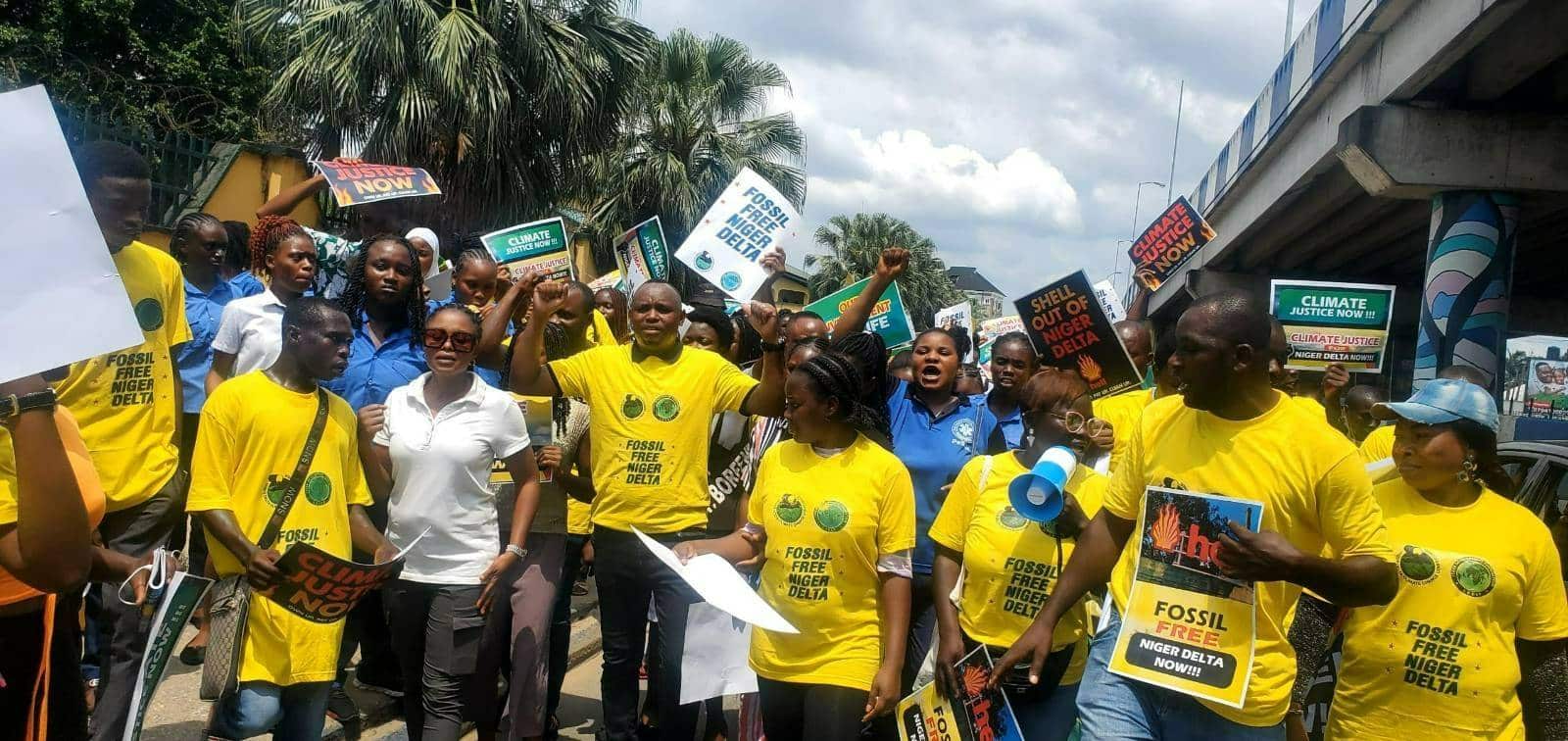
In October 2024, over 100 delegates from across the globe gathered in Port Harcourt (River States, Nigeria) for the Niger Delta climate change conference, organized by the Nigerian grassroots organization Lekeh Development Foundation. In this blog, one of our Community Resource Exchange partners from the Ugandan community group East African Crude Oil Pipeline Host Communities (EACOP HC) shares about their experience at the conference, where they had the opportunity to exchange learnings and build solidarity with communities impacted by oil activities in the Niger Delta.
Amara’s anguish, our story
When we arrived at the Niger Delta climate change conference, the air was thick with a mixture of hope and worries. We were there to share painful stories that portray how our lives have been forever altered by the oil and gas projects that are plaguing our communities. But we were also there to build solidarity, share learnings, and strengthen our movements.
Amara, a young woman from Uganda, was one of the delegates. Her story, like countless of others among us, is a testament to the urgent need for climate justice. Her village is nestled along the winding creeks of the Albertine Graben, which forms part of the western arm of the Great Rift Valley system in East Africa. Once upon a time it was a green and fertile land, teeming with life. But when the multinational oil companies arrived, they unleashed a relentless onslaught of grief, pain and violations of human and environmental rights.
In 2018, the oil companies, with the support of the Ugandan government, started forcibly displacing Amara’s community. Over 100,000 people were forced to leave their traditional land where they used to farm. They were robbed of their rights, peace and freedom. They were displaced without any due regard to their economic, cultural and social rights, and this led to poverty, food scarcity, teenage pregnancies, school dropouts, and loss of dignity.
Beyond the over 100,000 people who were displaced, the fossil fuel industry affected millions of other Ugandan citizens whose livelihoods depend on agriculture, fisheries and tourism, as these sectors need a healthy and clean environment to thrive.
The pain of seeing the destruction of our communities and the suffering of our families weigh heavily on our hearts. The Albertine Graben is one of the most ecologically sensitive areas in Uganda, as it hosts 70 percent of our national parks and major lakes, rivers and water streams. But the lush greenery, the thriving fishing communities, and our joyful lives have all been ravaged by the relentless greed of multinational oil companies. Today, for Amara and our communities, our only and last resort is the passion and determination to fight for our children’s future, advocating for a greener and cleaner tomorrow.
The Call for Climate Justice
@Eacophostcmty we are fueled with the spirit of resilience and solidarity with our fellow affected oil host communities in the @NigerDelta to continue with the struggle to say no to fossil fuels.Its time to begin investing in clean energy for a Greener future.#climatejusticenow pic.twitter.com/MfepmgI4aJ
— East African Crude Oil Pipeline Host Communities (@Eacophostcmty) October 23, 2024
These personal struggles prompted many of us to join the growing movement for climate justice. Some of us have since then been working as community journalists: we report and document the negative impacts of oil and gas activities on our community livelihoods and on the environment. During the conference, we have listened to the testimonies of communities from the Niger Delta and witnessed their suffering for the past 60 years. As we return home, we are even more committed to work in solidarity, to strengthen our resilience, and to demand for a cleaner and greener renewable economy for our communities and the generations that will come after us.
These exchange learning experiences, facilitated by the Community Resource Exchange program of the Coalition for Human Rights in Development, helped us appreciate that our struggles are the same. We must work together, speak with one voice, and demand for climate justice now! Why should we wait for hell to come to us, if we can stop it now?
As community.based journalists and observers, we know very well that these challenges are fueled by a common thread: the pursuit of profit at the expense of people and the planet by multinational corporations, often backed by financial institutions and our corrupt government officials.
Challenges and Resistance
Since we joined the struggle of fighting and demanding for the protection and promotion of our human and environmental rights, we have faced and witnessed a number of challenges. Government security agencies are illegally arresting, intimidating and harassing human rights defenders. They are trying to stop us from doing our work in defense of the rights of vulnerable communities and the environment. However, our collaborations and partnerships with like-minded organizations has enabled us to continue doing our work amidst the closing civic space and repression from our governments and oil companies. Our communities have demonstrated remarkable resilience and creativity in their resistance and shared struggle for climate justice. Their dreams for the future are not one of continued extraction and exploitation, but of a sustainable, equitable path forward – one that respects the rights and aspirations of the local communities. As of today, communities continue to organize community-led and non-violent actions, to conduct evidence-based advocacy to stop oil and gas activities, and to demand increased funding for just and clean renewable alternatives.
A Call to Action
As the conference drew to a close, we stood before the assembled delegates, our eyes burning with determination and inspiration from stories such as Amara’s. “Our struggle is not just about the Niger Delta and the Albertine region,” we declared. “It is about the future of our planet, the well-being of our children, and the fundamental right to live in a healthy, sustainable green environment. We call upon the world to stand with us, to hold the oil companies accountable, and to champion the vision of a just, green future that we all deserve.”
Amara’s words echoing through our minds and across the conference hall, igniting a spark of hope in the hearts of all who heard. For in her story, and in the stories of countless others like us, lays the blueprint for a global movement and revolutionary demand – one that would not rest until climate justice is achieved, not only in the Niger Delta and the Albertine region, but across the world.