

Do you know someone who can review the environmental assessment for this mega dam? And someone who can offer a small grant for a gathering, to bring together all the communities affected by this port project? And is there anyone who can help us do advocacy with the World Bank and help us get our comrades out of jail?
In the past four years, the Community Resource Exchange (CRE) has collaborated with over 200 communities, responding to their requests and connecting them with the information, skills, tools, resources, or allies who could help them advance their struggles.
In the first phase, we focused on finding and offering loose threads, so that communities could weave their own beautiful tapestries of resistance.
When we started, we didn’t know for certain what patterns and imagery would emerge in the tapestries, or which knots we and our community collaborators would encounter. Four years later, as we launch the second phase of the CRE pilot, we are working together with our community collaborators to add colourful threads to their tapestries, but we are also starting to stitch their tapestries into a beautiful quilt.
Harsh weather is coming: we are all feeling the chilling effects of climate injustice, economic inequality, oligarchy and authoritarianism. Stitching a quilt of resistance represents our collective ambition to make the CRE a strategic safe haven, a relational sanctuary where communities can learn from each other, practice collective care, and work together to push for systemic change on their own terms. In a quilt, each of the pieces retain their individuality, but they also come together to become something bigger and more useful than the sum of their parts.
 Harsh weather is coming: we are all feeling the chilling effects of climate injustice, economic inequality, oligarchy and authoritarianism. Stitching a quilt of resistance represents our collective ambition to make the CRE a strategic safe haven, a relational sanctuary where communities can learn from each other, practice collective care, and work together to push for systemic change on their own terms. In a quilt, each of the pieces retain their individuality, but they also come together to become something bigger and more useful than the sum of their parts.
What does this mean in practice? After having conducted an evaluation and internal reflection process, we are now launching the second phase of the pilot and introducing some changes to ensure the CRE is even more strategic, responsive to communities’ needs, and impactful.
In this blog, we present these key changes and next steps. Staying true to CRE’s community-led way of working, we’ll continue working to reveal systemic failures of key public and private economic actors, pursue redress in individual cases, and support communities to push and transform the very model of development to center their perspectives through policy and narrative change.
Read more: some of the tapestries of resistance in our quilt
In Argentina, our collaborator Asamblea Pueblos Catamarqueños en Resistencia y Autodeterminación (PUCARA) – a collective movement in Catamarca that brings together several local environmental groups – has been powerfully mobilizing local communities, conducting international advocacy and advancing legal strategies to protect their territory. In March 2024, they won an important court case: with a landmark ruling, the Supreme Court of Catamarca stopped the issuance of permits for new lithium mining projects in the Salar del Hombre Muerto and for the expansion of current ones. The court recognized the irreversible environmental damage provoked (including drying up a local river) and required a new cumulative and integral environmental impact assessment of the different projects in the area. One mining project (Sal de Vida) had received funding from two development banks (International Finance Corporation and the Inter-American Development Bank), but – a few months after the court ruling – the company prepaid its loans to end the contracts. The CRE supported the legal and advocacy strategy, and among the CRE collaborators and allies who were also engaged in the advocacy efforts (especially targeting the international investors), there are Fundación Ambiente y Recursos Naturales (FARN), Fundación Yuchan, and the Bank Information Center (BIC).
In Kenya, the CRE facilitated a community exchange and capacity building session for communities impacted by Chinese-funded mining and oil projects, in the Democratic Republic of Congo (DRC) and Uganda. Several ally collaborators contributed to the capacity-building sessions, focused particularly on follow-the-money research and protection strategies: Inclusive Development International, Protection International-Kenya, Youth for Green Communities (YGC), and Freedom House-DRC. Additionally, the Coalition’s Communications program facilitated a session on how to safely document human rights abuses. The activity was financially supported by Open Society Foundation, AFREWATCH, IDI, and Environmental Defenders Collaborative (EDC). In collaboration with the CRE, AFREWATCH has then continued to support the DRC communities, especially in relation to the new Mining Code. For the communities, this capacity building was an opportunity to exchange experiences and strategies on how to deal with Chinese investments, and to build connections and solidarity.
In Indonesia, recognizing the inherent toll of struggles on communities’ mental health, our CRE partner Yayasan Srikandi Lestari (YSL) has been conducting a series of training sessions and activities focused on well-being and protection. YSL is a women-led organization, focused in particular on women’s rights and ecological justice. To support local communities affected by a Chinese coal-fired power plant in North Sumatra, YSL has been facilitating sessions on community protection, organizational and individual security procedures, Indonesian laws that can provide protection and redress, and mental health. The project helped relieve stress, fostered camaraderie, built solidarity, and provided a much-needed respite for community members, helping boost their morale and reinvigorating their commitment to the advocacy work they were doing. The CRE also connected them to the Environmental Defender Law Center (EDLC) which provided crucial legal guidance. YSL also participated in a learning circle with women human rights defenders on communication strategies and a learning session on digital security. The CRE also connected YSL to three ally collaborators (Front Line Defenders, Urgent Action Fund, and Freedom House) who provided support on protection strategies.
These are just some of the almost 200 stories of connections and collaborations the CRE have facilitated in the last three years, aimed at building community power. Each of them offers a beautiful image to add to our quilt, and has provided us with some key lessons learned that are guiding us in the next steps.
Transitioning to the Second Phase
In January 2024, the CRE started the slow but steady process to reflect on the first phase of its pilot (from November 2020 to December 2023), and to propose improvements for the second phase of the pilot, which will run from April 2025 to March 2028.
In the same way the design and implementation of the first phase of the CRE pilot was grounded in collective reflection and learning, the CRE’s transition to its second phase has been a collaborative and community-led process. You can read more in the blog “Untangling knots and finding new threads“.
The CRE collaborators, especially grassroots groups, assessed the CRE’s impact, suggested which direction the CRE should take, and guided us in this continuous learning process. To help us assess the first phase, we also commissioned an external evaluation, developed through participatory quantitative and qualitative methodologies, that will be published in May 2025. In parallel, the CRE’s global Advisory Committee and its Regional Grant Working Groups reflected on the first phase and drew recommendations based on feedback from CRE collaborators and external evaluation, to chart the way forward for the second phase.
The outgoing Advisory Committee and Regional Grant Working Groups from the first phase of the pilot have designed the contours of our quilt and articulated a series of changes that will be introduced in the second phase of its pilot, and that we outline in the following section.
1. Improving the CRE structures
In the new phase, we will enable a stronger bottom-up approach to ensure the CRE’s working groups and advisory committee – which have been integral to the work of the CRE – can also oversee our strategic direction, and to hold us more accountable to our grassroots collaborators. They will be our lead quilt designers, setting strategic direction for the CRE system overall.

Indigenous activist standing against lithium mines in the Salar del Hombre Muerto, Argentina. Credit: Asamblea Pucara
The three existing Regional Grant Working Groups, composed of five activists and civil society representatives from Latin America, Africa and Asia respectively, are metamorphosing into Regional Working Groups. In addition to reviewing and approving the CRE’s grant-making process, they will also help set regional thematic priorities, support outreach, and deepen collaborations and linkages. Each of the Regional Working Groups will also appoint two representatives from among themselves to serve on the CRE’s global Advisory Committee structure.
The new Advisory Committee will have a more active and deliberative role on strategy, learning, and accessibility and accountability to communities. In addition to the six representatives from the Regional Working Groups, the outgoing Advisory Committee and Regional Grant Working Groups also appointed three more members who are well connected to networks at the local, national, regional or international level. To ensure continuity, most members of the CRE structures will continue serving their role.
2. Setting regional thematic priorities and enabling communities of action
To deepen its impact despite the limited resources available, the CRE will work with its Regional Working Groups (RWGs) to identify key thematic priorities, focusing outreach, research mobilization and other efforts around them. These thematic priorities are like intended patterns or colour schemes for the tapestries that will be added to the quilt, and they allow the CRE to better focus its efforts towards deeper impact.

Women collect firewood in the countryside in Sierra Leone Credit Annie Spratt Unsplash
Every tapestry of resistance a community weaves is important and crucial, even if it does not find a space in our quilt. The CRE will continue to receive requests outside its thematic priorities where communities still want connections to skills, tools, resources and allies. In such contexts, we will continue to map out additional and relevant “sister networks”, deepening collaboration with them, delegating responsibilities based on each network’s strengths, interests and capacities, rather than duplicating existing resources.
Additionally, during the second phase, the CRE will also support at least five communities of action, building on the foundational work already conducted in the past years. Through the communities of action we will help coordinate grassroots groups affected by similar projects or resisting against the same actor to exchange experiences among themselves and develop joint campaigns and advocacy efforts. These connections will serve as a powerful resource, allowing communities to draw on a wealth of lived experiences and to link local struggles with national, regional and global ones. We will also work to raise funds to offer more sustained and systematic support to community-led struggles (including access to grants of up to 30,000 USD, as originally envisioned in the original CRE design) focused on these themes of specific communities of action.
3. Intentional storytelling and documentation of learnings
We also want to find ways to showcase the beautiful tapestries of resistance and the different patterns in the quilt we are building together to inspire others to build quilts together. The stories of our community collaborators can be powerful tools to shift narratives, shape debates, and serve as evidence to drive policy and systems changes. In the second phase of the pilot, the CRE will more intentionally dedicate resources to document and disseminate communities’ stories in a more engaging, systematic and strategic manner. The goals are to create awareness and build solidarity, identify systemic trends, and harvest learnings. Storytelling will not only be used to expose wrongdoings, but also to showcase and advance community-led visions and alternatives for development.
Some of the strategic and structural points of improvement noted above will support the goal of more international storytelling. For example, communities of action can incorporate collaborative storytelling approaches to showcase the interconnectedness of the challenges they face and how solidarity-building strengthens their struggles.
4. Monitoring and evaluation
To make sure there are no holes in our quilt and that all the threads are strong, we also need to assess potential risks and identify challenges as soon as possible, and adapt accordingly. In this phase, the CRE will also adopt a participatory monitoring, evaluation, accountability and learning (MEAL) framework, that will allow it to continuously reflect on its work, assess its impact, and be responsive to the communities’ needs.
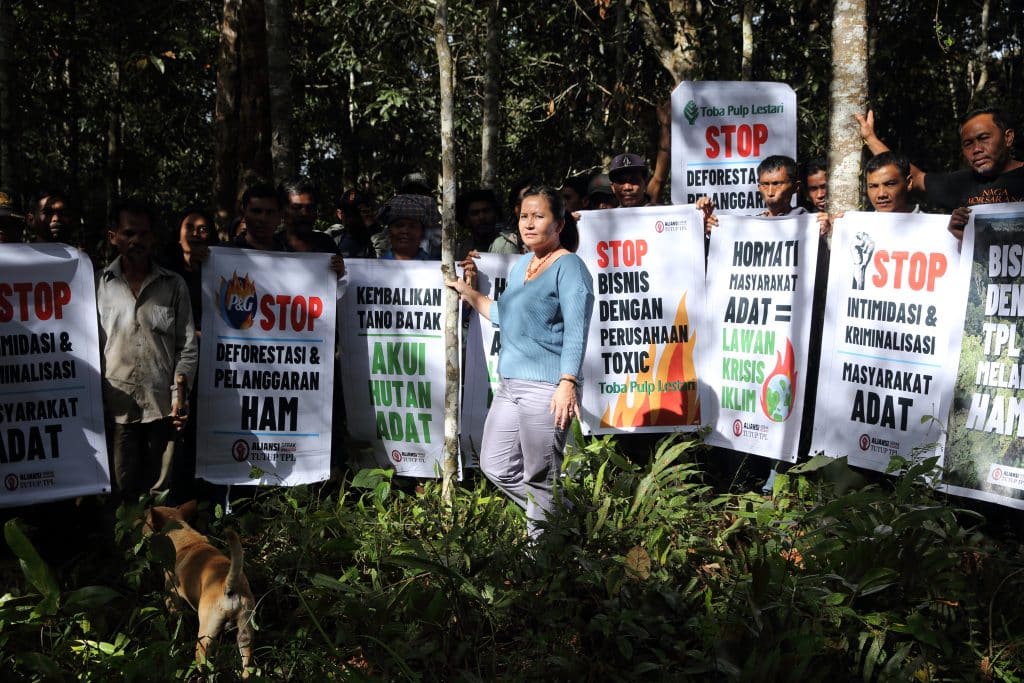
Delima Silalahi, one of our CRE community collaborators, in Indonesia. Credit Edward Tigor / Goldman Environmental Prize
We know that winter is coming, with cold winds of injustice and inequality whooshing over our heads. But sheltered by the quilt we are weaving together, we feel a sense of hope and safety in our plans for this new phase of the CRE pilot.