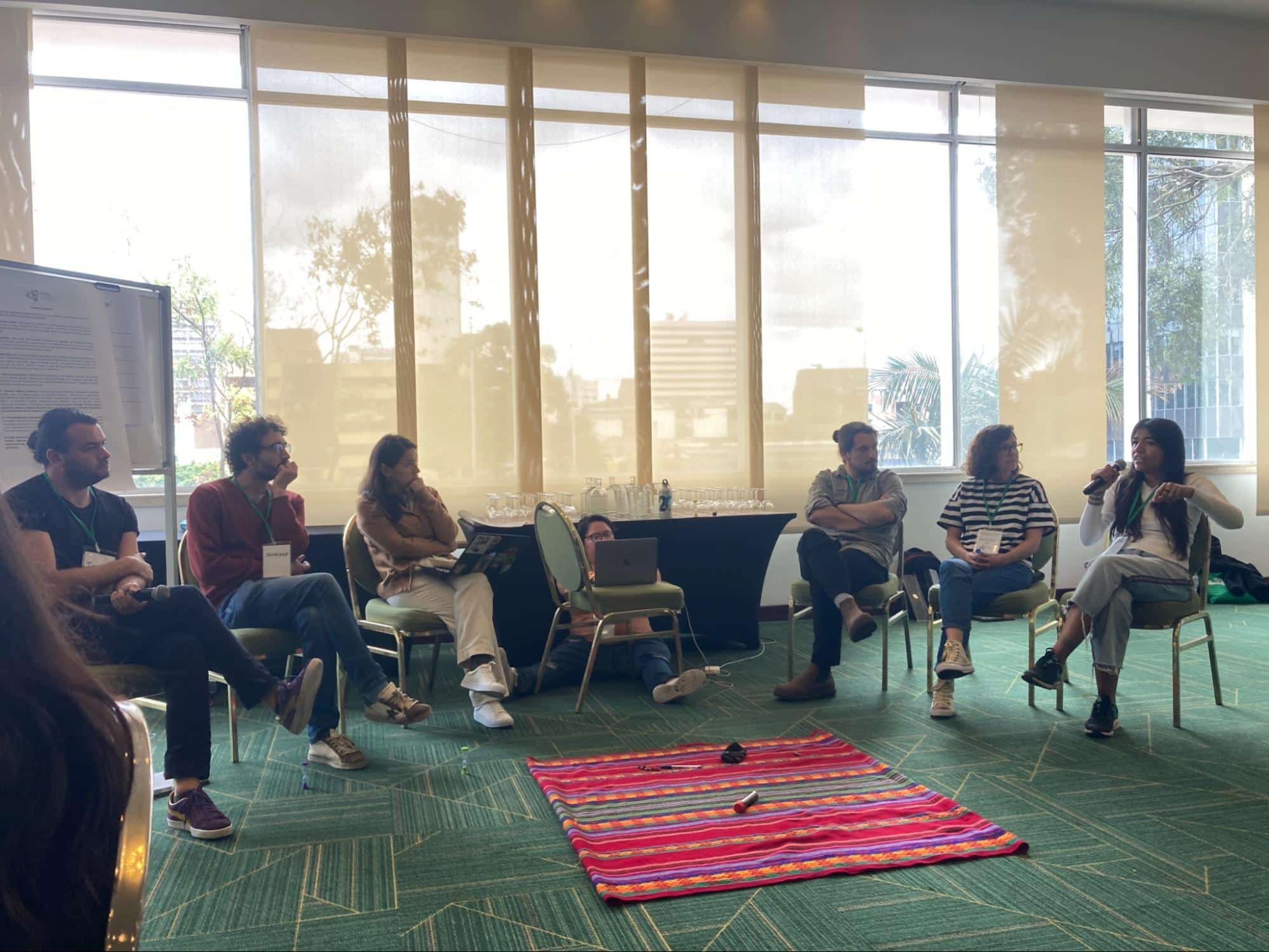
On June 17-19, the Regional Working Group for a Just Energy Transition (GRETJ) organized its second in-person gathering in Bogotá, Colombia. Over 50 representatives of civil society organizations and grassroots communities participated in the meeting, to share their experiences, strategize together, and identify next steps.
The Coalition – with several of our members and allies from the region – has been part of the Working Group since its creation, supporting the work in the thematic committees on gender, community engagement, minerals, advocacy, alternatives and campaigning.

The gathering in Bogotá was a key opportunity to strengthen the linkages among the different members, to revise together the workplans of the different thematic committees, and to identify possible strategies and the synergies we need to move our collective work forward. We identified as a key priority the need to build deeper relationships with local communities, promoting an energy transition that truly meets their demands and that support their proposed alternative solutions. To be just, the energy transition needs to respect the planet, the people, and their ways of life, from an inclusive and feminist perspective that challenges the mainstream extractivists model.
The group also noted how, to advance our collective advocacy, it’s key to put forward an alternative narrative. The international financiers and the political elites are increasingly co-opting our language and speaking about “just energy transition” and “climate action”. In response, it is crucial to join forces and put forward a clear articulation of what a truly “just” transition should look like, from the perspectives of grassroots communities who are in the frontline of the climate justice struggles.