

About the project
The Karuma hydropower project is located on the Nile River in Kiryadongo District, Uganda, is one of the largest hydropower dams designed to generate 600 MW of electricity to meet Uganda’s growing energy needs. Construction began in 2013 and was carried out by the Sinohydro Corporation Limited, a Chinese state-owned company. The $1.7 billion project is funded with 85 % from the Export-Import Bank of China and the remaining 15% covered by the Ugandan government.
While the construction of the dam was framed as an economic development and driver of progress, it has caused widespread displacement for the people of Kiryandongo district, unfair compensation for land and property, and loss of livelihoods, particularly for farmers and fishers whose land and river access were lost. Vulnerable groups, including the elderly, women and child-headed households, and the poor or sick, were promised resettlement but remained uncompensated over a decade later. In addition to economic impacts, the project has led to social risks including unsafe working conditions for youth and women, and ongoing legal struggles for justice.

Karuma dam–affected community members meet in their village to discuss the ongoing struggle for justice and fair compensation. Credit: Friends with Environment in Development
About the community-led struggle
“Justice will be when their properties are reviewed and paid for fairly, when their lives are at least equal to, or better than, what they were before the dam came” (Robert Kugonza, Friends with Environment in Development)
Since the inception of the dam in 2013, the people of Kiryandongo district have been at the forefront of resisting its impacts. In collaboration with Friends with Environment in Development (a Ugandan non-profit organization focused on promoting sustainable livelihoods, human rights, and environmental protection in rural communities), the affected communities have mobilized collective action, held workshops to raise awareness, and community meetings to demand justice and recognition.
Together, they developed and submitted two major petitions. One was to the Speaker of Parliament, written with other civil society organizations and community leaders, and another to the President of Uganda, read aloud and signed by the entire community. Both petitions demanded fair compensation, the resettlement of vulnerable families, and accountability for unfulfilled promises. When the letters were unanswered and unfulfilled promises remained, the community filed a legal case seeking justice for unfair compensation and displacement. Almost a decade later, the case remains unresolved, and the case keeps getting postponed.
Despite persistent obstacles such as court delays, failed mediations, and a lack of transparency from project developers and the State, the affected communities have maintained their resistance.
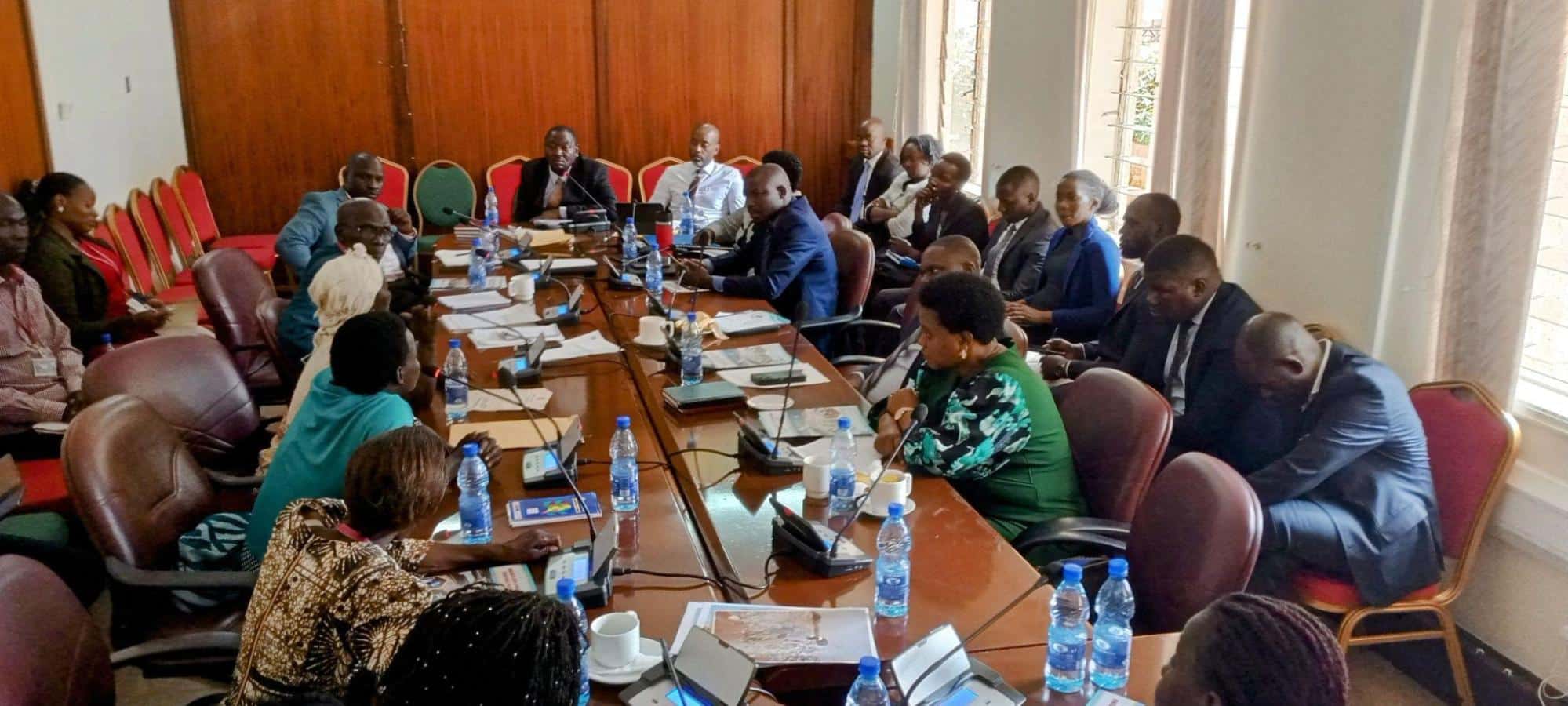
Representatives of the Karuma-affected communities, alongside FED, present their petition to the Speaker of Parliament and meet with the Parliamentary Committee on Environment and Natural Resources in Kampala. Credit: Friends with Environment in Development
Further resources
- CHRD Member: Friends with Environment in Development
- WSJ report exposes serious construction defects and potential corruption in multiple mega infrastructure projects funded and built by China
- Hundreds displaced by Karuma dam project demand fair compensation
- Uganda: Communities appeal to Sinohydro over unresolved compensation and resettlement at Karuma dam