Financing the transition, silencing defenders

Across Asia, the rush towards new energy projects — from renewables to “false solutions” — is increasing risks for communities and defenders who speak out against the harmful impacts of these projects. The report “Financing the Transition, Silencing Defenders“:
- analyses 12 case studies from seven Asian countries, examining reprisals in the context of renewable energy projects, their impacts, and who is behind;
- presents the affected communities’ key concerns;
- highlights the role and responsibilities of development banks, and their (in)action when reprisals occur;
- provides recommendations for development banks on how to safely and meaningfully include communities in the design and implementation of energy transition projects.
“Financing the Transition, Silencing Defenders” was published in June 2026 by the Coalition for Human Rights in Development, together with its members and partners Aksi! for Gender, Social and Ecological Justice, Asia Pacific Network of Environmental Defenders, Darya-e Swat Bachau Tehreek, FORUM-ASIA, GAIA Asia Pacific, International Accountability Project, Jalaur River for the People’s Movement, NGO Forum on ADB, People Ecology Network, and Rivers & Rights.
Across Asia, the rush towards new energy projects — from renewables to “false solutions” — is increasing risks for communities and defenders who speak out against the harmful impacts of these projects. The report “Financing the Transition, Silencing Defenders“:
- analyses 12 case studies from seven Asian countries, examining reprisals in the context of renewable energy projects, their impacts, and who is behind;
- presents the affected communities’ key concerns;
- highlights the role and responsibilities of development banks, and their (in)action when reprisals occur;
- provides recommendations for development banks on how to safely and meaningfully include communities in the design and implementation of energy transition projects.
“Financing the Transition, Silencing Defenders” was published in June 2026 by the Coalition for Human Rights in Development, together with its members and partners Aksi! for Gender, Social and Ecological Justice, Asia Pacific Network of Environmental Defenders, Darya-e Swat Bachau Tehreek, FORUM-ASIA, GAIA Asia Pacific, International Accountability Project, Jalaur River for the People’s Movement, NGO Forum on ADB, People Ecology Network, and Rivers & Rights.
Executive Summary
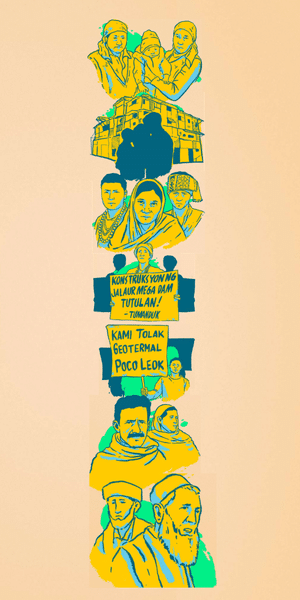
Across Asia, the rush towards renewable energy systems – including the extraction of so-called “critical minerals” and false solutions such as waste-to-energy or large dams – is increasing reprisal risks for communities and human rights defenders (HRDs), particularly affecting Indigenous Peoples and women. Poorly planned energy projects, often imposed without free, prior and informed consent or meaningful consultations, are harming communities instead of meeting their priorities and needs. Those speaking out and raising concerns are facing intimidation, criminalisation, and other forms of reprisals.
The report, Financing the Transition, Silencing Defenders, analyses 12 projects across seven Asian countries, surfacing key trends and violations in the context of just energy transition projects. It examines the different types of reprisals faced by communities and defenders, identifies the main perpetrators, and highlights the role and responsibilities of public development banks financing and promoting these projects.
In the first section, the report presents 12 case studies through a map and brief summaries indicating the financiers, amount of financing, type of project, key concerns raised, and the nature of reprisals experienced by the communities and HRDs.
In the second section, the report analyses key trends emerging from the case studies, with a particular focus on the following questions: what are the most common reprisals, who is at risk, who is responsible for the attacks, what is the role of development banks, and what are the main concerns associated with these harmful projects.
Finally, the report presents a series of recommendations on how development banks can facilitate a fast and just energy transition by ensuring that communities are safely and meaningfully involved in the design, approval and implementation of renewable energy projects. It highlights the importance of conducting due diligence, oversight and continuous monitoring of reprisal risks, civic space restrictions, environmental harm and clients’ operations. Moreover, when reprisals and harm do occur, development banks should be able to suspend projects, provide remedy, ensure accountability and prevent recurrence.
International public finance can help accelerate the energy transition in Asia while supporting equitable and sustainable development. However, for the transition to be not only fast but also fair, it must move away from the current top-down model of development toward an approach grounded in open civic space and safe avenues for communities to raise their voices and assert their priorities without fear of reprisals.
The report shows that the exclusion of communities from these energy projects, alongside threats to their lives and rights, has resulted in additional costs, further delays and a betrayal of public trust. All of this slows down the energy transition, and renewable energy finance risks causing more harm than good.
Key findings and trends

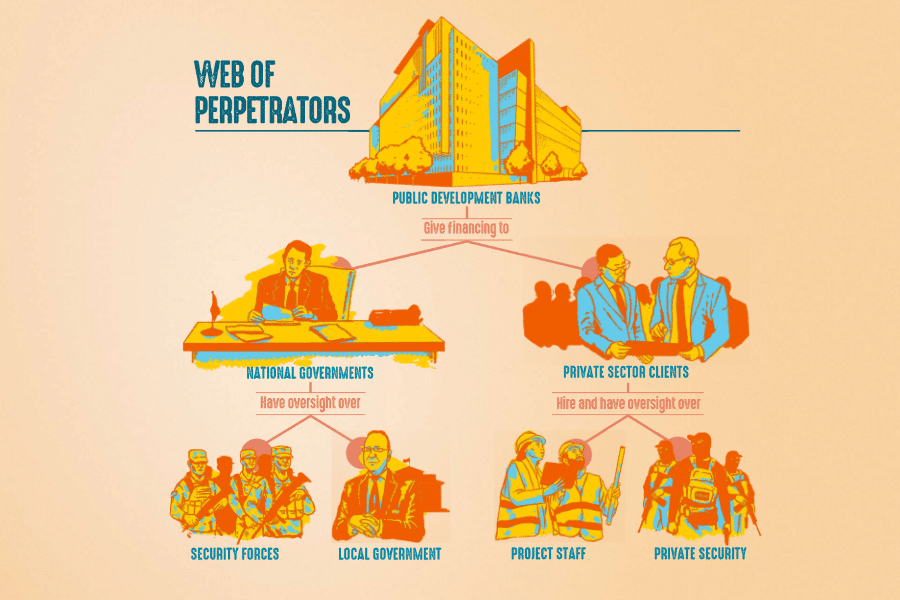
When these communities raise concerns about projects, they are often silenced through SLAPPs (Strategic Lawsuits Against Public Participation), physical attacks, criminalisation, intimidation and discrimination, largely perpetrated by local authorities and security forces. These attacks lie within a broader system of control, whereby governments, security forces, corporations and development banks often collaborate to silence any form of dissent.
In this context, communities and defenders across Asia are mobilizing and deploying a wide range of tactics to resist harmful projects and claim their right to self-determination. Strategies include the creation of committees and groups to mobilize community members; sending petitions, letters and pleas to local authorities and companies; conducting community-led research to highlight gaps in the Banks’ environmental and social assessments; and seek remedy through the Bank’s grievance and accountability mechanisms or national-level legal frameworks.
Why should development banks ensure an open civic space for the energy transition?
- It pays to listen. When impact assessments fail to reflect the risks and concerns identified by communities, projects often need to be redesigned or cancelled, leading to additional delays, costs, and debt burdens for borrower countries;
- Communities and defenders play an crucial role in ensuring transparency, accountability, and ongoing monitoring;
- Saving lives, not just money. Gaining accurate information from communities and defenders on the local context allows development actors to adapt in engaging stakeholders, and to ensure projects respect communities’ agency, incorporate local knowledge, and support a transition grounded in local needs and realities.
- Meaningful participation builds public trust and reduces reputational risk: when public development banks model a transition that is both fair and fast, they can also build broader public support for energy transformation.
Case studies