

By Sukhgerel Dugersuren, Joel de Souza, and Glenda Inés Mangia
Environmental defenders warn ahead of UNCCD’s COP17 in Mongolia that development banks are financing critical mineral projects that accelerate desertification, water depletion and deforestation while claiming to support a just energy transition.

When governments gather in Ulaanbaatar from 17 to 28 August for the 17th Conference of the Parties (COP17) to the UN Convention to Combat Desertification (UNCCD), they will pledge to restore degraded land and strengthen resilience to drought. Yet many of these same governments, as shareholders of public development banks, continue to finance large-scale mining projects that degrade fragile ecosystems, deplete scarce water resources, and accelerate desertification.
That contradiction is already evident in the run-up to the summit. In a communiqué ahead of COP17, Mongolia’s foreign minister highlighted the country’s ambition to combat desertification through artificial intelligence data centres powered by renewable energy. But while presented as part of a green future, data centres and the infrastructure that supports them are driving demand for critical minerals such as copper, lithium and rare earth elements. Their expansion risks intensifying the very mining impacts that contribute to land degradation and water scarcity in arid regions.
The production of one metric ton of lithium, for instance, requires between 1 and 2 million liters of water to produce. Gold and copper mining operations use chemicals for exploration and extraction, which need further water to be diluted; and this water, once contaminated, is then discharged back into the natural world. Over the years, the mining sector has developed standards to address or mitigate these impacts. Way too often, however, companies fail to comply with such benchmarks.
Mongolia, this year’s COP17 host, illustrates this tension well. Nearly 80 per cent of the country’s land is already degraded or affected by desertification, according to the government. Yet, development banks are expanding support for critical mineral mining in the country, while failing to ensure compliance with social and environmental safeguards.
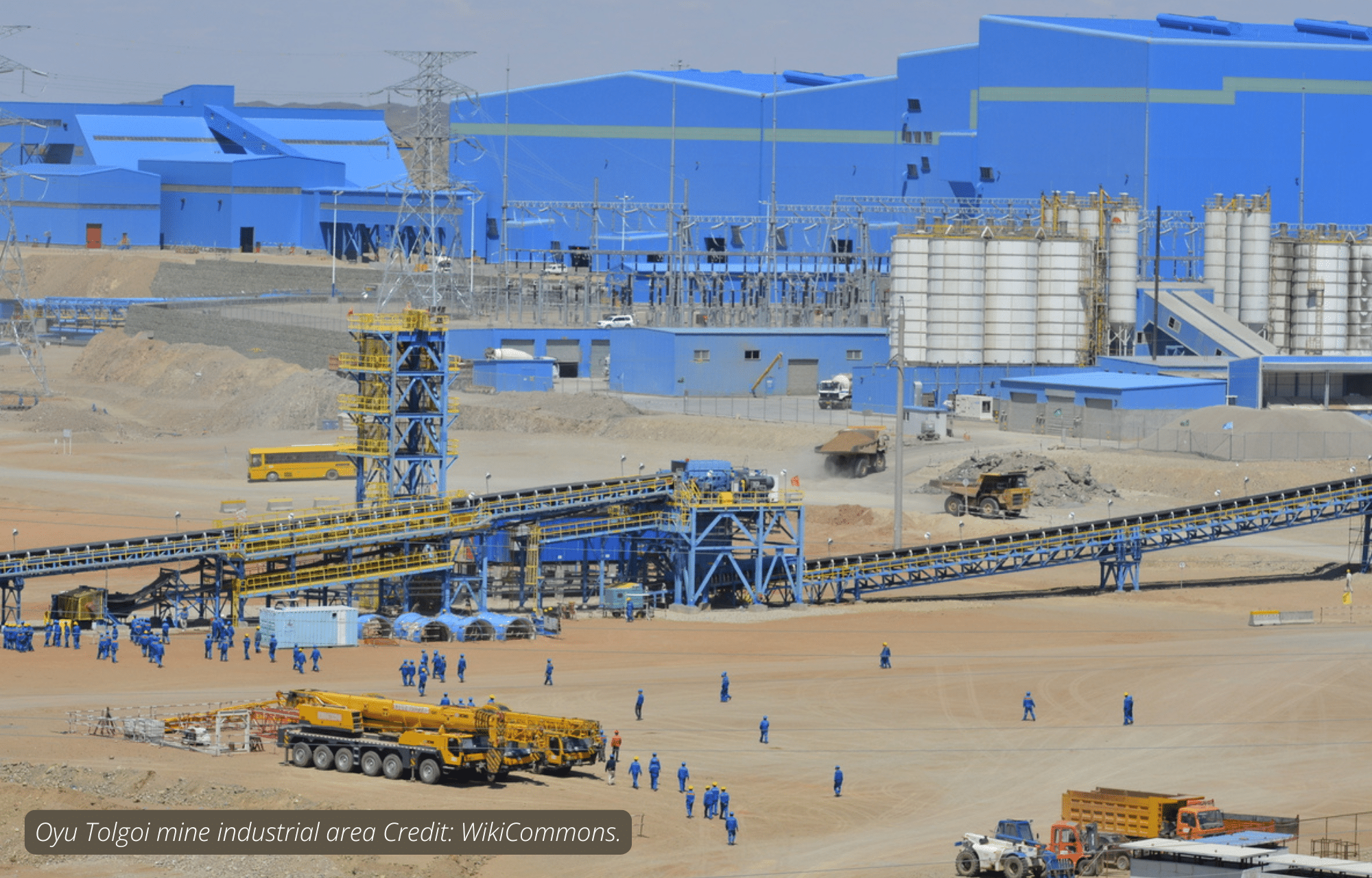
For more than a decade, pastoralist communities and environmental defenders in Mongolia have warned that Rio Tinto’s Oyu Tolgoi copper mine is heavily affecting South Gobi’s scarce water resources. Herders report that their land and wells have become increasingly dry since the mine began operating. Yet, the European Bank for Reconstruction and Development (EBRD) and the International Finance Corporation (IFC) invested a combined US$350 million in the project in 2024.
Development banks are financing desertification
Historically, public development banks have been cautious about investing directly in large-scale mining projects, due to the high social and environmental risks involved. In recent years, however, they have been heavily investing in this sector.
In November 2025, the Asian Development Bank (ADB), after avoiding mining investments for four decades, approved a controversial new Energy Policy that opens the door to financing critical mineral extraction. One of its flagship projects is the Reko Diq mine in Balochistan, Pakistan, which several development banks are funding. The mine, which sits in a highly militarised and conflict-affected region, threatens an already hyper-arid desert ecosystem with further land degradation and desertification.
In May 2026, also the World Bank Group unveiled a new strategy for metals and minerals, pledging to “quintuple support to the sector in the next five years”. Argentina is one of the target countries for this new strategy: since 2024, the World Bank has already committed nearly USD 2 billion in loans and an additional USD 1.9 billion in guarantees to support projects involving reforms and deregulation of the energy and mining sectors, as well as investments in logistical and strategic infrastructure for those sectors. These investments feed into the Incentive Scheme for Major Investments (RIGI), a government program granting extensive fiscal, legal and export benefits to large-scale extractive projects.
The World Bank and IDB Invest also funded the controversial Sal de Vida lithium mine, in a salt flat in the Catamarca province affected by seven other lithium mines. Water, already scarce in this arid territory, is disappearing quickly. As a result of mining activities, the Trapiche River has completely dried up and for local herders finding water and food for their llamas, goats or sheep is becoming a daily challenge.

In Zambia’s Copperbelt, approximately 5,000 people across eight communities surrounding the Nchanga and Konkola copper mines have endured decades of water and soil pollution. These impacts are rarely described as desertification, yet the loss of fertile soil, vegetation, water and agricultural livelihoods feeds directly into the wider degradation of productive land.
Zambia’s own commitments under the UNCCD set a target to rehabilitate all land degraded by mining and quarrying by 2030, in part to mitigate current desertification trends. Nevertheless, the World Bank’s US$65.6 million Zambia Mining and Environmental Remediation and Improvement Project, which explicitly targeted polluted mining areas in Chingola, brought no direct remediation to these eight communities.
Mining-affected communities call for stronger safeguards
From Mongolia to Pakistan, to Zambia and Argentina, local communities and civil society groups are sounding the alarm around the irreversible harms of this new wave of extractivist projects undertaken in the name of the “just” energy transition.
According to the UN, “up to 40% of the world’s land is degraded, affecting more than 3 billion people worldwide and with dire consequences for our climate, wildlife and livelihoods.” Drought, land degradation and desertification are already costing the global community an estimated US$ 878 billion every year. Yet, the concerns of mining-affected communities and environmental activists are either being ignored or used as a pretext to stigmatise them as “anti-development”, criminalise them and attack them.
The UNCCD promises, “we have the power to bring land back to life”. But to do so, governments and public development banks need to go beyond slogans and explicitly recognise the impacts that productive sectors like large-scale mining have on land degradation, water resources and the ecological integrity of ecosystems.
Ana Pandigracio, Biodiversity Director at Fundación Ambiente y Recursos Naturales (FARN), a former elected member of the UNCCD CSO Panel for Latin America and the Caribbean (2022–2024) and former elected IUCN Councillor (2021–2025), recommends that, to mitigate these impacts, they commit to not supporting further mining expansion in arid zones and require existing projects to comply with robust environmental safeguards and the highest applicable standards, including those set out by the International Union for Conservation of Nature (IUCN).
As a group of CSOs recommended during a previous UNCCD conference, governments and development banks should also support community-led initiatives, particularly those led by women, youth, pastoralists and Indigenous Peoples, and integrate their knowledge into drought management strategies.
Economic development should not come at the cost of greater land degradation, worsening water scarcity or mounting social and environmental harms for current and future generations. Instead, public development banks need to invest in community-led solutions that protect, restore and sustainably manage ecosystems while respecting the rights of the communities that depend on them.

XXXXXX
XXXXX
About the authors
Sukhgerel Dugersuren is a women human rights defender and executive director of Oyu Tolgoi Watch, Mongolia. She has a long history of exposing human rights abuses and environmental degradation linked to mining, energy and infrastructure projects.
Joel de Souza is deputy executive director of CAUCE–Cultura Ambiental, Causa Ecologista Foundation in Argentina where he conducts research and oversees initiatives to monitor and demand accountability for harmful development projects.
Glenda Inés Mangia is an environmental activist, nutritionist, and Coordinator of the Agroecology and Food Department at CAUCE–Cultura Ambiental, Causa Ecologista Foundation in Argentina. She was awarded a fellowship in 2021 by JWH Initiative and Both ENDS for her work as a young environmental leader.