

This blog was written by Charlize Tomaselli, Research and Learning Facilitator at the Coalition for Human Rights in Development, as part of a series that will look at just energy transition projects, their impacts, and the demands of affected communities in Africa and beyond.
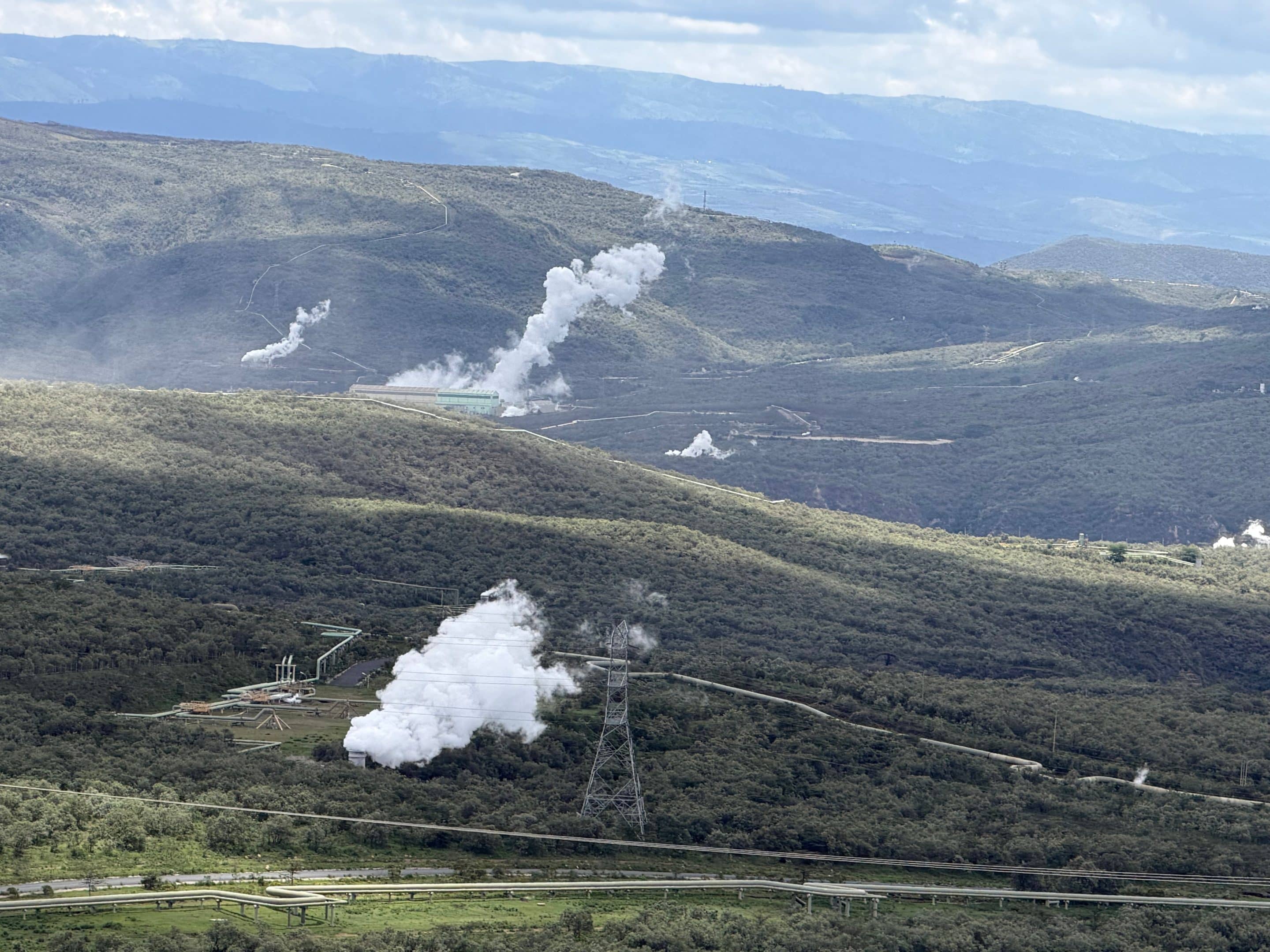
Credit: Steam from Menengai geothermal fields. Charlize Tomaselli/ CHRD
In Kenya, steam rising from the Rift Valley has become a symbol of national ambition, energy security, and low-carbon development. The country’s geothermal expansion is often praised by international financiers such as the African Development Bank (AfDB) as a model for Africa’s clean energy future. Geothermal energy provides stable baseload electricity (unlike solar and wind, which fluctuate with weather conditions), helps deliver industrial growth, and reduces greenhouse gas emissions and dependence on fossil fuels. Yet, on the ground, the story is far more complicated.
Local communities living near the Menengai geothermal fields, for instance, for years have been raising concerns about flawed consultations, poor environmental assessments, and severe air and noise pollution. The AfDB, instead, hails this project as one of its success stories.
The AfDB, one of the most important financial and political backers of geothermal expansion in Kenya, started investing in the Menengai field in 2011. After supporting the exploration phase led by the state-owned Geothermal Development Company (GDC), the Bank recently approved loans for two geothermal plants in the area, managed by the private power companies OrPower Twenty-Two Limited (OTTL) and Globeleq.
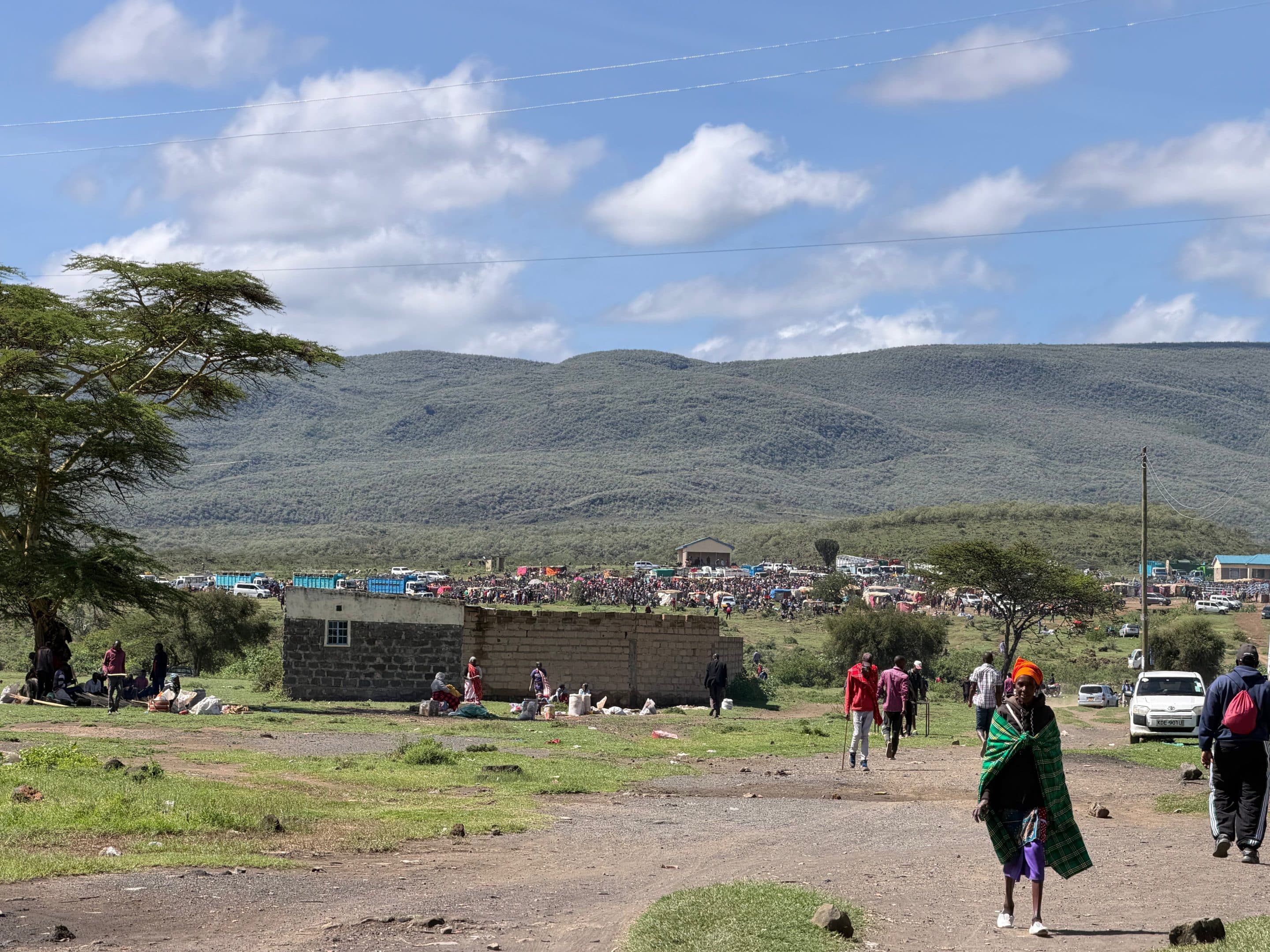
Despite the Bank’s commitment to stakeholder engagement, residents of Menengai have described consultation processes that feel distant, inaccessible, and heavily managed. Community members recount learning about projects not through transparent engagement, but through the arrival of surveyors and valuation teams on their land. Meetings have often been held far from affected communities, requiring transport costs many residents cannot easily afford. Others describe participation processes shaped through local elites, selective invitations, or forms of pressure that blur the line between consultation and consent.

Credit: Charlize Tomaselli / CHRD
In Olkaria, where the AfDB supported the construction of multiple transmission lines, geothermal expansion has unfolded alongside conservation regimes within Hell’s Gate National Park, producing long-standing conflicts around land access, displacement, and Maasai livelihoods. Communities describe conservation and renewable energy development as working together to narrow access to land and resources. They have not been recognised as landowners, and they are often treated as problems to be removed rather than stakeholders with legitimate claims.
In Mount Suswa, geothermal expansion remains in its earlier stages. In April 2026 the government granted GDC approval for the feasibility study, but the AfDB has already expressed interest in supporting the project. Local residents, who have closely followed the experiences of communities in Olkaria and Menengai, fear the same patterns – land dispossession, water pollution, threats to cultural heritage, and exclusion from decision-making – will repeat themselves. When communities asked GDC officials what was happening, they reportedly responded, “we are the government and we can do whatever we want”. For many residents, this reflects a broader reality in which accountability, due diligence, and rights are treated as secondary concerns.
The issue is not simply whether meetings occurred. It is whether communities had any meaningful power within them.
This tension sits at the heart of many large-scale renewable energy projects across Africa. Development banks increasingly emphasise the importance of stakeholder engagement, safeguard frameworks, and high environmental and social standards. Yet, formal compliance with consultation procedures does not necessarily translate into democratic participation in practice.
Credit: Charlize Tomaselli / CHRD.
The AfDB’s role is especially significant because development finance institutions are not passive lenders. Their financing helps legitimise projects politically and internationally, and attracts private investors. The Menengai geothermal field, for instance, illustrates how development finance often operates through a layered model of public risk and private profit.
The AfDB mobilized a total of $145 million for the state-owned company GDC, to undertake the expensive and risky process of drilling wells and developing steam infrastructure. Once the steam resource had been secured, private independent power producers were brought in to construct and operate individual power plants. This model is frequently praised as innovative because it reduces the financial risks associated with geothermal exploration, a sector historically considered too uncertain for many private investors. But it also raises broader political questions about who bears the risk, who benefits from public finance, and how communities are positioned within these development processes.
Additionally, when a project receives AfDB support, it carries the institutional weight of a regional development bank presenting the project as aligned with sustainable development and climate goals. This creates an uncomfortable contradiction increasingly visible across the energy transition.
Renewable energy projects are often assumed to be inherently just because they are low carbon. But that does not necessarily translate into improved or transformative lives for the communities living alongside these projects. The same political economy that has long shaped fossil fuel extraction can also alienate and disempower communities, leaving them excluded from the benefits of the energy produced from the land on which they live.
The AfDB is not solely responsible for these dynamics. The Kenyan government, private developers, conservation authorities, and international investors all play important roles. But because the Bank positions itself as a development institution committed to inclusive growth and sustainable development, it carries particular responsibility for how these projects unfold socially and politically.
The challenge for institutions like the AfDB is not merely to finance renewable energy, but to confront the deeper political questions attached to it. Whose development is being prioritised? Who defines what counts as public interest? What forms of participation are considered legitimate? And can a project truly be called part of a “just transition” if affected communities feel they are being managed rather than heard?
These questions are unlikely to disappear as geothermal expansion continues across Kenya and elsewhere on the continent. If anything, they will become more urgent. Development banks are expected to play a growing role in financing Africa’s energy systems over the coming decades. Kenya’s geothermal sector therefore offers an important warning as much as a success story. The future of renewable energy in Africa will not be judged only by megawatts added to the grid or tonnes of carbon avoided. It will also be judged by whether communities living closest to these projects are treated as participants with power, or merely as obstacles to be managed in the pursuit of green growth.