

CRE Updates
- CRE Evaluation: As the CRE pilot started transitioning into its second phase, we commissioned an external evaluation to document the key achievements of the first phase, assess its strengths and gaps, and provide recommendations on next steps and ways forward. At least 120 individuals participated in the evaluation. You can now check the results here.
- A new cohort of grantees: in June, the CRE launched a call for new proposals, with a focus on struggles in the context of just energy transition. We awarded a total of 12 grants to communities in 12 different countries (Brazil, Chile, Ecuador, Dominican Republic, Kenya, Zimbabwe, Tanzania, Madagascar, Georgia, Indonesia, Papua New Guinea and Pakistan). Beyond these grants, we’ll collaborate with other communities by facilitating linkages, sharing resources, and providing capacity-building opportunities.
- Our new CRE collaborators map: in this interactive map, you can now see some short profiles of the first cohort of CRE collaborators. In the coming months, we’ll continue updating the map with the rest of the CRE collaborators and adding additional info to their profiles. For security reasons, many collaborators who prefer to remain anonymous will not appear in the map. If you collaborated with the CRE and you’d like to spotlight your struggle on the map, get in touch and write to us at: cre@rightsindevelopment.org.

Updates from our CRE partners
With the support of the CRE, communities around the world are holding development banks and international investors accountable, mobilizing to advance their rights, and building solidarity with other communities facing similar challenges. Below, we highlight some of their powerful struggles.
Africa
In Lesotho, communities impacted by the water project Lesotho Highlands Water Project – with the support of Seinoli Legal Centre and Accountability Counsel (AC) – have filed a complaint to the African Development Bank’s independent recourse mechanism. You can read more about the complaint in AC’s website and in this article by the Guardian, and check out this powerful documentary and this ten-year impact report to find out how our CRE partner Seinoli Legal Centre has been successfully supporting communities affected by development projects in the past decade.
- Justice for the land can never be achieved without justice for women. In this blog, feminist leader and community activist Penina Nailantei (Kenya) shares her reflections after attending an eco-feminist gathering in South Africa, organized by our partner Shine Collab.
- In September 2025, our CRE partner Pilex Centre for Civic Education Initiative filed a court case against Indorama Eleme Petrochemicals Limited (IEPL), a subsidiary of Indorama Corporation, which operates a fertilizer factory in Rivers State, Nigeria. The company – which is also facing other judicial cases – is accused of unfair treatment of workers and exposing them to hazardous chemicals without adequate safety measures.
- In Isiolo county, Kenya, Indigenous communities are speaking out against the human rights abuses faced in the context of the conservancy areas managed by Northern Rangelands Trust (NRT) and taking legal actions to defend their rights. Our local CRE partners have reported systematic harassment by security forces, restrictions on land access, and even abductions and extrajudicial killings. A recent report by Avocats Sans Frontières & FIDH documents how NRT’s actions have triggered a human rights crisis among Indigenous people.

Latin America
To support our CRE partners in LAC, in the past few months we have organized a series of learning labs, including:
- A four-part learning circle on how to strengthen community narratives in the face of harmful development projects, co-organized with Sustentarse (Chile), Instituto Maíra (Brazil) and Cohesión Comunitaria e Innovación Social AC (Mexico). It included a session on power mapping and transformative narratives led by feminist organization JASS (check out their Just Power Guide).
- A five-part learning lab on protection for human rights defenders, on how to prevent and mitigate reprisal risks, co-organized with Protection International, Access Now, Front Line Defenders and IM-Defensoras.
- A three-part webinar on Strategies for Legal Defense. You can now see the recordings here and a blog by our intern Emma Camarlinghi, who reflected the power of collective spaces for sharing knowledge and building solidarity. The webinar also featured the testimony of Mari Luz Canaquiri Murayari of the Federation of Kukama Indigenous Women in Peru, who led a successful legal battle to protect the Marañón River in the Peruvian Amazon and grant the river legal personhood.
- In October, the CRE – together with FIDH, Oxfam, PODER, Source International, FAIME, and Corporación Ambiental Terrae – will also organize a two-part webinar on “Challenges and possibilities for documenting harmful human rights impacts” (sign up here).
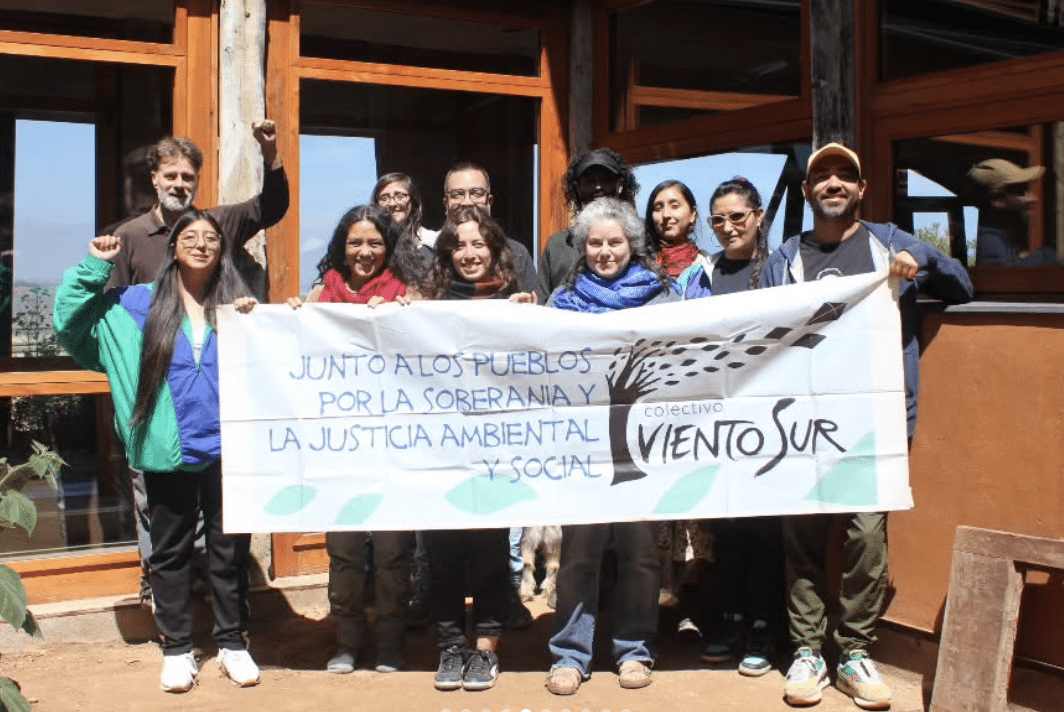
Colectivo Viento Sur, Chile. Photo credit: Colectivo VientoSur
- In November 2025, several CRE partners will be attending the COP30 in Belém (Brazil) to demand a truly just energy transition, that takes community rights and participation seriously, rather than reinforcing the same development models that caused the crisis. Ahead of the COP, we will also join the Mesoamerican Caravan for Climate and Life. To learn more about our collective demands, check out the blog “The Planet is Burning and Communities Worldwide Are Calling for Justice”, by the CRE LAC Regional Facilitator Claudia Romero.
- The Uruguayan movement “Paysandú por un Uruguay Soberano” has gathered over 10,000 signatures to enable a popular referendum to prevent HIF Global from establishing green hydrogen plants in the Paysandú department.
- In November 2024, Ecuador’s Constitutional Court recognized the modern slavery practices of Furukawa. For over 60 years, the Japanese company subjected Afro-Ecuadorian workers to forced labour and other grave human rights abuses in its abaca (Manila hemp) farms. Our partner Centro de Derechos Económicos y Sociales (CDES) is now calling for the enforcement of the ruling, as the Court ordered Furukawa to pay more than $41 million to the over 300 victims, a public apology and collective reparation measures. In October, CDES will also release the documentary “Las cadenas del abacá: esclavitud contemporánea en Ecuador” (trailer here).
- In September 2025, Asamblea PUCARA, Alliance Humedales Andinos and FARN organized the festival “Ambiente y Primavera”. Communities, CSOs, academics, activists and artists came together to exchange experiences and raise awareness about their struggles to protect water, territories and rights. The festival focused particularly on the harmful impacts of lithium extraction, and was held in parallel to the closed-doors “International Lithium Seminar”.

Asia
In July 2025, Indonesian communities and CSOs (Trend Asia, Apel Green Aceh, LBH Pers Padang, BankTrack, and Ekō) filed formal complaints against four major Australian and Japanese banks for enabling the harmful activities of Perusahaan Listrik Negara (PLN) — Indonesia’s state-owned power utility. The banks (ANZ, SMBC, Mizuho and MUFG) are accused of failing to conduct adequate human rights due diligence, thereby contributing to over 6,720 premature deaths annually, severe air pollution, and violations of the rights to life, health, and a clean environment. Read more.
- In August, the CRE joined the Indigenous Peoples Human Rights Defenders (IPHRD) Network regional exchange in Baguio, Philippines, where communities from Thailand, Myanmar, Nepal, India, Philippines, Cambodia, Malaysia, and Indonesia shared their stories and experiences. As part of the exchange, participants also organized a solidarity visit to Itogon, Baguio, where local Indigenous communities are resisting large-scale mining.
- For over two decades, palm oil company PT. Hardaya Inti Plantations in Indonesia’s Buol District has seized thousands of hectares of land from indigenous people in the area and committed serious rights violations. In response, Forum Petani Plasma Buol (FPPB) has been mobilizing local farmers, raising awareness of the project’s impacts, building alliances at the local and international level, and demanding justice. Read more in this statement. In September, FPPB joined the UN Business & Human Rights Forum Asia-Pacific and joined two sessions:
– “A Rights-Holder Led Approach to Corporate Accountability: Lessons from grassroots movements in India and Indonesia”, together with our CRE partner from the Anti POSCO and Anti Jindal People’s Movement (India);
– “Regional Leadership in Action: NAPs as Pathway for Stronger Standards”, where the FPPB representative highlighted the lack of consultation on the National Action Plans (NAPs) and how the collusion between business and governments has violated the rights of farmers and peasants.
CRE collaborator spotlight: Nepal Majhi Women Upliftment Association
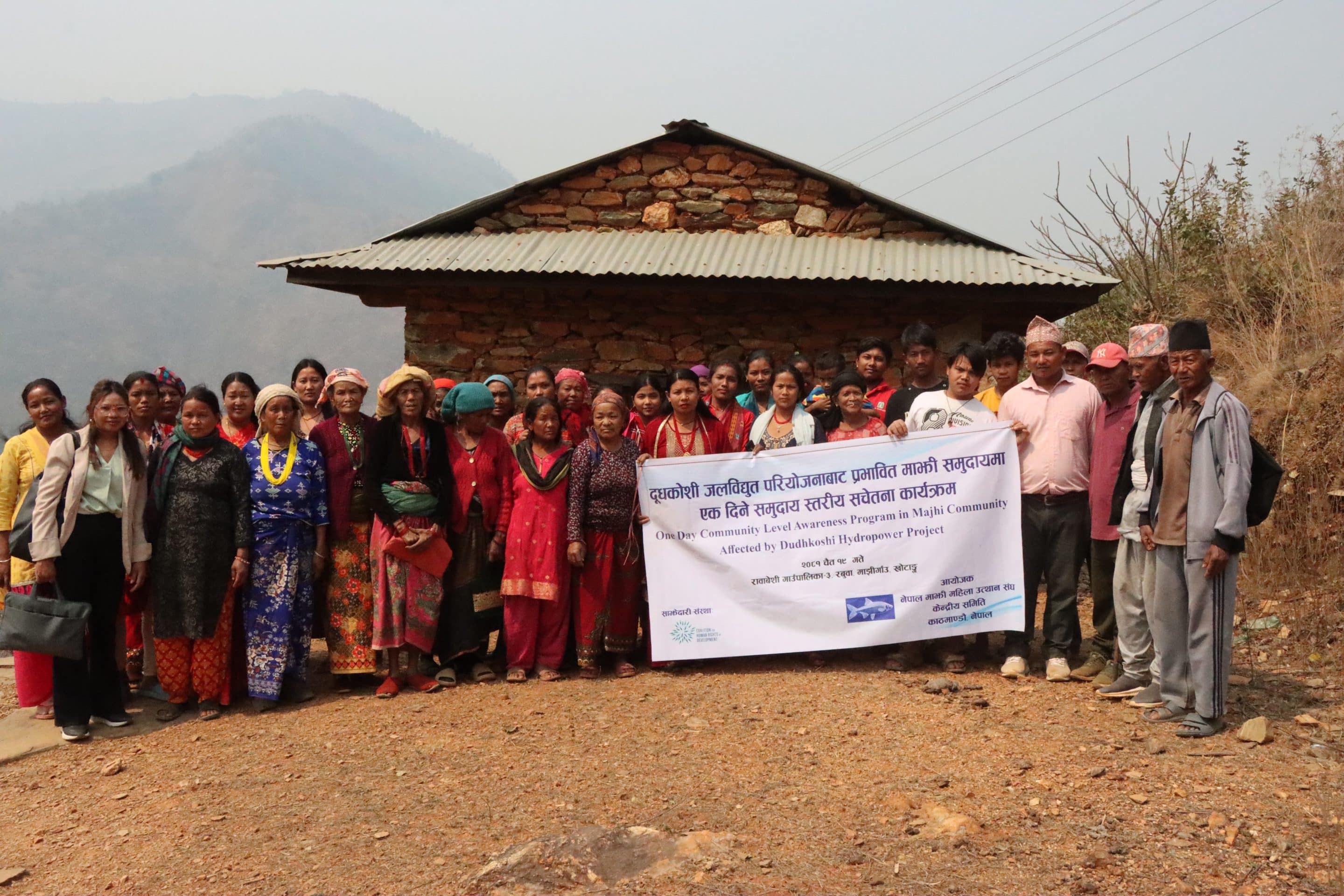
Known as the “river people,” the Indigenous Majhi community has lived for centuries along the banks of Koshi and other rivers of Nepal. From birth to death, they maintain a deep and sacred relationship with the rivers, which is intricately woven into their culture, language, religion, traditions, and practices. In this blog, our CRE collaborators Rita Majhi (Nepal Majhi Women Upliftment Association) and Anusha Shrestha (Community Empowerment and Social Justice Network, CEMSOJ) share about the challenges they’re facing in the context of large hydroelectric projects, and what they’re doing to defend their rights and protect their land.
Reading list: reports, articles and toolkits
- GeoComunes, together with various organizations in Mexico and Latin America, launched a geovisualizer to document the expansion of the green hydrogen industry in Latin America, as well as other associated projects such as ammonia plants. Check out the geovisualizer here.
- “Chinese investment in Rempang – and respect for indigenous rights” by Nukila Evanty (Indonesia), Chairperson of Indigenous Peoples’ Initiatives and Chairperson of the Civil Society Coalition against Organized Crimes. You can also check out an overview of Nukila’s intervention at the ASEAN Forum here.
- “From Colonial Exploitation to Climate Vulnerability: A Legacy of Injustice for Marginalized Communities – Non-Economic Loss and Damage in Asia and the Pacific” (Manushya Foundation)
- “Accelerated demand: Human rights in Eastern Europe and Central Asia’s transition mineral boom – 2025” (Business & Human Rights Resource Centre)
- “Clean Cars, Dirty Nickel: Mapping the Indonesia–China–Germany nickel supply chain for EV batteries” (by Rosa-Luxemburg-Stiftung and Indonesian CSO AEER, with support from PowerShift)
- Users’ Guide to bank human rights complaint channels (Banktrack)
