


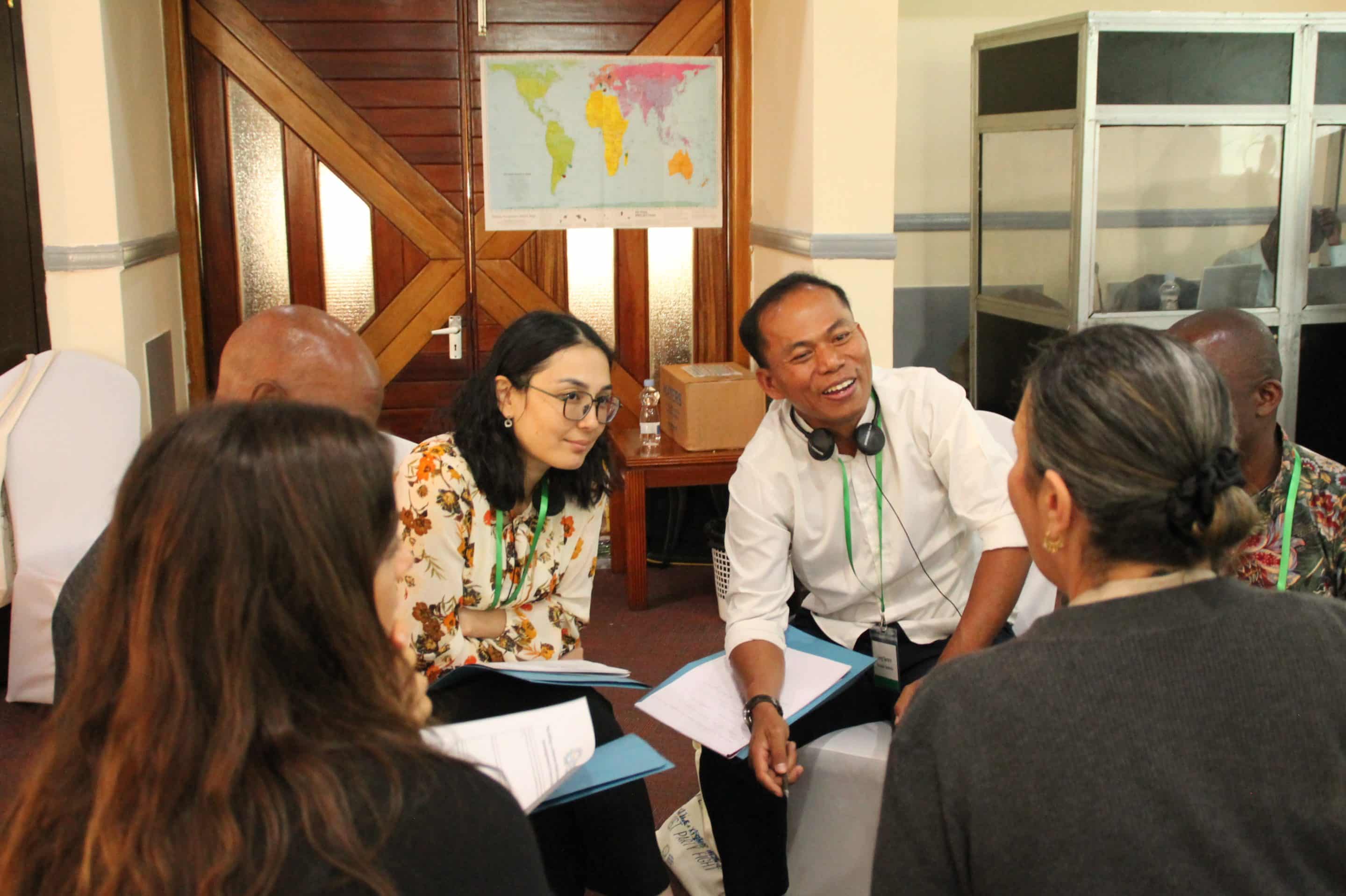
From July 8 to 11, the Coalition for Human Rights in Development brought together 70 representatives of grassroots groups, Indigenous Peoples’ organisations, social movements, and civil society organizations from 40 countries for a four-day members’ gathering in Nairobi, Kenya.
With renewed energy and clarity, we reaffirmed our shared commitment to confront the growing threats to civic space, the deepening funding crises, and the injustices faced by Indigenous Peoples, women, and communities in the Global South affected by harmful development projects.
Together, we will continue to fight for a vision of development that is truly led by and for communities, rooted in their priorities and needs.
“We need idealism to imagine another reality, and realism to change this one. And within the Coalition, it’s possible to walk and learn alongside peers who have found this balance.”
(Suhayla Bazbaz, Cohesión Comunitaria e Innovación Social | Mexico)
Under the slogan of “Lucha, Fiesta, Siesta” (Fight, Celebrate, and Rest), the Members Gathering provided a safe and inclusive space to:
- Shape the 2026-2030 strategy, through a participatory and horizontal approach (Coalition members led the co-creation of the agenda, facilitated the various sessions, and documented key outcomes)
- Celebrate our 10-year anniversary, reflecting on our collective achievements so far;
- Nurture collective care and solidarity.

Shaping the 2026-2030 strategy
Our collective process to share the 2026-2030 strategy began over a year ago. From March to July 2024, the Secretariat and Steering Committee facilitated a series of one-on-one conversations, group discussions and surveys with about 80 members, partners, and advocacy targets.
During the consultation process, members and partners – directly and indirectly – raised some key strategic questions:
- How do we want to work together on our core thematic priorities?
- How can we more effectively influence the broader political economy of development?
- And how can we foster greater ownership and deeper engagement in our collective work?
The Members Gathering offered a space to begin answering these questions together. Through a series of 14 thematic strategy labs and 4 collective alignment spaces, we explored points of convergence and divergence, helping us identify the most constructive paths forward.
You can read a recap of the consultation results in two documents:
- a 2-page infographic on the main priorities going forward (divided under thematic issues, advocacy targets/spaces, and ways to improve our collective work).
- a 30-page summary, which includes: key priorities and how to move forward; key trends; and a reflection on key strengths and weaknesses of the Coalition.
Key themes, highlights and strategic directions
1. Communities and Indigenous Peoples at the center
To strengthen our work on community-led development, we should:
- develop an inclusive framework to clarify our shared understanding of the concept.
- map existing efforts to better link members and partners with available resources and – through the Community Resource Exchange – continue fostering collaboration and solidarity among communities
- center community leadership and knowledge, with a particular focus on Indigenous Peoples and women, ensuring their representation in decision-making and advocacy processes.
“We have wounds that come from colonization, that make us live with grief and loss most of the time. But we can turn to ancestral teachings to defend our right to feel joy and organize rage.”
(Jessica Holles, Instituto Maira | Brazil)

3. Global power structures and advocacy strategies
Our members agree that we should continue to focus primarily on public development banks. At the same time, they recognize that banks often obscure their role through the use of financial intermediaries, technical assistance, private sector investments, and other financing modalities. Therefore, it is important to:
- Broaden our advocacy to address the wider development finance ecosystem, taking into account the complex web of powerful actors involved (e.g.: linking with allies working on corporate accountability, supporting national advocacy efforts led by members and partners, etc.)
- Explore advocacy strategies to influence development banks from the outside (e.g.: strategic litigation in countries where projects are implemented or where development banks are registered, and by engaging intergovernmental human rights mechanisms and committees)
- Learn more about and start exploring norm-setting spaces (like the G20 and the climate COPs)
“We have been seeing how development banks have become more powerful and deceptively using our language with governments, we want to reclaim again our own narrative and challenge the role of development banks in these spaces.”
(Jaybee Garganera, ATM | Philippines)

5. A renewed sense of belonging
“In the midst of so many wars globally, with so many deaths and misery, it’s very important to get together, to debate, to reflect, to hug each other, to support each other, to come together to see what are our prospects for the future and how we can build a different world.”
(Camilo Bermúdez, COPINH | Honduras)
The Members’ Gathering was also a key opportunity for the participants to better understand how the Coalition works, to feel an increased sense of ownership, and collectively explore ways to shape its governance and strategic direction.
Members highlighted the need to:
- Improve information-sharing and coordination across regions;
- Strengthen and adapt existing structures like working groups and regional spaces, to be more agile and responsive;
- Keep fostering collaboration, coordination, co-creation, and reflection spaces;
- Engage in honest conversations about accountability—not only to donors, but to one another;
- Jointly organise and mobilize on communication and narrative strategies, to amplify community perspectives, center their demands in the development agenda, and counter negative narratives.
“Bringing all of us together, the Coalition has created a common ground to fight human rights abuses. The Coalition is the place to be.”
(John Brownell, Green Advocates International | Liberia)

2. Just Energy Transitions
To advance a community-led approach to the just energy transition, we should
- center communities and their priorities, while fostering alternatives and community-led projects for energy access;
- increase coordination at the cross-regional level
- continue to challenge the mainstream narrative around the Just Energy Transition, to address historical injustices, neo-colonialism and false solutions.
“As part of our work on JET, we need to address historical injustices, we need to build a different and post-extractivist model, and we need to start talking about degrowth.”
(Pamela Arancibia, ACUE | Chile)

4. Shrinking civic space and militarization
Civic space restrictions and growing conflicts and militarization are among the major challenges faced by many of our members and partners. As part of the work of the Defenders in Development campaign, members indicated the need to:
- Continue mapping gaps in bank policies and practices, and documenting reprisals
- Create more spaces for solidarity actions
- Focus on countries where civic space is shrinking, while finding safe ways to reach out to communities in closed spaces.
Additionally, we also discussed possible complicity of development banks in militarisation and crimes against humanity. Some Coalition members expressed interest in researching and documenting the links between development finance and human rights violations through militarisation and genocide, and engaging in collective evidence-based advocacy using existing international legal frameworks. Some also expressed interest in leading work around specific conflict areas (for example in Democratic Republic of the Congo, Palestine, or Myanmar) – as well as thinking more at a systems level (for example, linking communities affected by critical minerals exploration with communities affected by the arms industry).
“As a Coalition focused on human rights, we can’t stay silent. (…) In Mongolia, which is a hub for critical minerals, the rush for critical minerals is also linked to war. We have to demand development banks for a responsible exit from such projects.”
(Sukhgerel Dugersuren, OT Watch | Mongolia)
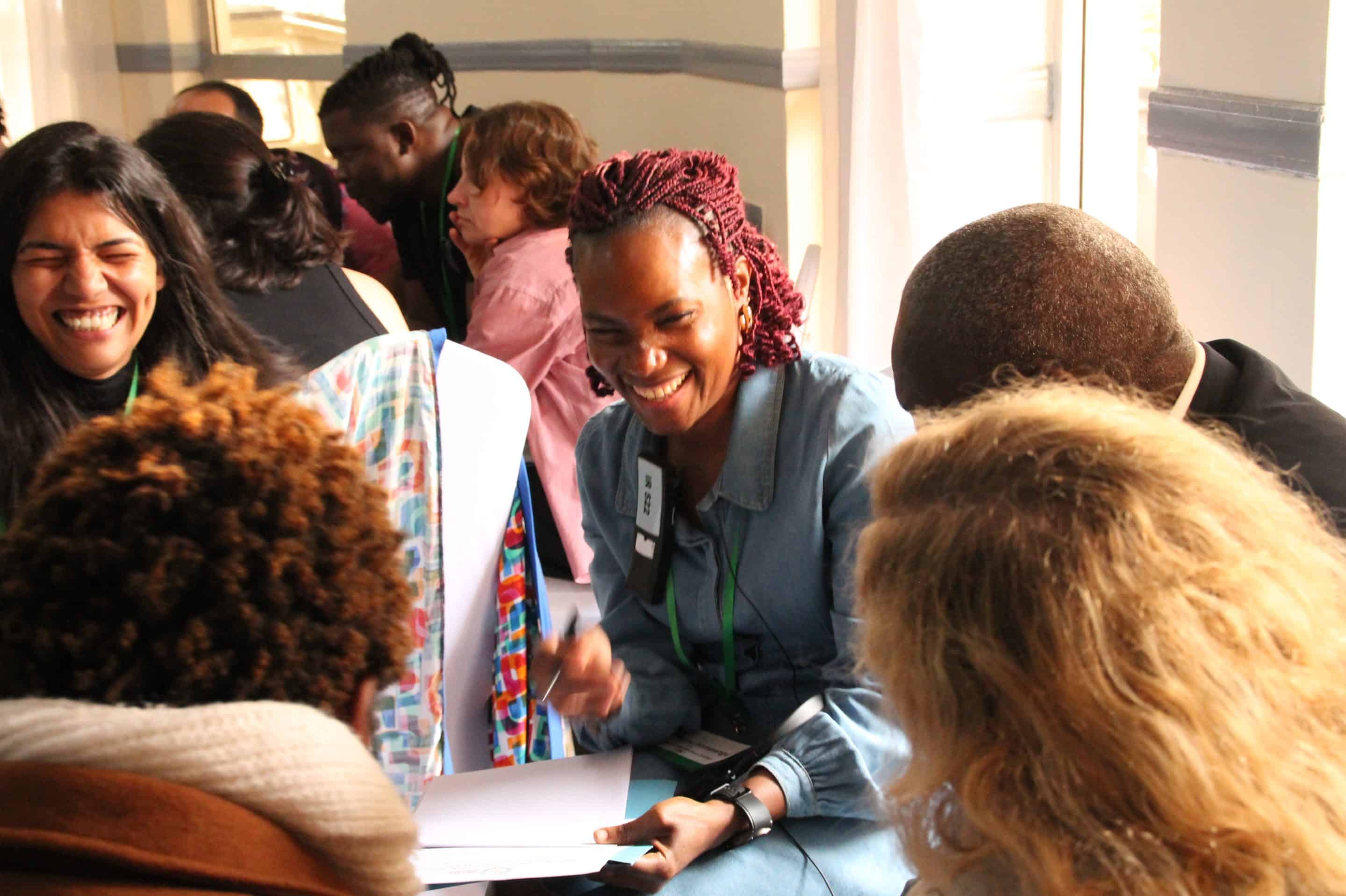
“We need to rethink our way of working, to put the community first in everything we do rather than seeing them as victims or beneficiaries.”
(Phiona Nampungu, Bank Information Center)

Looking Ahead
The strategy will continue to evolve, and the gathering was just one step in the process. In the coming months we’ll consolidate all the inputs and recommendations we received during the meetings, with a goal of having a strategic plan and a collective manifesto in place before the end of the year.
On behalf of the Secretariat team, thank you—for showing up, for your insights, your time, your solidarity, and above all, for the compassion and care you brought into this space.
And a special thanks to those who, although not with us in person, have contributed thoughtfully and patiently throughout the almost two-year-long process of shaping our collective strategy.
“I think the most important thing is to hold on to love—and also to our faith in humanity. That’s what keeps us in solidarity, allows us to trust each other, and helps us keep going together.”
(Ndeye Fatou, LSD | Senegal)
Voices from the Members Gathering