

This blog was written by Charlize Tomaselli, Research and Learning Facilitator at the Coalition for Human Rights in Development

Coalition’s members and partners at the G20 in Johannesburg, November 2025. Credit: CHRD
Johannesburg carried a particular electricity in the final week of November. Delegations arrived from across Africa, and the world. As heads of State and ministries from the world’s largest economies gathered for the first G20 on the African continent, dozens of civil society groups joined the G20 Social Summit. Hundreds of other people, in parallel, joined a counter-gathering that pulsed with movement energy, the “We the 99% People’s Summit“. Into this moment, the Coalition for Human Rights in Development brought twelve partners and members from nine African countries, weaving together perspectives from communities living beside mines, pipelines, megafarms, gas fields, and polluted rivers. For many, this was a first encounter with the G20 and a rare opportunity to see how global policies collide with local realities.
The week did not unfold as a neat sequence of meetings; it felt more like a long, collective breath. People met one another as strangers on Monday and left on Friday with the sense that they shared a struggle, even if their contexts differed. The official G20 Social Summit carried the formal tone expected from a state platform, but there was also a quiet determination among delegates to bring rooted knowledge into a space where technocratic language often dominates. A member from Zambia spoke afterwards about how “enriching and refreshing” the week felt, and another from Senegal stated, that “even within the constraints of a formal event, the Indigenous speakers and grassroots testimonies and contributions during the G20 Social Summit brought authenticity and urgency into the discussion on climate justice and just energy transition”.
Still, others walked away with mixed feelings. Inputs from civil society, which had been carefully crafted and negotiated, appeared in the final declaration in condensed form, creating the sense that the language had been softened to the point of losing its meaning. A participant from Zimbabwe said the official tone “did not reflect the emotion in the room”. Another from Cameroon noted that the absence of interpretation made it difficult for everyone to participate on equal footing. These gaps illuminated the limits of official channels and made the counter Summit feel even more vital.
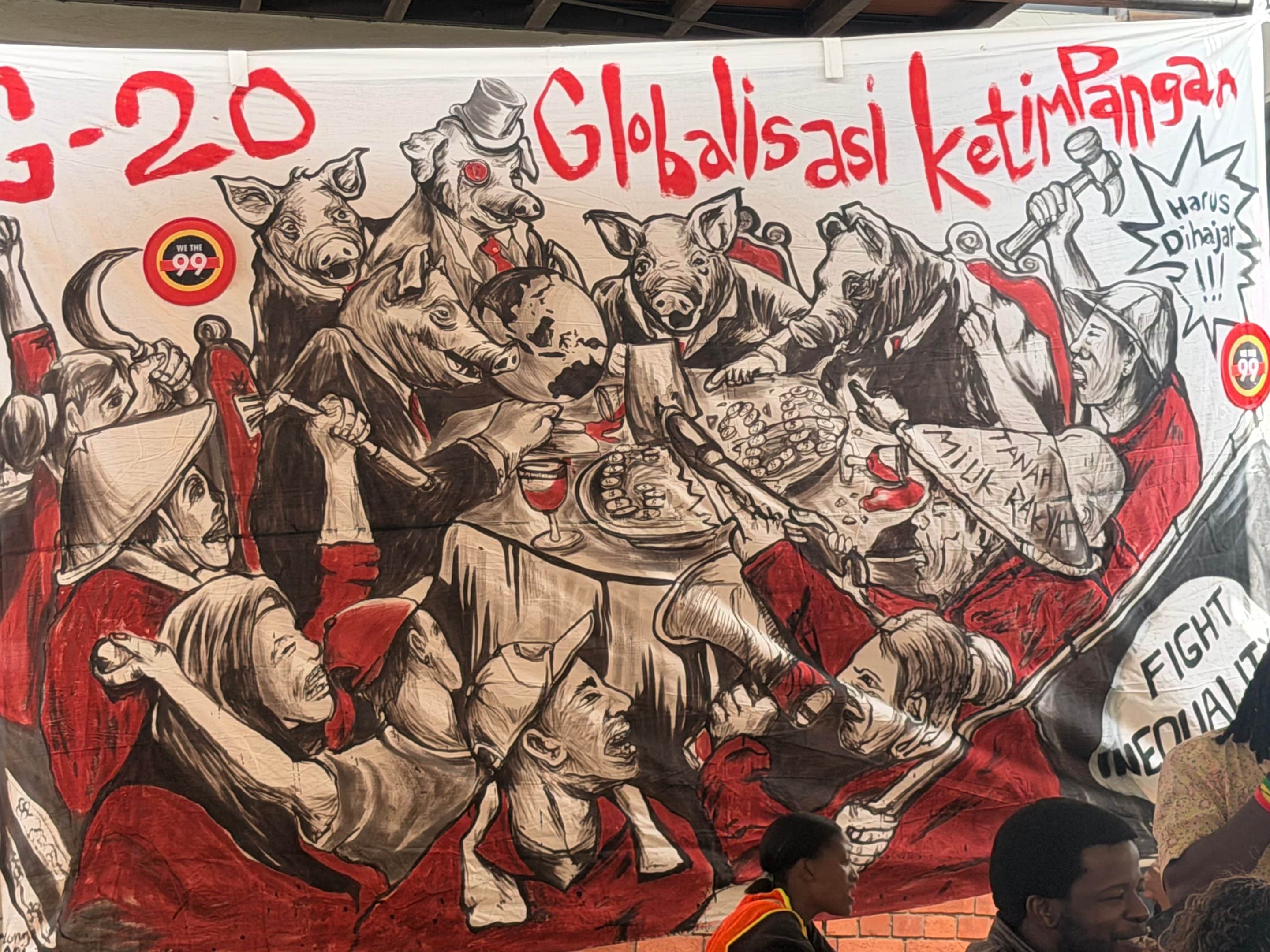
We the 99% People’s Summit took place in a very different spirit. The atmosphere was alive with drums, dance, poetry, and testimonies from across the continent. There was no attempt to mimic the G20’s structure. Instead, people spoke plainly about dispossession, contaminated water, land theft, mining explosions, and the quiet violence of slow environmental degradation. One partner from Uganda described the space as political, human, and full of life. Another from South Africa said that the stories shared “reminded me that community resistance is not an abstract concept, it is lived every day”.
The transition between the official Summit and the Peoples Summit illustrated the tension at the centre of global civil society engagement. The G20 remains a powerful political formation that shapes trade, finance, energy infrastructures, and development pathways, yet it often feels unreachable. The Peoples Summit made that distance visible, while also refusing it. There, global economic governance was not spoken of through acronyms. It was experienced through communities describing the loss of grazing land, the arrival of foreign transnational corporations, and the frustration of watching governments promise one development model after another without delivering meaningful change.
Between these two summits, the Coalition convened a workshop with partners, including representatives from the African CSO G20 Group (ACG20). The workshop became a grounding space where participants could strip away the overwhelming speed of official processes. On the first day, facilitators opened up the architecture of the G20 and translated its structures into accessible terms. People asked detailed questions, mapping the various tracks, sherpas, working groups, and thematic processes. For many, it was the first time the G20 became legible rather than distant. The room carried a sense of excitement, mixed with the dawning realisation that this global body has far more influence over African economic policy than most citizens ever see.
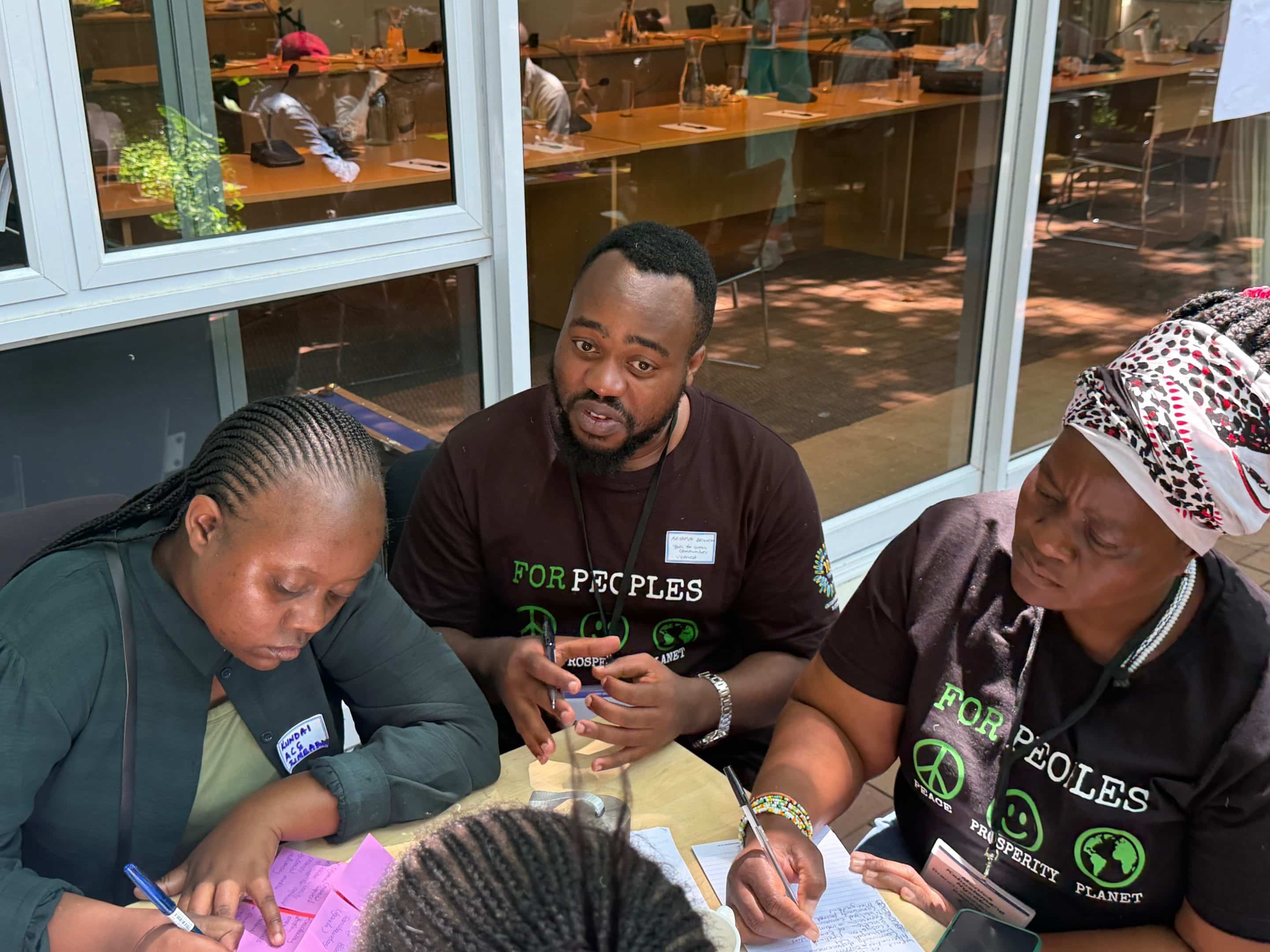
On the second day, the workshop settled into a circle of shared struggle, where stories moved across borders and resonated deeply. Community leaders from across the continent spoke from their own lived realities. A woman from South Africa’s Northern Cape, where 36 iron and manganese mines are concentrated within a single, severely under-resourced municipality, described the cumulative toll of constant mine dust and water pollution. Women, men, children and the elderly live with tuberculosis, respiratory and skin conditions, and cancer rates far above the national average. Unemployment remains widespread, even as many young people hold higher education qualifications. Women, she explained, are often pressured to trade their bodies for the mere possibility of securing menial work. Yet the community continues to resist through protest, sustained campaigning and legal action. One of the most entrenched challenges is captured traditional leadership, where those entrusted to protect communal interests instead sell out their people for personal gain. As she put it plainly, “We need to put our people before profit. We need to advocate for our community and not sell them out”.
A participant from Zimbabwe, affected by both diamond mining and oil drilling, spoke of the steady erosion of agricultural land that underpins local livelihoods. When communities are relocated, it happens without free, prior and informed consent and with little regard for social norms or the role of traditional leadership in maintaining cultural continuity. In response, communities have turned to agroecology and honey farming to feed their families and generate income, while continuing to challenge mining companies and the state over inadequate compensation and unjust relocation processes. Crucially, she emphasised the importance of documenting these struggles, so that others can grasp not only the facts, but also the emotions that sit behind the impacts.
From Welkom in South Africa’s Free State, a man spoke about the long shadow cast by mine closures. Abandoned shafts have become sites of danger, drawing zama zamas – artisanal miners often linked to criminal syndicates. In response, the community has protested to the Department of Mineral Resources and Energy (DMRE), demanding, “do your job, and don’t let these companies run away from their responsibilities!”. They are also imagining alternatives, including converting disused workers’ hostels into social housing and formalising artisanal mining, recognising that “the gold is still there, that is why there are zama zamas”.

Many participants said this day was “the most powerful” part of the entire week. It brought to the surface a deeply shared understanding that extractivism, whether fossil or renewable, continues to shape African economies in ways that reproduce inequality. It also underscored the growing clarity among communities that they are not passive recipients of global policy. They are political actors, and their analysis is rich and informed.
Throughout the week, the most consistent thread was the recognition of each other. One participant said the gatherings made them feel “united with the same struggles even though we come from different places”. Another said the experience created a strong feeling of “solidarity, clarity, and purpose”. Informal conversations over tea breaks became spaces where strategies began to form. People compared tactics, shared organising tools, and debated approaches to resisting harmful projects. Others reflected on how essential it is to create these transnational connections before stepping into global forums that often attempt to speak on behalf of the Global South.
By the final day, the collective mood had shifted. What began as curiosity about the G20 had become a grounded political awareness. People left with stronger networks, deeper understanding, and renewed commitment to push back against decisions made far from the communities who feel their impact. The experience also made clear that any engagement with global institutions must be paired with counter spaces that nurture imagination, resistance, and political clarity.
Johannesburg offered a rare moment where official power and community power appeared side by side. It revealed the distance between them, but it also revealed something far more important. Across nine countries and twelve participants, a collective message emerged: Grassroots communities are not marginal to global governance. They are essential to reshaping it, naming its injustices, and building alternatives grounded in dignity, land, and life.

Additional readings
- “Grounded Transitions: Closing the Gap Between G20 Priorities and the Realities of Critical Mineral-Affected Communities” (Coalition for Human Rights in Development report) – November 2025
- “Whose Transition It is Anyway?” (op-ed by Charlize Tomaselli, for Africa is a Country) – November 2025
- “Ramaphosa, the G20 and empty promises of a just transition” (op-ed by Charlize Tomaselli, for Business Day and Amandla) – November 2025