By Agustín Vázquez and Gustavo Castro
Otros Mundos Chiapas / Friends of the Earth Mexico / BIORED
The high costs of liquefied petroleum gas (LPG) derived from hydrocarbons, energy dependence amid international conflicts and wars, the climate and migration crises—affecting the most vulnerable, particularly rural inhabitants, Indigenous, and campesino communities—the rapid deforestation and loss of forests and jungles, the decline in biodiversity, the crisis of food sovereignty, difficulties in accessing water, and respiratory diseases, especially among women and children due to the use of open-fire stoves, have led us to rethink the need to seek local, family, and community-based alternatives to confront these challenges. This is happening in the midst of pressure from large-scale projects such as dams, mining, oil wells, gas pipelines, dry canals, and monocultures like oil palm, promoted by governments, corporations, and banks.
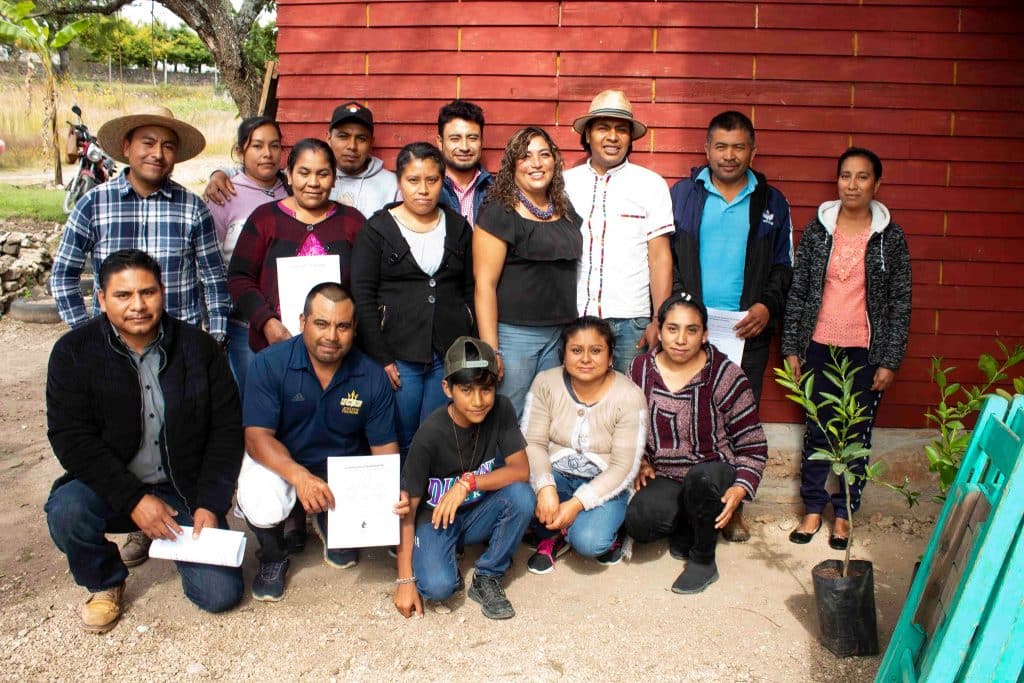
 Since launching the Escuela de Justicia Energética (School of Energy Justice) in 2019, we recognized the need to implement community-led and sustainable energy autonomy alternatives. This process gave birth to the Red de Biodigestores (Biodigester Network) –BIO RED– in Chiapas, composed of Indigenous and campesino families working to develop an energy model based on family biodigesters, emphasizing cooperation, solidarity, and collective learning.
A biodigester is a biodigestion system that uses organic waste (biomass), such as animal or human excrement and plant residues, which is channeled into a special impermeable black sheet bag. The decomposition process transforms the waste into biogas, which is then used for a two-burner stove.
The byproduct of the biodigester, called “biol,” is a high-quality liquid biofertilizer that nourishes plants and restores soils. Each biodigester has a capacity of 8,000 liters in its liquid phase and produces up to 2.4 cubic meters of biogas, equivalent to three hours of daily cooking, as well as 100 liters of biofertilizer, which can fertilize 4.5 hectares annually. Through these biodigesters, we contribute to building alternatives to mitigate climate change.
 Currently, BioRed has 45 installed systems in Chiapas, strengthening the energy transition as an alternative in the hands of the people. These systems eliminate 100% of LPG gas consumption and reduce firewood use by 50%, helping to curb deforestation of forests and jungles for charcoal and firewood production. They also eliminate the need for chemical fertilizers through the use of biofertilizer, reducing family expenses on agrochemicals sold by large transnational corporations. Moreover, they improve the immediate quality of life, particularly for women and girls.
In interviews with women who take part in the project, many described how biodigesters had eased their daily lives. Rocio Alfaro from La Patria (La Independencia, Chiapas) shared:
“We cook better now because using firewood created too much smoke, and we felt it was harming us. Plus, buying gas was very expensive. With biogas from the biodigesters, cooking is much quicker.”
Each biodigester has the potential to capture up to 12 tons of CO2 equivalent (CO2eq) per year. So far, biodigesters have fertilized over 200 hectares with biol, benefiting more than 240 people directly. Each year, 450 tons of CO2eq are captured, and 13,500 kg of LPG gas consumption is avoided.

Additionally, the project has improved the physical and mental health of women and children, who previously had to carry firewood on their backs, spend significant money on LPG or charcoal, and inhale toxic gases from open-fire stoves. Now, they have more time for other activities. Family economies have improved, soils have been enriched, and harvests are now free of agrochemicals, strengthening food sovereignty. Each year, BioRed members gather in an assembly to share experiences, receive training, and explore mutual support strategies.
Among the families interviewed after using biodigesters, Salomón Gómez Vázquez, also from La Patria, said:
“For us, getting firewood used to mean buying it or cutting down trees. And we don’t like cutting down trees. So this [biodigester] has been something really special for us.”
Salomón, who has been using a biodigester for three years to cook and grow crops like cucumbers and corn, added:
“It also raises awareness within the family. Sometimes we don’t realize that there are things we can use and benefit from in very important ways for our families and our crops.”
A Path Toward Community-Led Energy Transition
We celebrate this journey toward a community-based energy transition, where Indigenous and campesino communities control their own clean and sustainable energy. This is decentralized, small-scale energy that meets local needs. It is an alternative that improves quality of life, reduces deforestation caused by large-scale projects, and fosters autonomy and environmental stewardship.
BioRed continues to grow. Each year, more communities join the energy transition. In response to the climate crisis, new elements are being integrated to make biodigesters part of a circular system. Families are now installing rainwater harvesting systems to address droughts, supply biodigesters, and irrigate home gardens and maize fields. Another emerging challenge is finding ways to harness solar energy to power water pumps or explore the use of biogas for household lighting—challenges that lie ahead.
However, predatory capitalism refuses to let people step outside its system or stop consuming its products. Governments and corporations seek to suppress community-driven alternatives, keeping people dependent on their agrochemicals, seeds, food, centralized energy, and high costs. This is why it is urgent not only to resist exploitative capitalism but also to create local, bottom-up, community-driven, and autonomous alternatives.
These alternatives are emerging worldwide, sparking hope for other possible worlds.