

IDB Annual Meeting in Paraguay
Civil society organisations from Latin America and the Caribbean took part in the Annual Meeting of the Inter-American Development Bank (IDB) Group, held in Asunción from 11 to 14 March, to voice concerns about the direction of the Bank’s investments and to demand that its operations respect human rights, protect the environment and ensure the effective participation of affected communities.
The organisations, which form part of the IDB Working Group, held meetings with Bank officials, governments and other stakeholders to address issues such as the growing restrictions on civic space in the region, the risks associated with the commodification of nature, the growing presence of the IDB in the Amazon, the development of regional logistics and infrastructure corridors under the Conexión Sur programme, and the challenges of driving a truly just energy transition.
We highlight some of the main forums for dialogue that the Working Group held during the Assembly:
Participation in the IDB–Civil Society/Stakeholders Forum
One of the first opportunities for exchange was the IDB–Civil Society/Stakeholders Forum. Suhayla Bazbaz (Director of Community Cohesion and Social Innovation, Mexico) participated in the panel ‘The importance of multilateral engagement with civil society organisations: challenges and perspectives’ representing the IDB Working Group.
Suhayla highlighted the importance of involving civil society from the earliest stages of project design, as well as in monitoring their implementation. She noted that early and meaningful participation can help improve the quality of investments, prevent conflicts and ensure that projects respond to the realities of the local areas.
Concerns were also raised during the session regarding gaps in due diligence and in the implementation of the IDB Invest Environmental and Social Framework. Among the examples cited was the Manzanillo energy project in the Dominican Republic, which has been criticised for its environmental, climate and social impacts, as well as for the opposition expressed by local communities.
Testimonies at the Meeting
Ana Laide travelled from Pará, in the Brazilian Amazon, to hold development banks to account for financing energy projects with severe social and environmental impacts. Her community, in Altamira on the banks of the Xingu River, has been profoundly affected by the Belo Monte Hydroelectric Power Station, one of the world’s largest dams. Drawing on her own experience, she warns of the consequences of these megaprojects for communities and their territories.
In 2025, we published the Portuguese version of our report “Demystifying Development Finance” with the support of Conectas Direitos Humanos, which includes the case of Belo Monte.
Roundtable discussions
On the first day of the assembly, roundtable discussions will be held between the IDB and civil society organisations on the following topics: regional logistics corridors, the Amazonía Siempre programme, the new procurement policy, and restrictions on civic space.
Logistics corridors and the South Connection programme
At the roundtable dedicated to the South Connection programme, civil society organisations and representatives of indigenous peoples highlighted the need for new regional integration initiatives to learn from previous experiences such as IIRSA, which caused significant social and environmental impacts.
Among the main points raised by civil society and affected communities were:
- The importance of incorporating lessons learnt from past infrastructure projects, avoiding a repetition of mistakes relating to environmental impacts, adverse effects on indigenous peoples and a lack of participation.
- The need to assess the cumulative impacts of infrastructure corridors, including roads, waterways and logistics hubs that affect Amazonian territories and protected areas.
- The urgency of ensuring effective consultation and participation processes for indigenous peoples and affected communities, as in the case of the Capricorn Bio-Marine Corridor, which crosses Brazil, Paraguay, Argentina and Chile, and its impact on the territory of indigenous peoples such as the Ayoreo.
- It is important to have a plan for engagement with civil society and affected communities; it was suggested that an advisory committee comprising civil society actors be established, modelled on the advisory board of Amazonía Siempre.
- Concerns regarding the expansion of large-scale energy projects, including new hydroelectric plants, and the need to strengthen socio-environmental safeguards.
During the dialogue, IDB representatives noted that the Conexión Sur programme seeks to distinguish itself from previous initiatives by broadening its focus to digital connectivity, energy, trade and regulatory frameworks, and not solely road infrastructure. The forthcoming launch of a Regional Infrastructure Observatory was also announced.
Amazonia Forever: financing, participation and solutions from the ground up
The panel on Amazonia Forever addressed the programme’s progress and the challenges involved in ensuring that IDB investments meet the needs of Amazonian communities.
Indigenous organisations and representatives highlighted several priority issues:
- The importance of co-creating solutions with indigenous peoples and traditional communities, recognising their leadership in bioeconomy and conservation strategies.
- The need to facilitate direct access to finance for communities, including resources for local projects and economies.
- Concerns regarding a lack of information and feedback in prior consultation processes, as well as the need for greater transparency in the programme’s design.
- The structural challenges facing the Amazon region, including crime, illegal mining, persecution of environmental defenders and the absence of state presence in many territories.
IDB representatives highlighted that the programme aims to mobilise more resources for the region, including the issuance of Amazon bonds, and to develop innovative financial instruments to support sustainable initiatives. They also reiterated the commitment to strengthen the programme’s advisory board and expand the participation of social actors in its implementation.
Shrinking civic space: a growing challenge for development
At the roundtable on the reprisals and civic space, the Coalition and the Working Group presented our new report, Restricted Participation: Recent Trends in Latin America that Undermine the Right to Participation in the Context of Development Projects, to IDB officials and civil society organisations.
Iva Larrosa, the Coalition’s Regional Coordinator for Latin America, presented the two growing trends addressed in the report:
- Laws that unduly regulate civil society organisations in ways that limit their autonomy and independence, and threaten their very existence.
- The weakening of environmental protection safeguards, which limits opportunities for participation and access to information.
Iva then summarised the series of recommendations presented in the report.
Next, Loreto Vázquez Salvador (ACUE Última Esperanza Foundation, Magallanes) presented the case of Chile and its so-called ‘Permit Law’, passed in 2025, which accompanies a series of measures to streamline development projects.
Camila Bartelega of the Inter-American Association for Environmental Defense (AIDA) presented the case of Brazil, with the so-called “Devastation Law” passed in early 2026 and draft legislation aimed at restricting funding for social and civil society organisations.
During the discussion, organisations from various countries shared evidence of the worsening conditions for public participation in the region.
Key concerns raised included:
- New laws and reforms that restrict civil society participation, limit access to public information or impose excessive controls on organisations.
- Government narratives that stigmatise social organisations, accusing them of money laundering or interfering in public policy.
- The rise in digital violence, criminalisation and threats against environmental defenders, particularly in the context of extractive or infrastructure projects.
The organisations emphasised that public participation and access to information are fundamental conditions for legitimate and sustainable development projects.
IDB representatives acknowledged the challenges posed by this context and committed to exploring institutional mechanisms to address the shrinking of civic space, including the development of a potential internal action plan and the strengthening of channels for dialogue with civil society.
Meeting with the IDB President and IDB Invest CEO
On the first day of the Assembly, the IDB Working Group held meetings with IDB President Ilan Goldfajn and IDB Invest CEO James P. Scriven.
There, we raised concerns about projects such as Conexión Sur, which threaten territories, indigenous peoples and biodiversity, and we demanded greater accountability in the face of the shrinking of civic space and setbacks on gender and environmental issues.
We also highlighted cases that demonstrate historical failings in the Bank’s operations, such as the Ixquisis (Guatemala) and Alto Maipo (Chile) hydroelectric projects. In this context, Marcela Mella, spokesperson for the No Alto Maipo Citizens’ Coordination Group (CCNAM), spoke to emphasise the need to establish a robust framework for responsible exit, following the Bank’s decision to withdraw its financing from the hydroelectric project in 2021.
Workshop with Paraguayan organisations
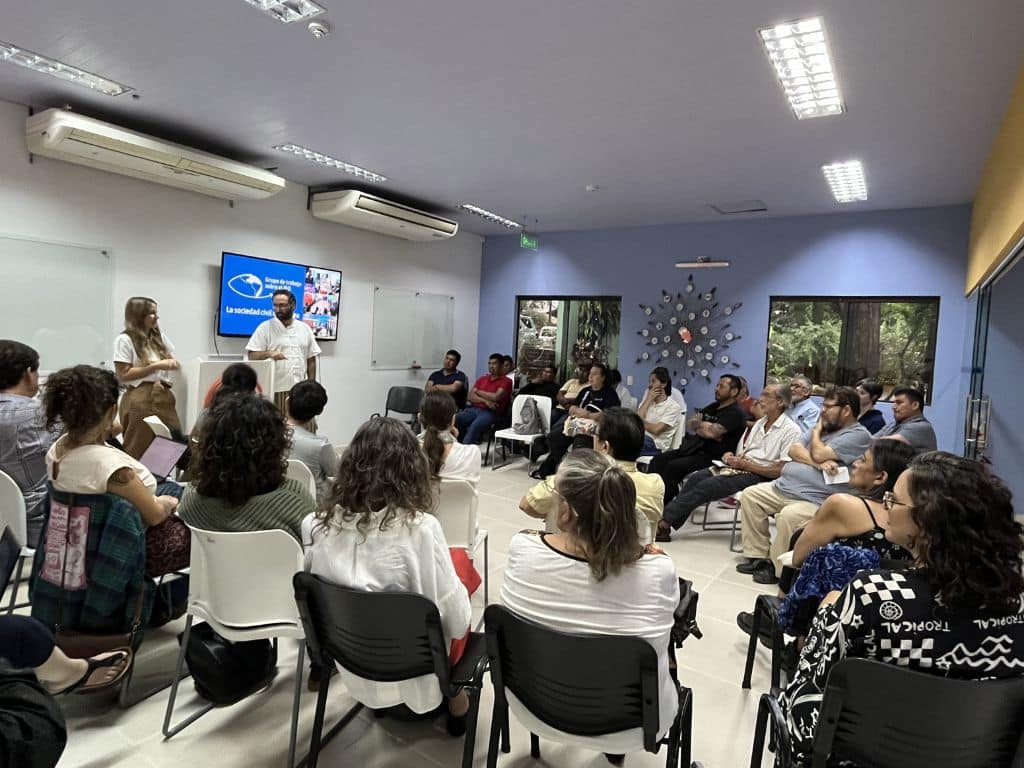
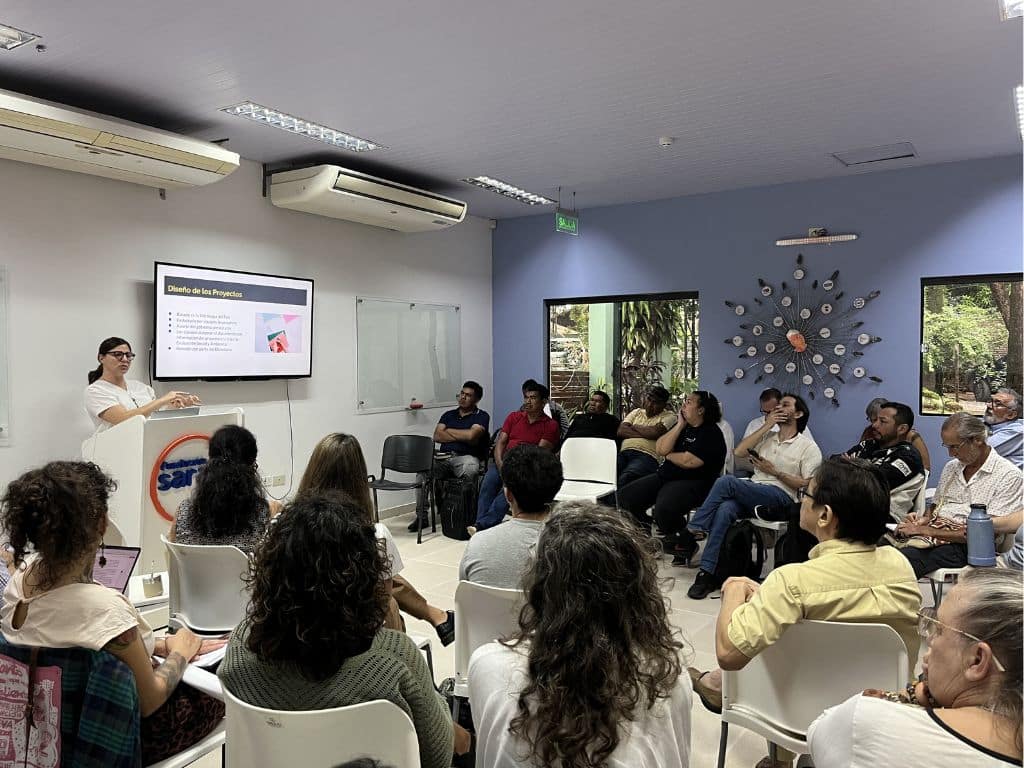
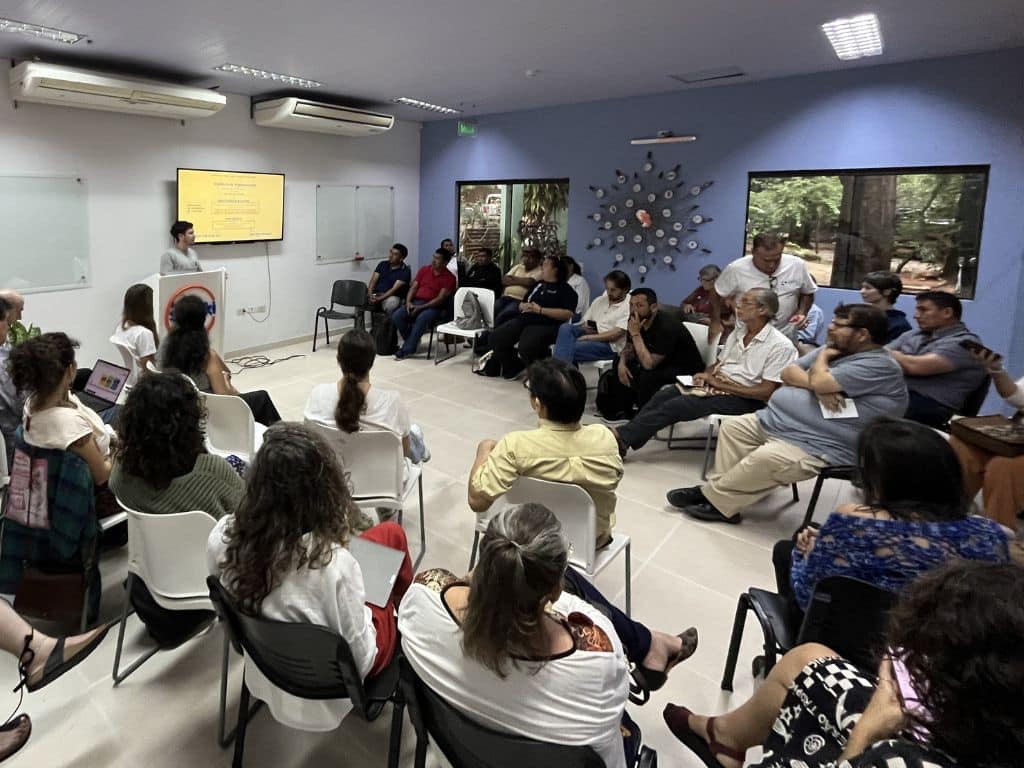
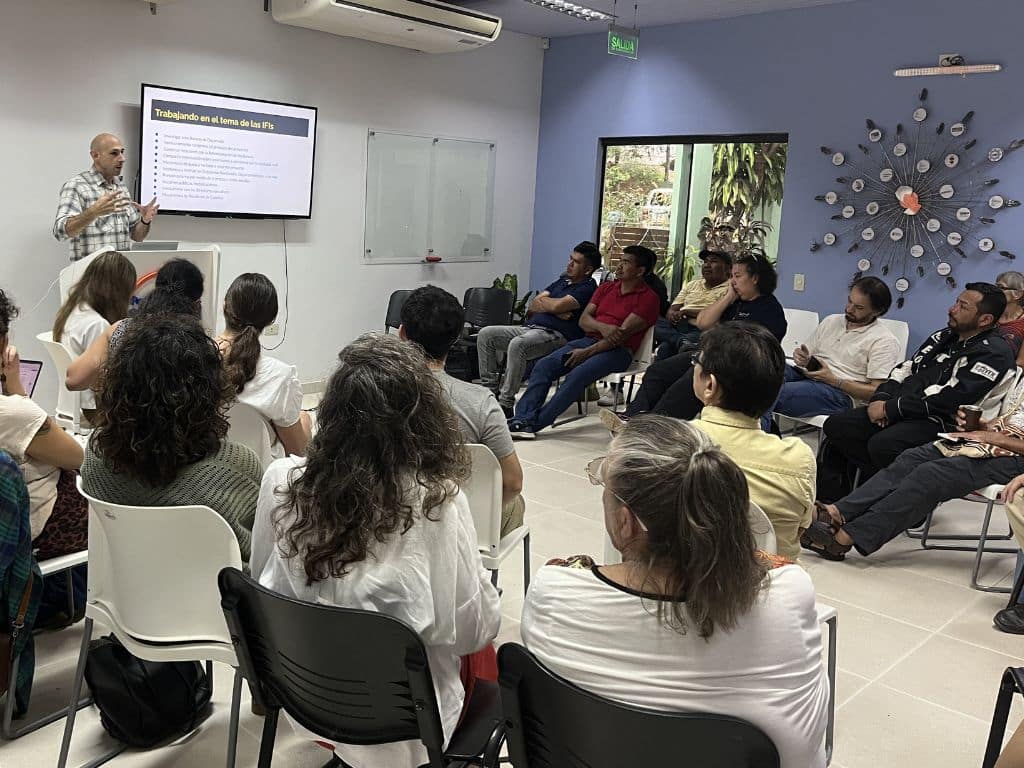
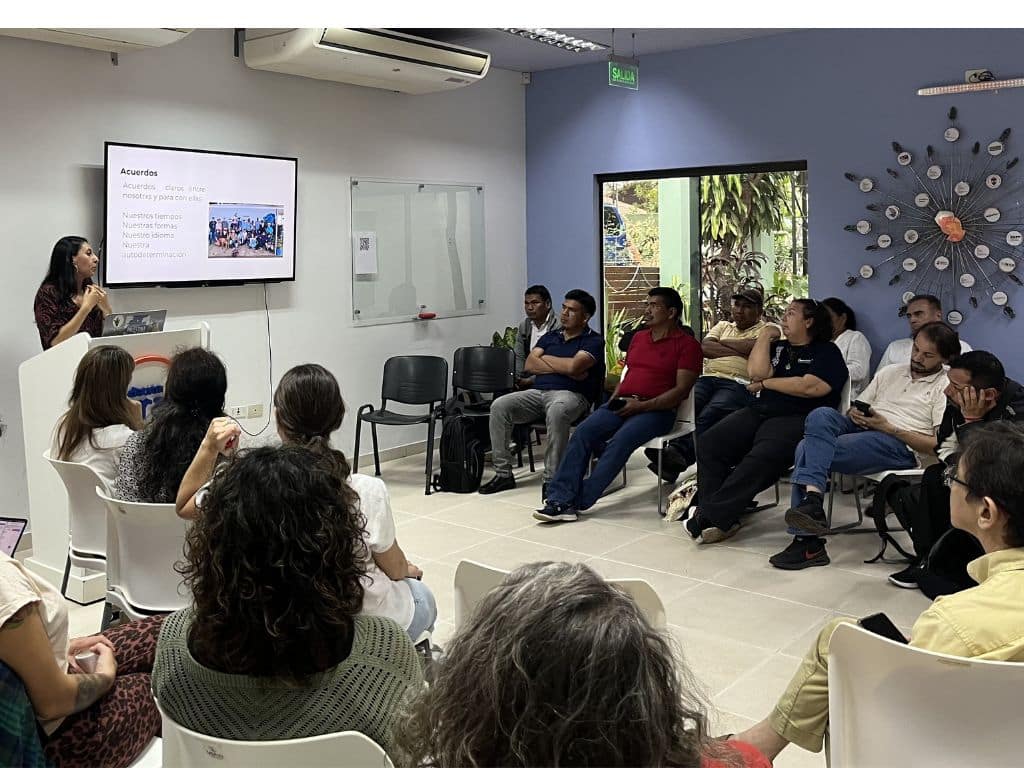
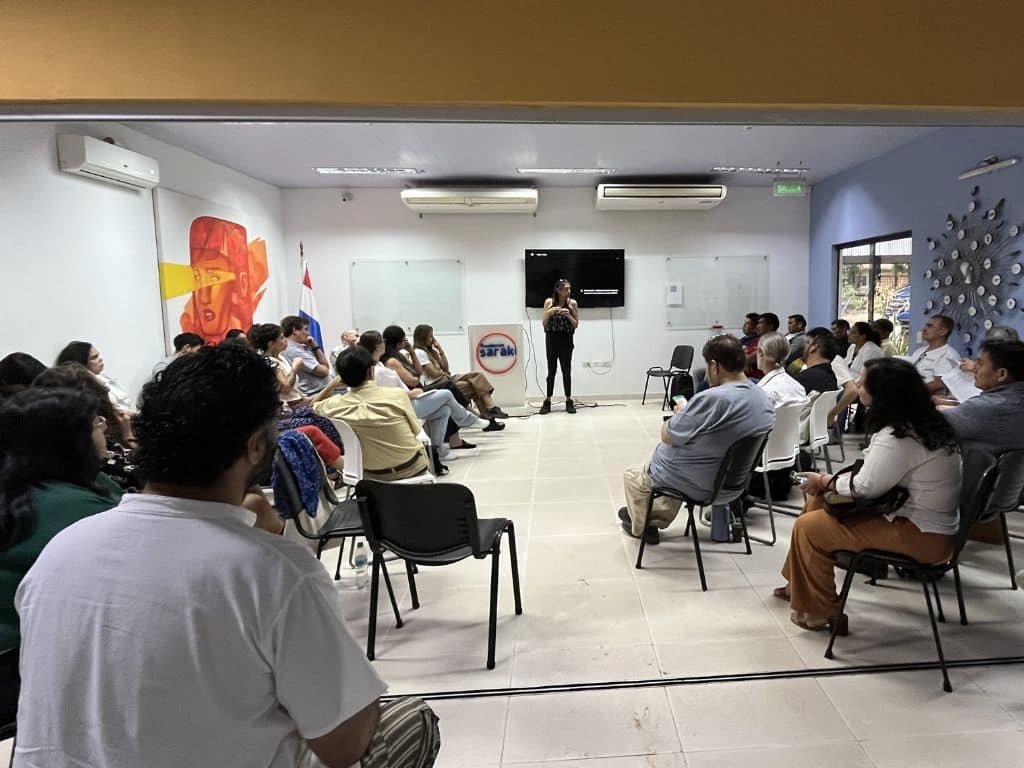
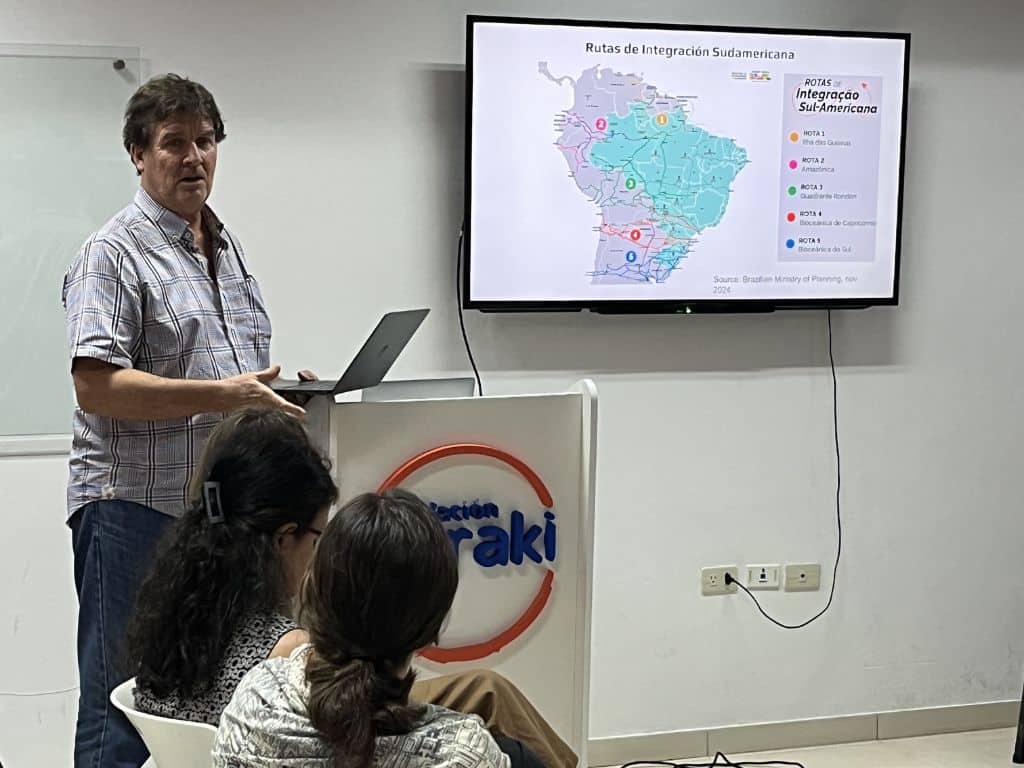
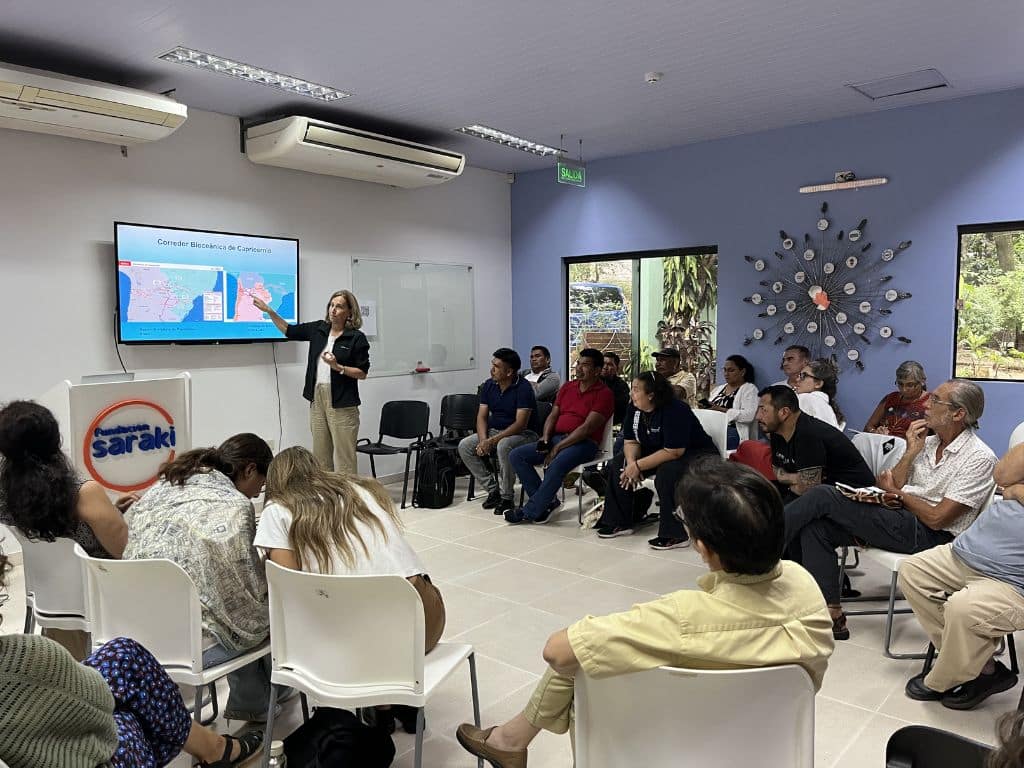
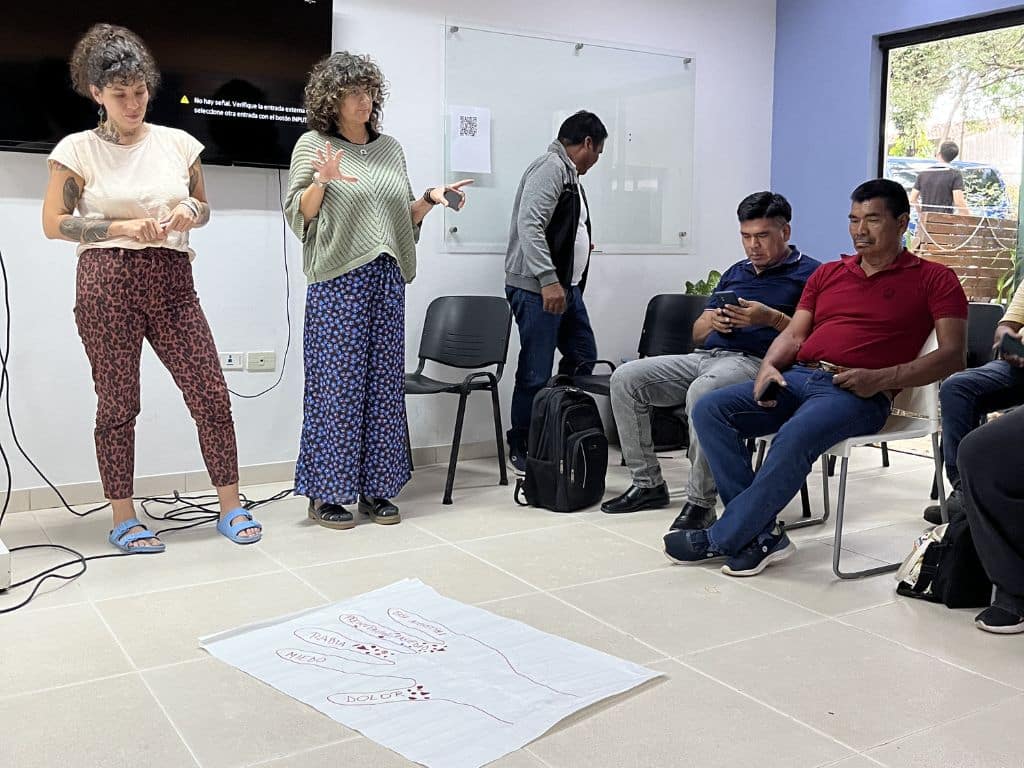
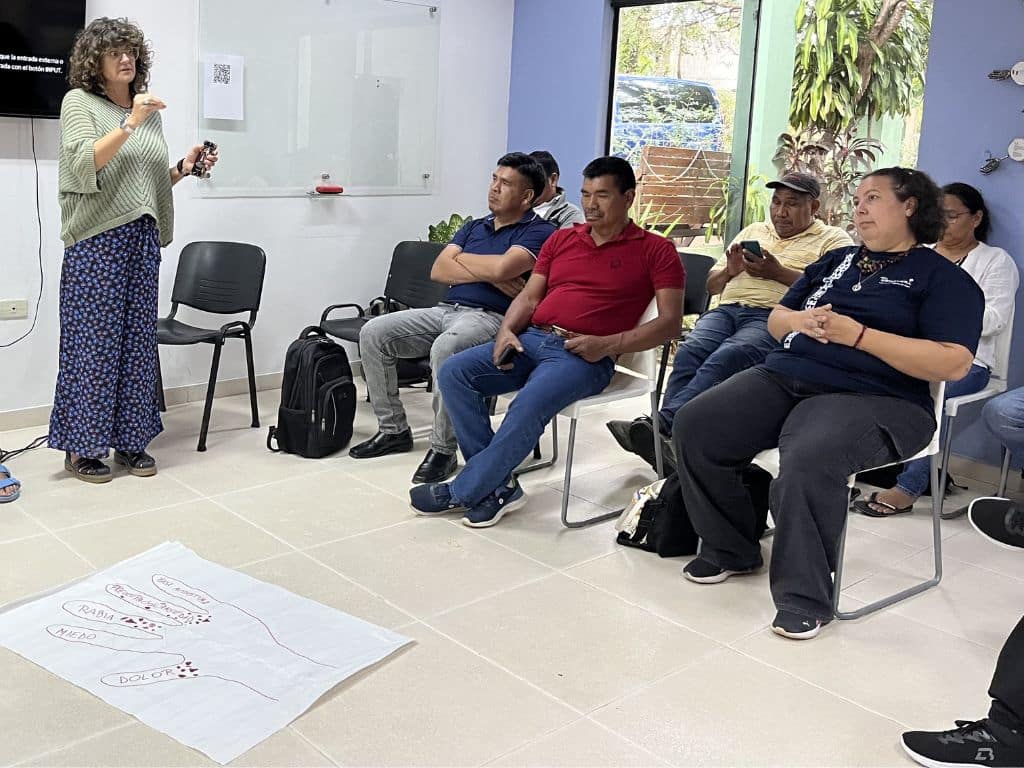
As part of the IDB’s annual meetings and taking advantage of the opportunity to meet in person, members of the IDB Working Group held a workshop with civil society organisations and representatives of indigenous communities from Paraguay at the Saraki Foundation. During the meeting, information was shared on how the IDB operates, its programmes in the region and the accountability mechanisms available when projects have an impact on local areas, as well as experiences of complaints lodged by communities in Brazil, Chile and Colombia. The exchange provided an opportunity to reflect collectively on the challenges faced by communities, including infrastructure projects such as the Capricorn Bioceanic Corridor, and to strengthen regional coordination in order to demand greater transparency, effective participation and respect for the rights of affected peoples and communities.
1
2
3
4
5
6
presentación de
7
8
Corredor Bioceánico

9
10
11
Ejercicio de
About the IDB Working Group
The IDB Working Group is a coalition of numerous civil society organisations from across the region and internationally, focused on advocacy work with the IDB. Many of these organisations have over 30 years’ experience in monitoring Multilateral Development Banks (MDBs), providing strategic value through their technical and institutional expertise. The group works in almost every country in the region and addresses a range of complementary issues, such as human rights, gender, disability, indigenous peoples, biodiversity, climate change, the Amazon and river basins. The group’s recommendations and actions are informed by monitoring specific projects, supporting communities affected by IDB-funded initiatives. Several of the organisations also support claimants before accountability mechanisms such as the MICI.
