

This op-ed was written by Charlize Tomaselli, Research and Learning Facilitator at the Coalition for Human Rights in Development, and published by African Arguments. You can read the full op-ed here.
In Iceland, geothermal energy – one of the cleanest solutions to the climate crisis – is widely hailed as a success story. It supplies 65 % of the country’s electricity and heats nearly 90% of its households. Everyone benefits from it.
Thousands of kilometres away, in Kenya, steam rising from the Rift Valley drives one of Africa’s largest geothermal programmes, supplying nearly half of the country’s electricity. According to recent data, Kenya is the world’s sixth-largest geothermal producer. Yet, its projects are entangled in disputes over land, livelihoods and rights, with local communities left grappling with acid rain, noise pollution and toxic soil.
So how can geothermal energy be celebrated as a success story in one country, and a source of conflict, contestation and environmental harm in another? The difference lies not in the energy resource itself, but in how this resource is governed, financed, and embedded within different social and political contexts. It’s not about energy, it’s about power.
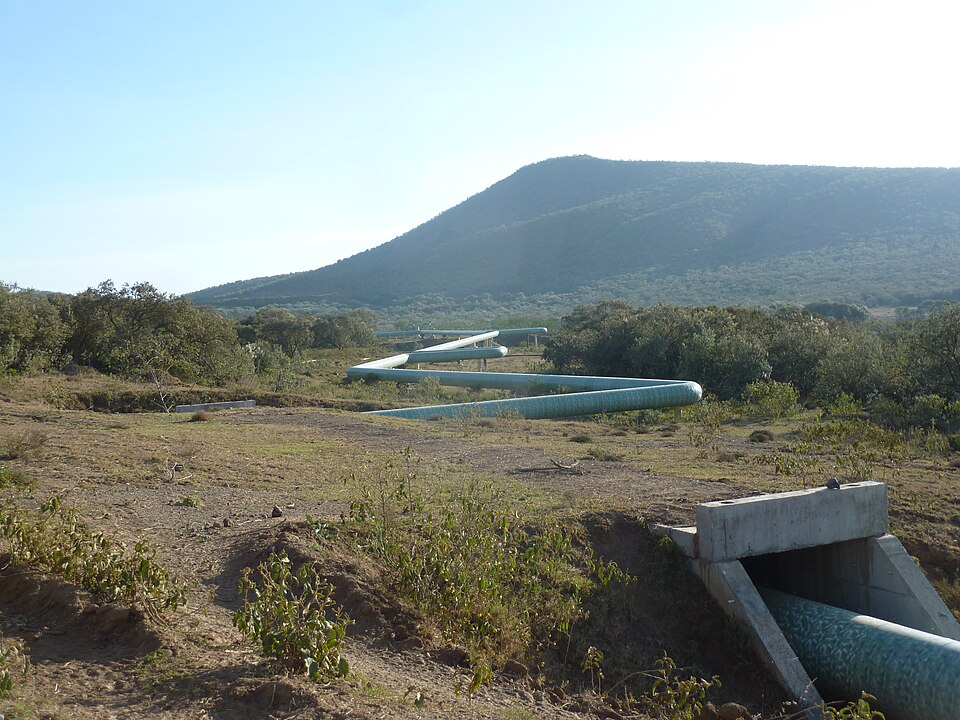
Steam pipe in Hell’s Gate natural park, Kenya. 2017. Photo credit: Wikimedia Commons.