

This article was written by Siddharth Akali, Director at the Coalition for Human Rights in Development.
Last week, the United Nations Security Council met to discuss how prosperity through natural resources governance could lay the foundation to peace.
While the world’s largest economies compete to secure supply chains for minerals they have identified as critical to their energy, digital and military industries, resource-rich countries across the Global South continue to bear the cost of this extractivist rush and are facing increasing tensions and conflicts, even as they bear the brunt of inequality, climate change and ecological collapse.
To address this, many Security Council delegates spoke about mineral “beneficiation”, which is the upgrading of raw minerals into higher value products. Their logic is that technology transfers and investments to support local processing and manufacturing could create more wealth in resource-rich countries. However, within the current economic development model, beneficiation is unlikely to bring about prosperity, let alone peace.
Only a model that centers people’s needs, respects their role as crucial decision-makers, and invests in workers and care economies can enable communities to thrive in peace.
This fundamental system change will require long-term collective work, spanning multiple generations. However, as outlined below, there are some immediate steps we can take to transform extractivist systems that exacerbate conflict, and build development pathways self-determined by communities to meet their needs while protecting our planet.

Van transporting minerals. Credit: Canva stock picture.
Why the current model is failing to bring peace and prosperity
In international and regional fora, governments and financiers such as public development banks are increasingly promoting the idea of “green industrialization” as a win-win solution to align economic growth and beneficiation with climate action. However, the current approach to green industrialization is failing to address systemic power imbalances and to redestribute wealth, and Global South countries get caught in a vicious circle of sacrificing their communities and ecological resources chasing a prosperity that the economic model does not provide them.
Policy makers tend to be obsessed with increasing gross domestic product and growing the economy at all costs, because they equate GDP with development. While the economy may grow and private industries may benefit from investments in critical mineral extraction and beneficiation, the profits barely trickle down to the vast majority of people facing poverty.
Additionally, Global South countries are forced to compete with each other in order to support higher standards of living elsewhere for wealthier communities. Governments are pressured to reduce taxes, cut resource royalties, weaken environmental and social safeguards, and take on large loans to attract and set up green industries. As a result, communities and the public sector end up bearing the downside risks of these investments.
Green industrialisation or green colonialism?
Within the current economic development model, green industrial projects are externally driven: the money, management and labour all come from outside the affected communities, and to meet external demand. These negative impacts put projects at odds with affected communities, especially when Indigenous Peoples and local communities have not given their free, prior and informed consent (FPIC), nor have they had a say in shaping project design or implementation.
Too many of these projects result in land and resource grabbing, environmental degradation, pollution, and economic displacement of local livelihoods. Sometimes local community members are promised jobs, but the jobs never materialise or are precarious and poorly remunerated. Further, since the majority of workers from outside are men, the influx disrupts gender balances and relations, and transient male labour can also result in an increase in sexual exploitation of local women.
All too often state and non-state security forces are deployed to silence dissent, thereby fueling conflict. Host communities also don’t have a say in how the products they produce are used, whether for war or for peace. Within this top-down development model, green industrialisation becomes a form of green colonialism.
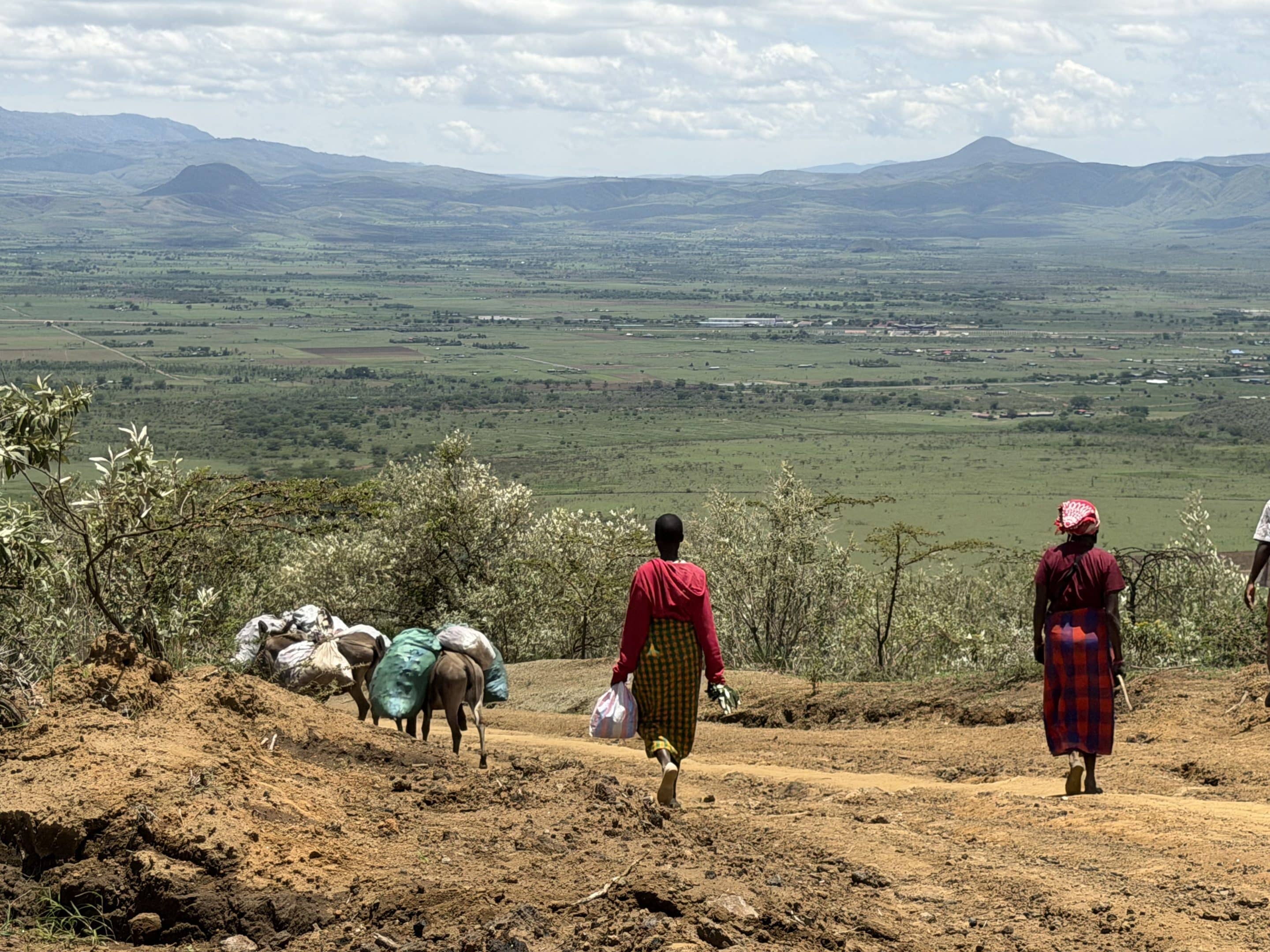
Maasai communities in Kenya. Credit: Charlize Tomaselli / CHRD.
What is community-led development?
Community-led development is a participatory, post-growth development model that starts from the needs and priorities of local communities, and respects their right to say no. The key is that communities come together in a safe, inclusive, deliberative goal-setting process. When communities are respected and can safely access adequate information, decision-making power, as well as financial and non-financial resources, they can freely self-determine how to most efficiently meet their needs and work together to make them a reality. At the heart of community-led development is the recognition that while Indigenous Peoples and local communities may not always have formal land title, many of them have customary rights to the land through their use, occupation and stewardship, often over generations and sometimes even millennia, and these rights need to be respected.
In practice, community-led development can look like community-led energy systems or agroecology projects such as a network of biodigesters in Chiapas, Mexico where local communities have their own clean and sustainable biodigesters to produce biogas and organic fertilizer contributing to food security and energy access. However, this does not mean that community-led projects are only small-scale projects, or use rudimentary technology.
Many local communities support the need for modern, scaleable, industrial development projects. For example, Masai communities in Kenya entered into a contract with a telecom company to erect a cellphone tower on Mount Suswa because it helped with their connectivity as well, and they were compensated for the use of their land.
Similarly many host communities understand and support the need for critical mineral extraction and beneficiation, but want to have a fair share and fair say in its development through an ongoing process that obtains their FPIC.
Community-led development could include participation of communities in natural resource governance and benefits sharing including through formal ownership, but it is also more than that. It centers on the leadership of communities in decisions that affect them through a process of self determination.
Community-led development is also well aligned with demands to increase public investments in local care economies and local care workers through better social protection and public services. Care work is essential to survive and thrive, so communities want culturally and contextually appropriate healthcare, education, senior care and child care. Additionally, many Indigenous epistemologies consider stewardship of the environment and its resources as care work. In a world where most care work is unpaid, caregiving usually happens within relationships in families and communities. Many communities often also facilitate their own mutual care networks such as cooperatives and self-help groups, and these are ideal hubs to develop local care economies in a community-led manner.
If green industrial projects are implemented through a community-led development model, then communities will have a framework to articulate how they want to participate in the governance, management and operations of these projects. In this model, communities could also drive accountability and secure redress on their own terms. So, centering community-led development in plans for critical mineral extraction and beneficiation ensures that these policies actually benefit the most marginalized communities.
What does post-growth mean?
Growth is not the primary goal under community-led development; nor is community-led development against economic growth. Instead, the goal of development shifts to directly meeting the needs of communities on their own terms.
There is increasing recognition that we live on a finite planet, which cannot sustain unlimited economic growth. This is evidenced by how the greatest pause in ecological degradation was during the coronavirus pandemic when there were significant halts in economic activity. Several academics and communities in the Global North are calling for degrowth through an equitable downscaling of production and consumption to mitigate climate change and ecological collapse. Even mainstream plans for diversification of mineral supply chains promote circular economies to increase recycling and reusing materials to decouple growth and resource use from resource extraction.
At the same time, many impoverished countries and communities, who were previously colonized and are least responsible for climate change, have a moral right to economic growth and development. Rather than saying yes to growth, or no to growth, community-led development is post-growth in that it creates a framework for multiple decentralized decisions about the use of lands and resources, that go beyond the fixation on growth as a useful measure of wellbeing.
Community-led development is the greener approach
Community-led development puts decisions about the use and protection of lands, territories and ecological resources in the hands of Indigenous Peoples and local communities, who have been effective stewards of their lands and territories for generations. Because of their proximity, as well as their long-term social, economic and cultural ties, Indigenous Peoples and local communities have access to the best information about ecological, social and other resources in their territories. They also have the best incentives to preserve and protect the resources they host in their territories for themselves and their future generations.
Therefore, Indigenous Peoples and local communities are the best judge of the value of local ecological resources and how it may be impacted by different activities. They are also best placed to make informed decisions for various development activities in a manner that mitigates the worst impacts. So rather than meeting global conservation targets through “fortress conservation” that has been largely discredited, community-led development shifts decision-making about ecological resources to the local level where there is the greatest incentives and information to conserve. It’s not about having separate zones for ecological activity and economic activity but about integrating human economic activity within the ecology. As a result, not only is community-led development a crucial tool for economic and social justice but it is also a sustainable pathway to climate justice while pursuing green industrial policy in a manner that serves people and the planet.
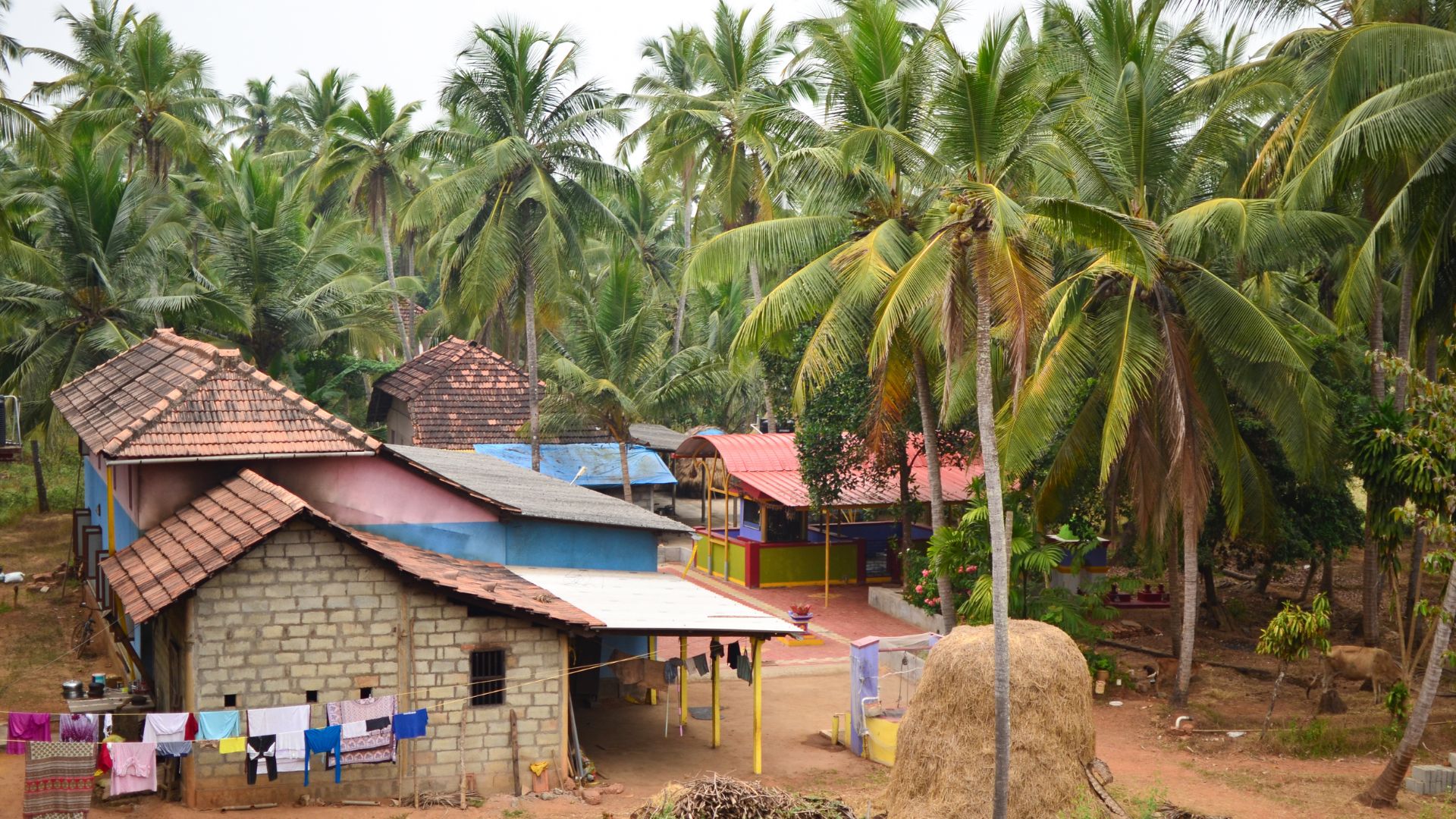 Credit: Canva stock picture
Entry points to advance community led development in the current economic model
There are several ways in which community-led development adds to domestic demand and helps green industrial policy to deliver on its promises of increasing local prosperity and wellbeing by value creation. And so it must be integrated into the policy toolkit of Global South governments and their financiers if they are truly committed to prosperity through green industrialisation.
From a traditional economic policy perspective, growth in domestic demand for consumption and investment also drives up value creation. Beneficiation and other green industrial policies typically focus on the supply of materials, services and products; but supply is only half of the equation. A few big beneficiation plans with enabling energy and transportation infrastructure will not lift countries out of poverty. Without domestic demand, small and medium enterprises, who are the lifeblood of the economy in the Global South, fail to fully benefit from green industrialisation.
If Global South countries invest directly in their own communities, workers and care economies through community-led development they will enter into a virtuous circle of domestic green industrialisation that can capture wealth and value domestically, is less dependent on external demand and predatory external finance, and has many positive externalities or indirect benefits.
Positive externalities of community-led development
Since the goal of investments in community-led development is to meet the self-identified needs of communities, unlike mainstream green industrial policy, community-led development is not extractivist or exploitative to communities and workers. Additionally, since communities themselves prioritize which of their needs they want to meet, which resources they want to use and how, while considering their own information and from external sources, they increase demand in a manner that efficiently distributes scarce local, national and planetary resources.
Green industrial policy centered on community-led development could include preferential hiring in host communities, and tailored skills development and training programmes to enable locals to contribute through and benefit from well-paying and secure green industrial jobs. Communities would also have avenues to ensure projects deliver on their employment and other commitments. Supporting community livelihoods through well-paid, secure jobs infuses money into the local economy and grows domestic demand. Additionally, when more local communities benefit from high-quality, sustainable jobs, it helps bring labour and communities together to grow popular support for green industrialisation
Investing in care work through community led development creates locally contextualised jobs that cannot be easily automated or outsourced, and has an outsized impact for women who do the majority of care work. This drives up local demand, allows more women to enter the workforce and boosts the national economy while meeting our crucial human needs for well stewarded ecosystems, dignified life for all and equality across genders.
An economy run by the people for the people
Community-led development is fundamentally about democratizing the economy by decentralizing economic decision-making to the Indigenous Peoples, local communities and workers who have been marginalized in the current economic model by powerful governments, large transnational corporations and financiers. The mainstream narratives about beneficiation bringing peace and prosperity to the Global South are incomplete and even wrong. Beneficiation of critical minerals on its own will not lift countries out of poverty. Indeed, in the context of the global inequality crisis, we need to make sure that new investments do not exacerbate existing inequalities and conflict in the name of beneficiation and green industrial policies.
Community-led development is crucial for any green industrialisation policy to succeed. Economic democratization by investing in communities and care economies gives Global South countries an alternative market for their products and services that benefits their own people, ensures prosperity reaches a broader base, and captures value in the Global South by increasing domestic demand. Finally, investing in communities and care economies encourages pro-social relationships at the local level and fosters a culture of care, human dignity and deliberation, offering the glimpses of an antidote for growing authoritarianism, oligarchic capture of governments, and conflict across the world.