

It’s called the “summit of solutions”. But can solutions come from the same institutions that are creating the problems? And can solutions be truly fit for purpose, without an honest reflection on the root causes of the problems we’re trying to solve?
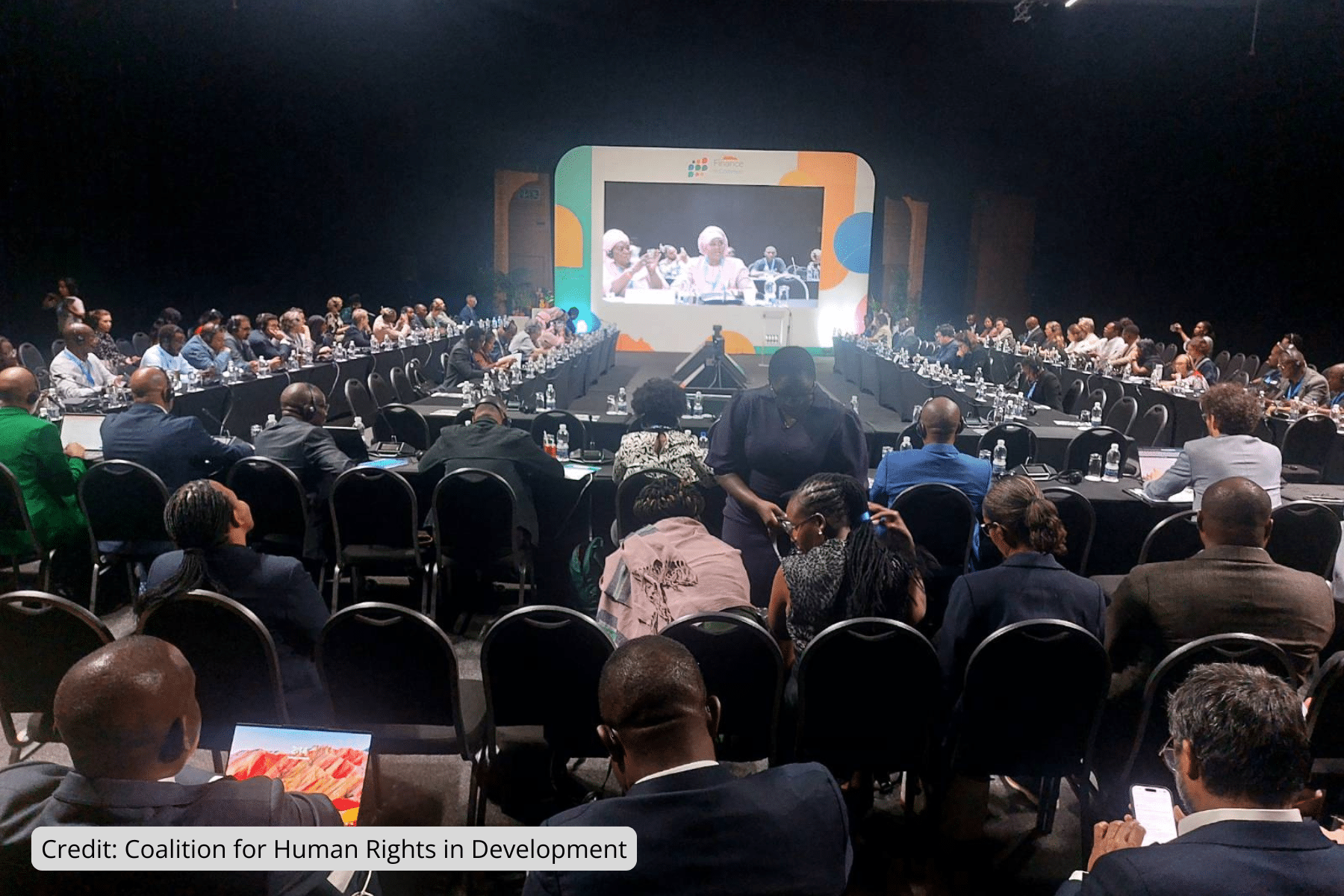
On February 26-28, hundreds of representatives of public development banks – as well as delegates from the private sector, governments, think tanks, academia and civil society – gathered in Cape Town, South Africa, for the 5th edition of the Finance in Common Summit (FICS). This year the Summit – under the overarching theme of “Fostering Infrastructure and Finance for Just and Sustainable Growth” – was co-hosted by the Development Bank of Southern Africa (DBSA) and the Asian Infrastructure Investment Bank (AIIB). For the first time, FICS took place alongside the G20 Finance Ministers and Central Bank Governors Meeting.
“There is a huge disconnect between what’s happening on the ground and what’s happening here,” says Busisiwe Kamolane-Kgadima, Deputy Director at the Centre for Applied Legal Studies (South Africa). “Those with power and money are strategizing among themselves on how they should tackle issues such as the just energy transition, without even mentioning communities. They are not even thinking what a just energy transition could look like for communities and how communities can get involved in these discussions”.
During the 45 official sessions of the Summit and in their bilateral meetings, development banks talked about how to accelerate growth, mobilize more private capital, and promote innovative financial mechanisms, throwing around plenty of buzzwords such as “sustainable”, “green”, and “just”. But once again, they failed to include in these conversations the people who are most affected by their projects and policies, and who have a better understanding of what “sustainable”, “green”, and “just” should look like in practice.
“At the Finance in Common there was a clear consensus: development finance must change”, says Nina Lesikhina (policy officer at CEE Bankwatch Network and member of the Coalition for Human Rights in Development Steering Committee). “However, the definition of change varied — some stakeholders called for increased investments, while others pushed for a fundamental reform of the global financial system. Civil society organizations worldwide emphasized a key message: development can only be sustainable if it is inclusive, participatory, and community-led.”
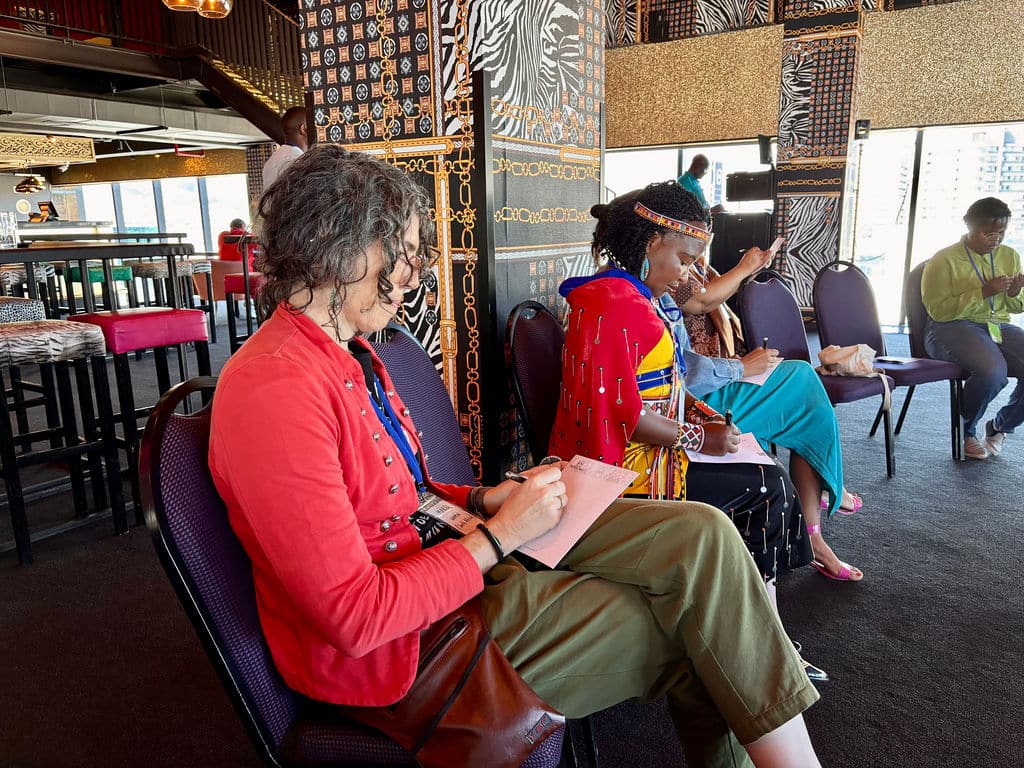
More than 60 civil society and community activists – including many Coalition’s members and partners, especially from the African continent – attended the Summit. For many of them, this was their first time attending FICS.
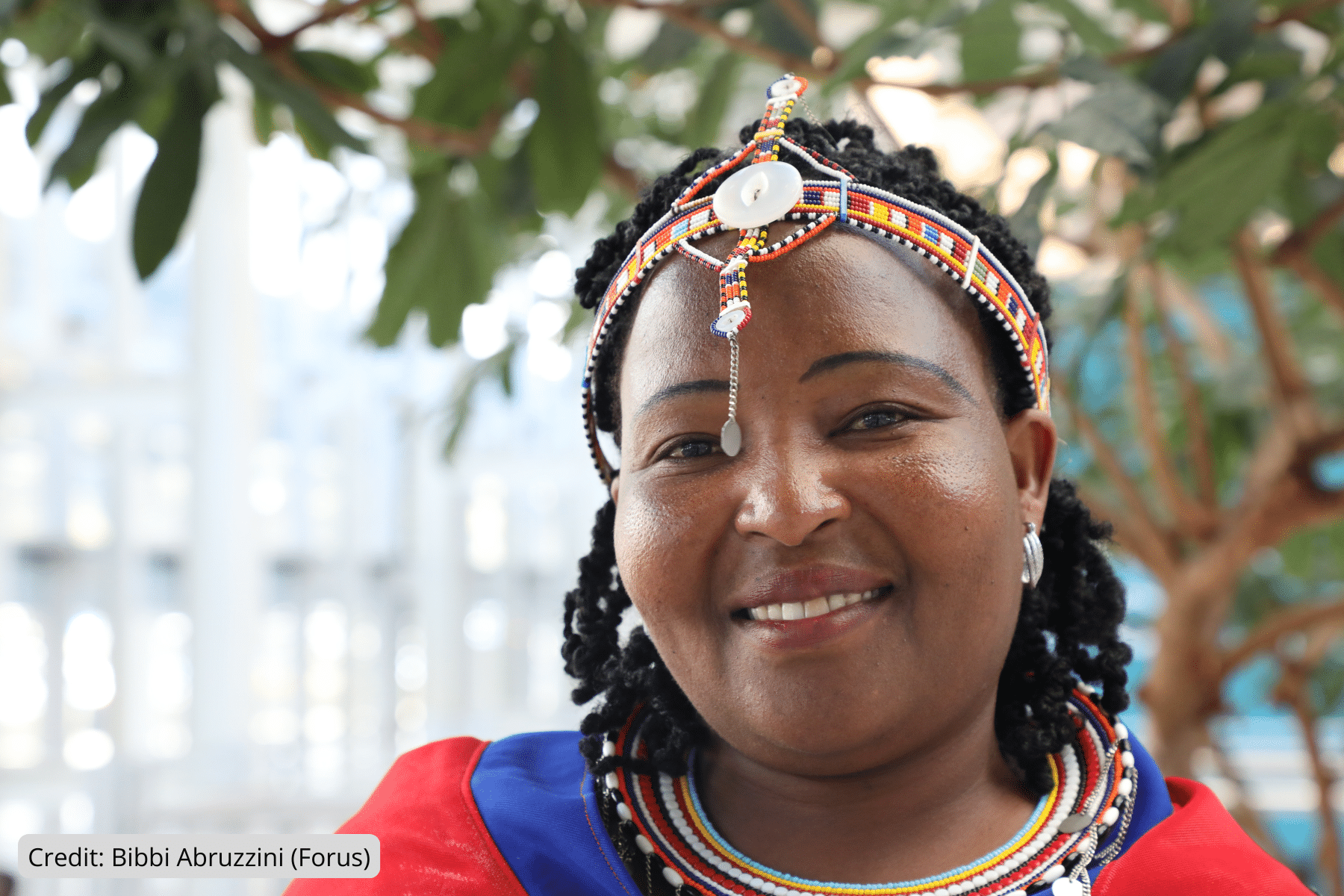
“Some of us have travelled very far to come here,” says Agnes Koilel, a Masai indigenous activist from Kenya and member of the local organization Narasha Development Community, whose community is affected by the AfDB-funded Olkaria geothermal projects. “We were disappointed to see that all these sessions were just presentations, where development banks were only talking to themselves, with no opportunities for us to raise questions and share our point of view”.
Civil society groups, however, did try to make their voices heard and shared their demands during three sessions:
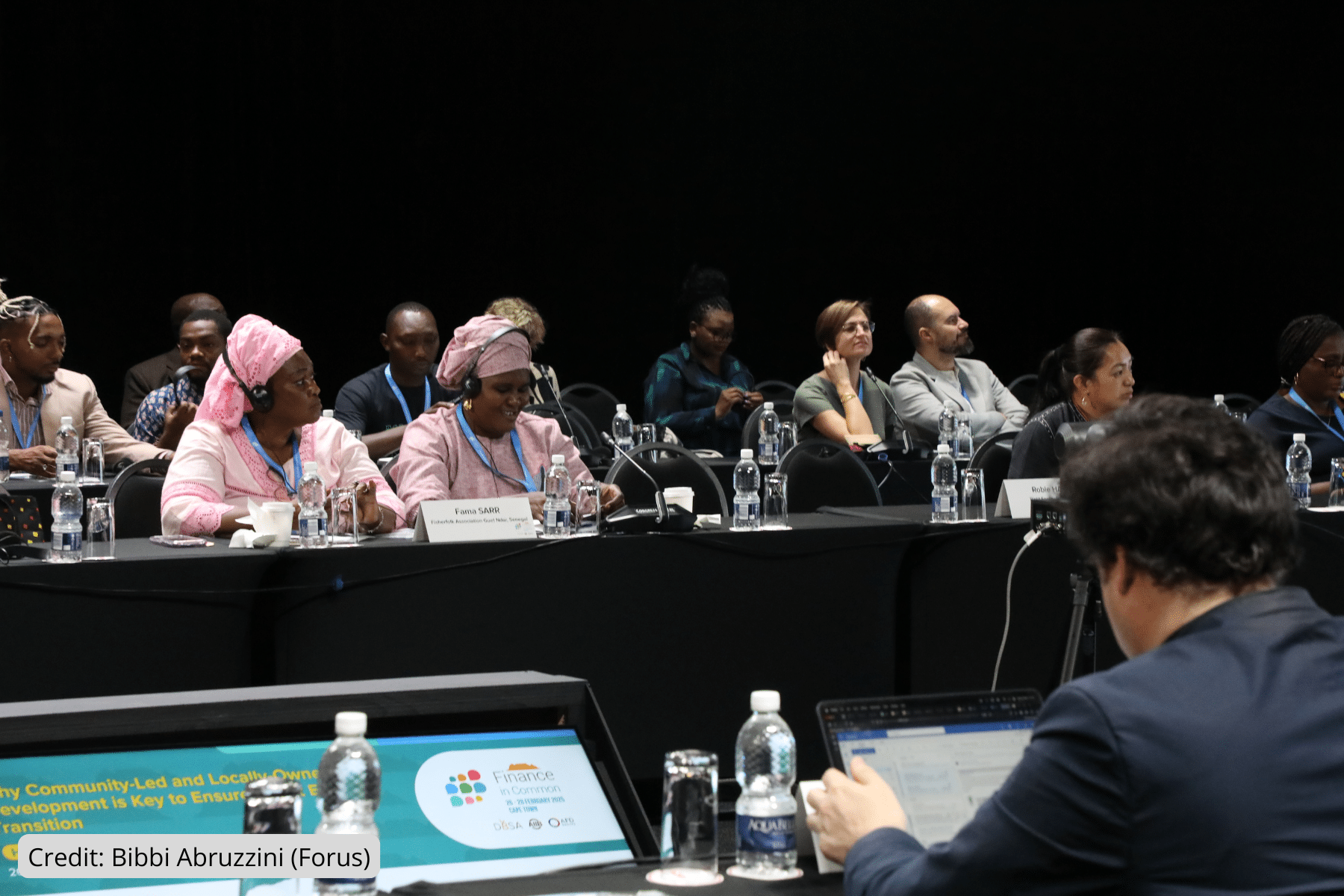
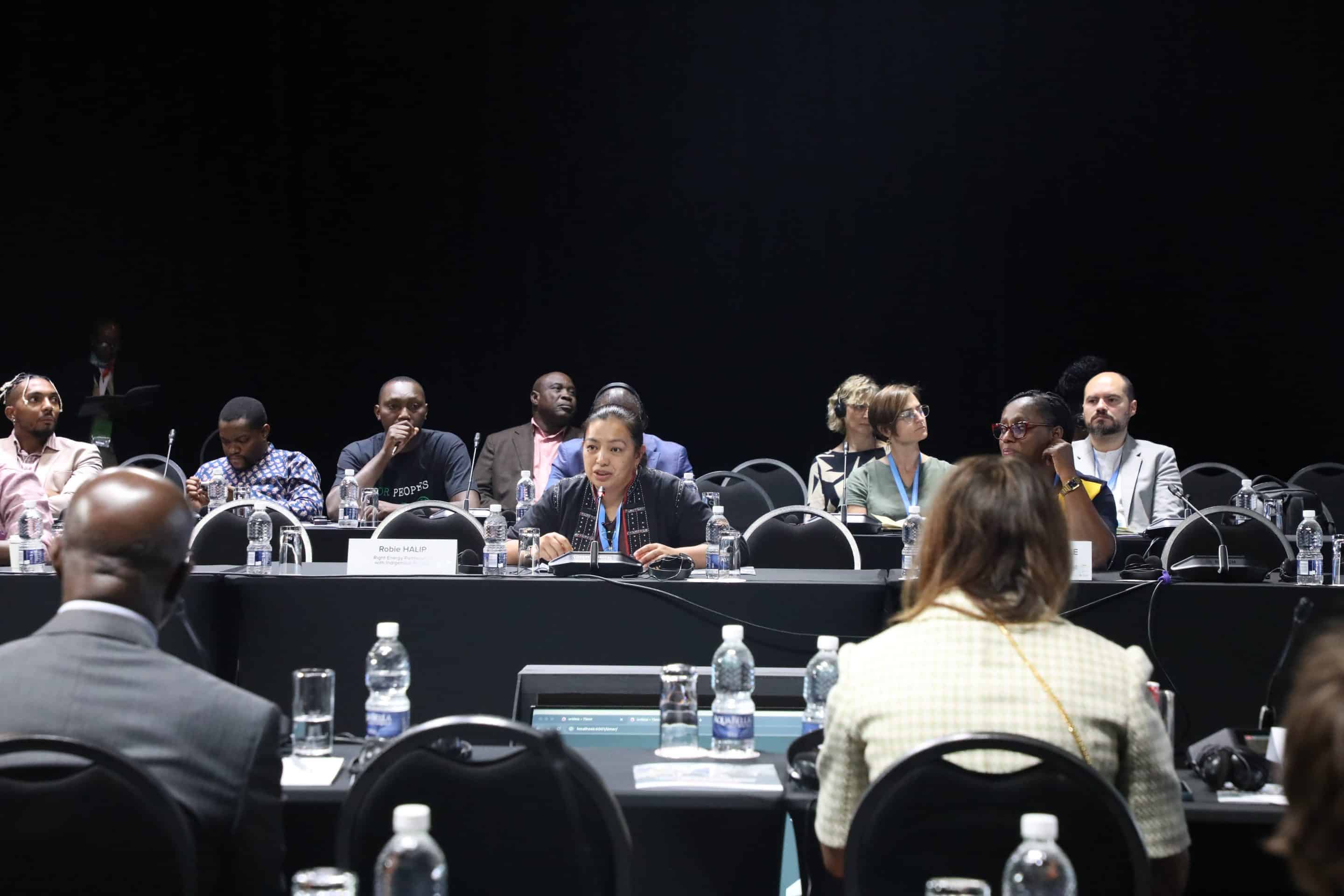
- “Why community led and locally owned development is key” session, co-organized with Forus and other CSOs, with the participation of our partners Robie Halip (Right Energy Partnership with Indigenous Peoples, Philippines) and Fama Sarr (community activist and leader of a women fishing processors organization in Senegal, who works closely with our Coalition member Lumière Synergie pour le Développement). You can watch the full recording here.
- “Impact Talk: Financing the Future: Why Community Engagement is the Key to Sustainable Development”, where Reitumetse Nkoti Mabula (Executive Director, Seinoli Legal Trust) shared about a problematic hydroelectric project. The Lesotho Highlands Water Project provides water to South Africa in exchange for royalties and generation of hydropower for Lesotho, but has led to devastating socio-economic and environmental impacts. Hundreds of families have been involuntarily resettled and more than 30,000 people lost their cropland and grazing land, with a particular impact on women. You can watch the recording of Nkoti’s presentation here.
- At the closing panel, Christelle Kalhoule (Chair of Forus) – speaking on behalf of over 400+ civil society organizations who endorsed a joint CSO declaration – called for a systemic shift in development finance, one that prioritizes people over profit, strengthens civic space, upholds human rights, and ensures community-led development.
Read more
Do you want to read some additional takeaways about what was discussed during FICS? Check out:
- “Amid aid cuts, a new development finance system starts taking shape” (by Adva Saldinger, Devex)
- Linkedin posts by Federico Sibaja (Recourse), Nina Lesikhina (CEE Bankwatch Network)and Forus.
- Joint CSOs press release “Civil Society at the Finance in Common Summit Calls for Community-led, Equitable, and Human Rights-based Development” (IPS news)
- Joint CSO declaration
- FICS official communique
- Mobilization campaigns during previous editions of the FIC Summit
Blogs
"Public development banks: sustainers of inequality"
In this op-ed, “Public development banks: sustainers of inequality” (published by the Chilean publication Resumen), Loreto Vasquez Salvador (Spokesperson of Asamblea Ciudadana Ultima Esperanza in Magallanes) shares her critique to the current development finance model.
Public Development Banks must prioritise indigenous peoples and communities in climate projects
In this blog, Manson Gwanyanya (Business and Human Rights Resource Centre) calls on development banks to prioritise Indigenous Peoples and communities in climate projects.
Press Release
As public development banks gather for the Finance in Common Summit (FiCS) in Cape Town, South Africa, civil society and community activists from across the world are demanding a shift to a community-led, equitable, and human rights-based development approach, that prioritise people and planet over profit, and a reform of the global financial architecture.
Timothy’s story
Timothy Ngetich – a representative of the Menengai West Stakeholders Forum (Kenya) – was one of the community activists who participated in the Summit. Timothy’s community is facing the harmful impacts of a geothermal project funded by the African Development Bank (AfDB).
The Menengai project – despite being presented as a green, sustainable solution advancing a “just” energy transition – is causing serious noise, air and environmental pollution, and negatively impacting the communities living closer to the construction area. Consultations around the project were flawed, and the community’s concerns have been disregarded. You can read more in this briefing.
“They’re literally coming to our doorstep,” says Timothy. “They’re coming to the land we cultivate, where we have our animals, where we’ve buried our kins. My own mother is buried here. So when they come and tell us to move out, where do they think we could go?”
A recent court case, however, has brought some hope for the local community, as it canceled the license for a new geothermal well recognizing the need for a cumulative impact assessment and new consultations.
Timothy did not have a chance to share his story with development banks at the Summit. However, he had the opportunity to meet with many other activists facing similar challenges, and to realize his community was not alone in the struggle. At the Summit, Timothy also met – by chance – an environmental activist from South Africa who had travelled to Kenya, to visit the site of the Menengai geothermal project. She recounted how they were denied an opportunity to speak with the affected community members. Instead, the renewable energy company organizing the field visit only presented the project’s benefits.
Photo gallery









In focus: how a community-led and truly “just” energy transition should look like
Within the context of the global climate crisis, the push for a low-carbon economy is reshaping resource-rich countries, driving demand for critical minerals and renewable energy. Communities across Africa, Asia and Latin America are stressing the need for a just transition that avoids the harmful, top-down models of the fossil fuel era. Yet, development banks are prioritizing large-scale projects without proper community consultation, which often leads to negative human rights and social impacts. But how can communities advance their own pathways to achieve a community-led just energy transition? And what would this transition look like?
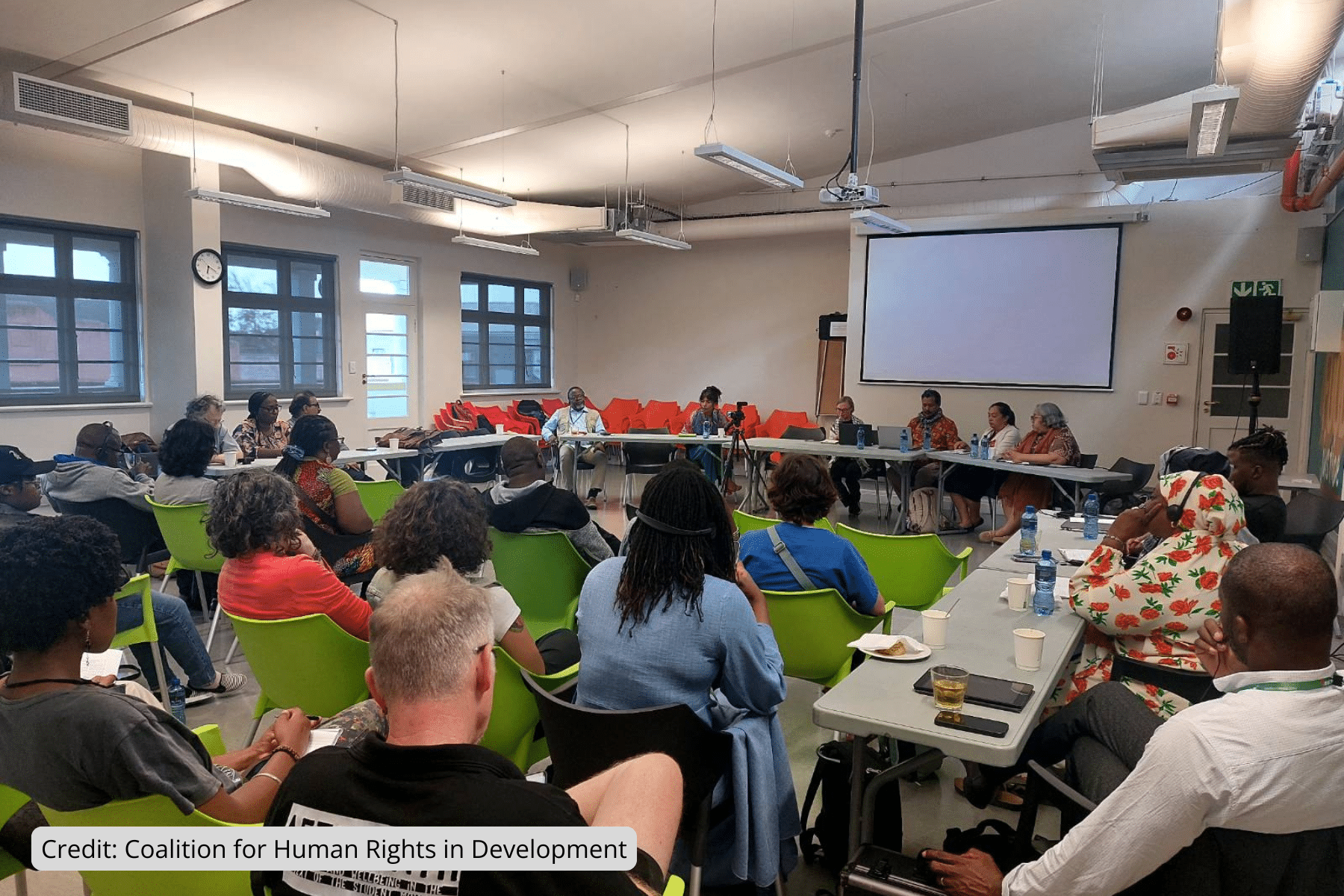
Ahead of the Finance in Common Summit, around 35 members and partners of the Coalition for Human Rights in Development (CHRD) organized a two-day workshop to explore community-led development as a solution in the framework of the Just Energy Transition. Community activists from across the world shared their powerful stories and experiences. They spoke about the everyday injustices and brutal violations faced by communities impacted by so-called “sustainable” or “renewable” projects. But they also spoke about solutions that come from communities themselves and truly serve their needs.
The workshop was an opportunity to exchange experiences and strategies, and to find alignment around a set of key demands that centered around three main priorities: Community Self-Determination and Meaningful Participation; Equity in Development Finance and Energy Access; and Accountability, Environmental and Rights Protection.
The demands that emerged during the workshop were also echoed during a public event “Just transition in whose interests?” – co-hosted by International Rivers and other Coalition’s members – where we also had the important participation of Tauriq Jenkins, an Indigenous Khoi Leader, activist, artist, and academic. During the session, Tauriq spoke in particular about the Save Our Sacred Lands campaign and the resistance against the development of Amazon African HQ, at the confluence of the sacred Liesbeek and Black Rivers.
During the event, the speakers shared first hand information which is sidelined – or all together negated – in the official agenda of the FiCS, about the very real implications of the projects for Indigenous Peoples’ communities, women and workers, ranging from risks of reprisals against those who advance dissenting perspectives to the demolition of housing, acquisition of ancestral lands and territories, and desecration of sacred areas. Community representatives on this panel also explained why and how they are calling for remedy, redress and reparations where destructive infrastructure projects have already moved forward, as well as for a suspension of any further investments in building out of false climate solutions.