

Cross-regional updates
- In August 2026, we awarded 14 grants to communities in Indonesia,Tajikistan, Thailand/Myanmar, Mozambique, Zimbabwe, Cote D’ Ivoire, Malawi, Ghana, Uganda, Peru, Chile, Mexico and Ecuador. Over the next year, these communities and civil society groups will advance their struggle in the context of mining and energy transition projects. We look forward to collaborating with them, learning from them, and exchanging seeds!
- Do you want to read the stories of our CRE community partners, learn more about the projects they are resisting or monitoring, and their demands? Check out our CRE map! Please note that for security reasons, many collaborators who prefer to remain anonymous will not appear in the map. If you collaborated with the CRE and you’d like to spotlight your struggle on the map, get in touch and write to us at: cre@rightsindevelopment.org.
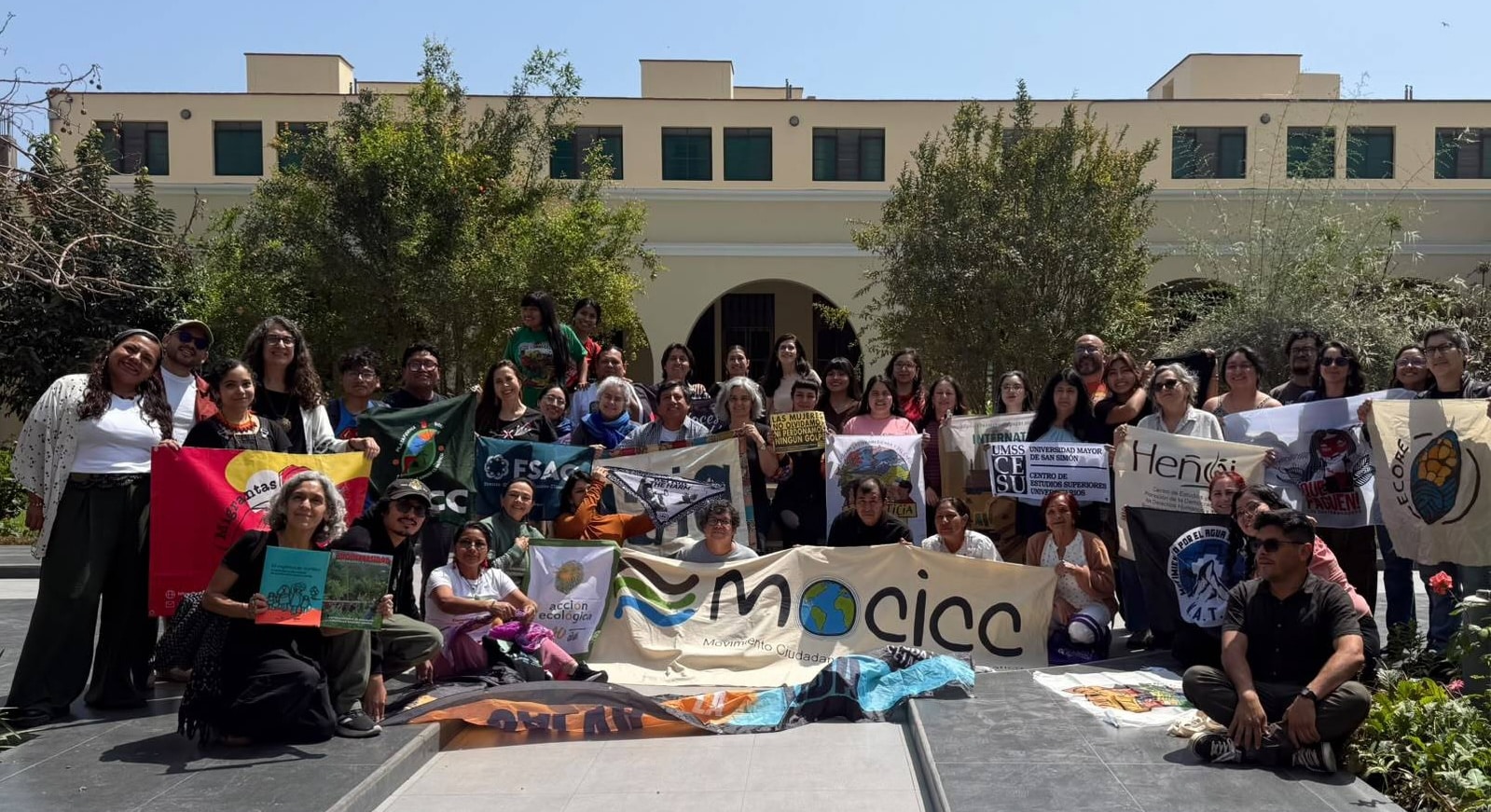
Communities from 13 countries in Latin America met in Lima for the V Latin American and Caribbean
Conference on Climate Justice (September 2026)
Communities of Action
In its second phase, the CRE decided to deepen its collaborative work in specific thematic areas and pilot Communities of Action (CoA) in Latin America, Africa and Asia. Our “communities of action” are community-led alliances of local, national, regional and international groups united by a shared issue, target, theme, or geography. Built around a joint agenda and work plan defined by the communities themselves, CoAs enable members to take coordinated action, share knowledge, pool resources, and build solidarity. They strengthen both local and collective struggles, increase resilience in shifting political contexts, and expose systemic patterns of abuse that isolated cases might otherwise obscure.
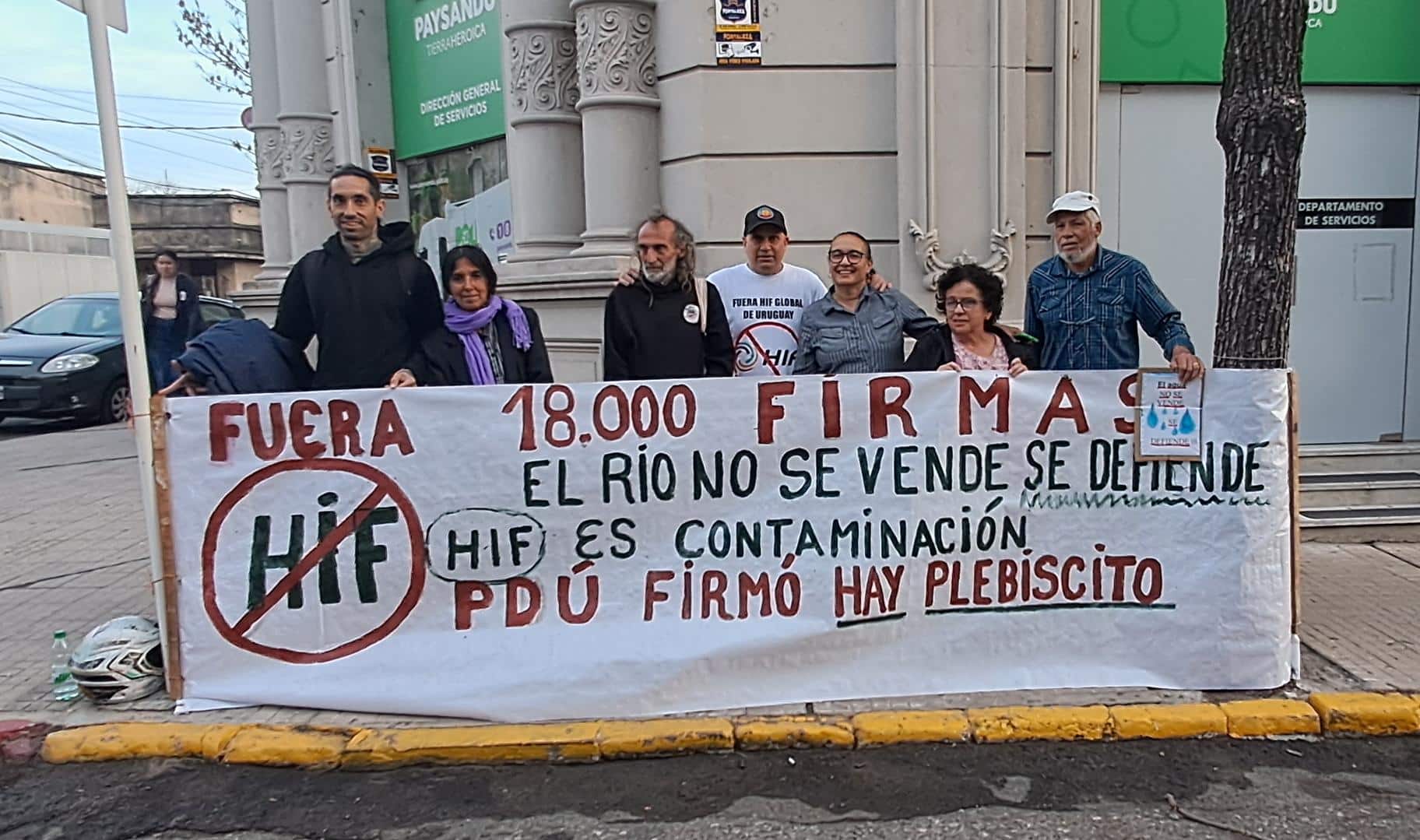
Across Latin America, organisations and communities working in territories affected by so-called “green” hydrogen projects are coming together through the “Latin America is already green” Community of Action to strengthen regional coordination, share knowledge and experiences, amplify community voices, and develop collective advocacy and communications strategies. The group, which met in person in Chile in May 2026, brings together nine organisations from Chile, Mexico, Argentina and Uruguay, collectively resisting more than 40 hydrogen projects promoted under the banner of the “energy transition.” While hydrogen is increasingly presented as a sustainable solution to the climate crisis, communities are raising concerns about the impacts of these projects on water, river basins, ecosystems, livelihoods and territorial sovereignty, as well as the lack of meaningful participation in decisions affecting their territories. This is why communities and organisations across the region are organising to challenge extractivist narratives around hydrogen, share experiences across borders, and demand people-centred soutions.
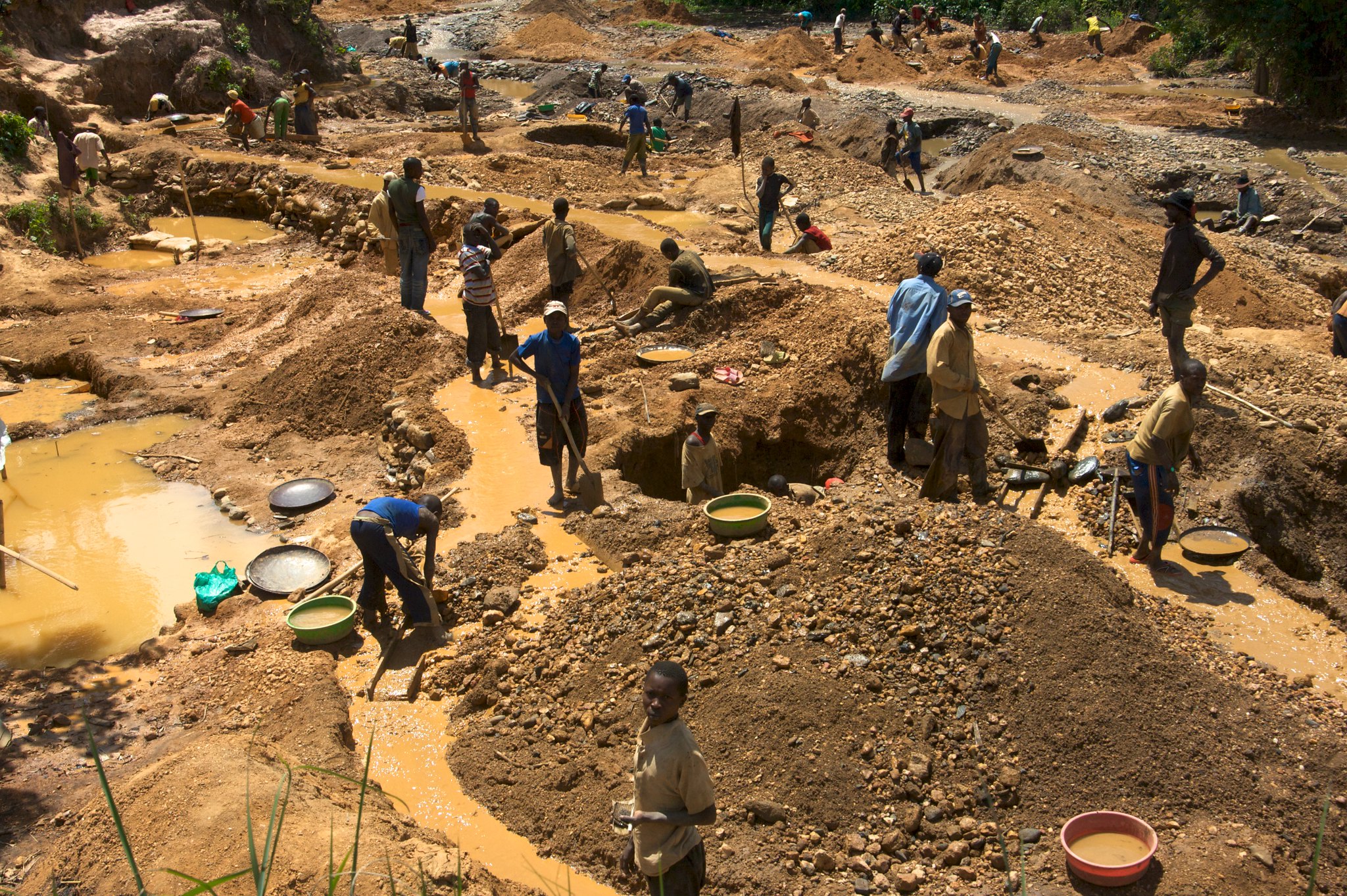
In DRC, five organizations working closely with mining-affected communities are working together to strengthen community-led advocacy, reinforce protection mechanisms, amplify grassroots voices, and improve accountability in the extractive sector. The DRC produces roughly 74% of the world’s cobalt and holds massive reserves of copper, coltan, lithium, tin, tungsten, and other critical minerals. Yet, many mining-affected communities disproportionately shoulder the costs (from pollution and loss of livelihoods to militarization and reprisals) while receiving minimal benefits from the wealth generated by these natural resources. This is why across the country mining-affected communities are demanding safe spaces and opportunities to put forward their demands, shape the projects affecting their territories, and hold companies and financiers accountable.
In Indonesia, we are working with a dozen of groups to develop a community of action focused on documenting the impacts of projects designated as “national strategy projects” (which are often associated with high levels of militarization), developing a collective advocacy strategy to demand accountability around these projects, and strengthening protection of affected communities and defenders. Several of these partners will also be attending the upcoming World Bank meeting in Bangkok.
You can read more about the upcoming events in Bangkok here.

Community exchanges and movement-building
In September, we launched a six-session series on collective mapping and monitoring with Fundación ACUE, EJ Atlas, Plan Colibrí, GeoComunes, Humanitarian OpenStreetMaps Team, Plataforma Latinoamericana y del Caribe por la Justicia Climática (PLACJC) and the Campaña Global Para Exigir Justicia Climática (DCJ-LAC). Each session features an interactive workshop on a community-mapping tool or methodology and fosters dialogue on how community monitoring, mapping, and the collective production of knowledge can become tools for building community and identity to defend territories and resist harmful development projects. The recordings and materials will shortly be available in a dedicated page in the Coalition’s website. For now you can check out the recordings of the first four sessions on our YouTube page.
XXXXXXXXX

From 12 to 15 September, in Lima, our CRE Regional Facilitator in LAC, Claudia, joined organisations, communities and networks from 13 countries for the fifth Latin American and Caribbean Meeting for Climate Justice, to continue strengthening collective spaces for organizing, community coordination, public denunciation, and developing tools for collective action in response to the injustices that cause and intensify the climate crisis. Read Claudia’s blog here.
Upcoming events
- At the end of September, several of our CRE partners from Africa travelled to Dakar (Senegal) to attend the African Business and Human Rights Forum. You can read their key demands around accountability and some of their stories in this blog.
- At the end of October, we will be joining a public hearing of the Inter-American Commission on Human Rights (IACHR) on “Impacts of the extraction of minerals critical to the energy transition”. During this event, we will be presenting our briefing documenting the experiences of several mining-affected communities in Latin America.
Stories
Uganda
The EACOP oil corridor is being promoted as a pathway to economic transformation, but for affected communities this project has meant land loss, disrupted livelihoods, inadequate compensation, gendered impacts, and reprisals. In July, our researcher Charlize Tomaselli met with several of our CRE partners in Uganda to conduct research on these harmful impacts of EACOP, but also to explore how communities are resisting and advancing their own demands. Check out the first blog of the series here. In the next ones, we will feature how communities are resisting and developing livelihood projects to rebuild food security, income and collective power. Stay tuned!


West Papua
From large-scale agribusiness projects to military bases and spaceports, West Papua is facing a new wave of destructive projects that are threatening its precious forests, violating the rights of the local Indigenous communities, and heavily militarizing these territories. In response, Indigenous people have powerfully challenged giant mining and agribusiness companies, launched legal battles and mobilized international solidarity – all in the struggle to assert sovereignty over their ancestral lands. Read more in this article, co-authored by one of our CRE partners, an environmental defender from West Papua who prefers to remain anonymous for security reasons.
Community’s story in the spotlight: Quilombola communities resist false climate solutions in Minas Gerais, Brazil
For generations, Quilombola communities in Brazil’s Jequitinhonha Valley have protected their territories, waters, forests, food systems, and traditional knowledge in the face of growing pressure from large-scale economic projects.
In the Upper Jequitinhonha, the expansion of eucalyptus monoculture for charcoal production has transformed landscapes and placed increasing pressure on community territories and water sources. Aperam BioEnergia, which manages approximately 124,000 hectares in the region, has received up to US$250 million in financing from the International Finance Corporation (IFC), the private-sector arm of the World Bank, including support for expanding its bioenergy operations and acquiring around 42,600 hectares of land.
Communities denounce the cumulative impacts of decades of eucalyptus expansion, including reduced water availability and threats to agriculture, livestock, native products, and traditional livelihoods. They are also being impacted by lithium mining projects, adding another layer of threats to their territories and ways of life.
For Quilombola communities, these projects raise fundamental questions of territorial rights, racial justice, and self-determination — particularly when projects presented as “green” or sustainable come at the expense of communities that have long protected these lands.
During the IMF–World Bank Annual Meetings in Thailand in October, the Coalition will be accompanied by Instituto Maira and Rosaria da Rocha Costa, president of COQUIVALE, to bring these concerns directly to international financial institutions and denounce IFC’s role in financing the destruction of Quilombola lands and livelihoods.
Read more
- Blog on COQUIVALE gathering in April
- Article on Aperam BioEnergia under investigation for preventing Quilombolas from accessing water (Portuguese only)

Publications, tools & resources
- “Bearing the Burden: The true Cost of Transition Minerals Finance” (International Accountability Project)
- “Mapeo Corporal desde la Soberanía Alimentaria en Puerto Natales: La lucha extractiva es causa feminista“ – Fundación ACUE (Spanish only)
- “Guía de metodologías de educación popular para la Justicia Climática“ – Plataforma Latinoamericana y del Caribe por la Justicia Climática and Campaña Global para Exigir Justicia Climática – América Latina y el Caribe (Spanish only)
- EJ Atlas – The Global Environmental Justice Atlas documents and catalogues social conflicts around environmental issues.
- “Shifting ground: Human rights, Chinese investment and the rush for transition minerals” (Business and Human Rights Centre)