

Foreword
As we face the dramatic consequences of climate change, there is broad consensus on the need for urgent action and calls for transformation. In 2024, we have seen more development projects and policies promoted as “sustainable”, “green”, “inclusive”, “just” and “community-driven”. Unfortunately, though, there’s little to celebrate.
Far too often, governments, corporations and development banks are stealing our language to use it as a smokescreen. While talking about ending poverty and protecting the planet, they are further dividing the world between those to be sacrificed and those to benefit from the sacrifices. And instead of addressing the root causes of the climate crisis, they are instrumentalizing it to perpetuate a top-down, extractivist and neoliberal economic model – one that exacerbates the problems it claims to solve.
In Chile, green hydrogen projects — presented as the new frontier of sustainable energy — are destroying fragile ecosystems and displacing Indigenous communities, while maximising profits for foreign corporations. In Kenya, conservation and renewable energy projects are replicating the same approach of the fossil fuel industry, with projects being imposed without consultations and failing to equitably share the benefits. In Mongolia, the rush for the so-called “critical” minerals is exacerbating human rights violations, pollution of water sources, health impacts, and reprisals against environmental defenders.
In international fora such as the G20 and the COP, powerful governments — from donor countries in the Global North to the largest economies in the Global South — are instructing development banks to leverage more private capital for the energy transition and ecological conservation. The G20 Roadmap for Multilateral Development Bank Reform, for example, calls on development banks to be “better, bigger and more effective”.
Superficially, increasing climate finance might seem like a good idea. However, the examples above show that development banks are diverting public resources toward private purposes, rather than mobilising private resources to public purposes.

Indigenous activists in the Salar del Hombre Morto. Credit: Susi Maresca
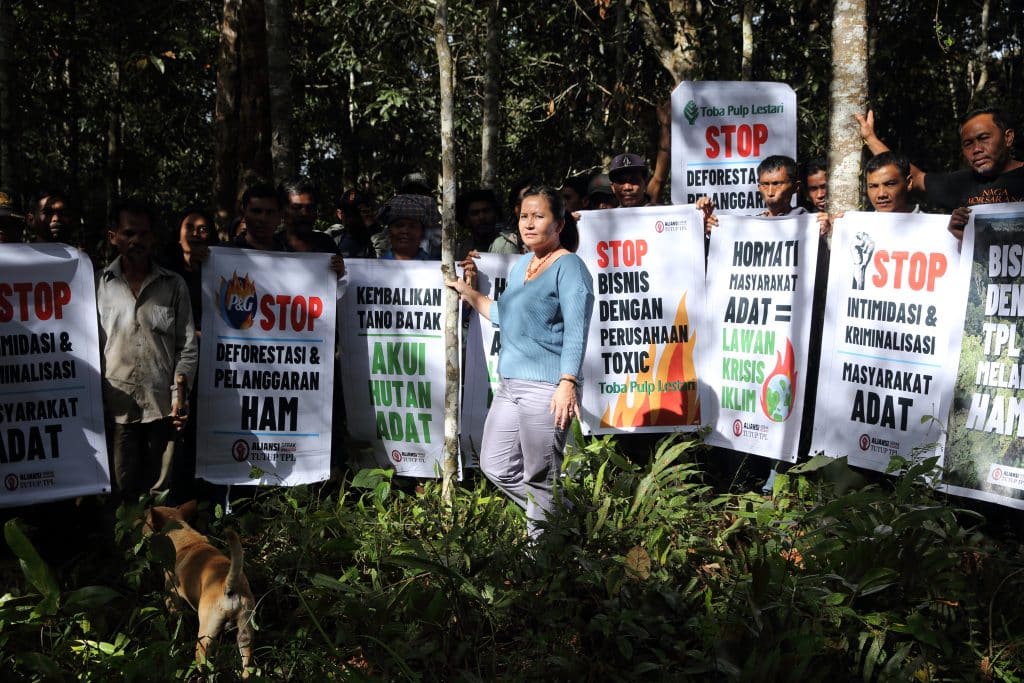
Delima Silalahi, Indigenous leader and director of Kelompok Studi dan Pengembangan Prakarsa Masyarakat (KSPPM) in Indonesia. Credit: Edward Tigor (Goldman Prize)
Across the world, with a few exceptions, states are abandoning their responsibilities to uphold human rights and shared prosperity: they are failing to exercise their powers to adequately regulate businesses, protect our collective resources, and tax corporations to fund essential services such as health and education. Instead, they are working hand in hand with corporations and development banks to plunder our liveable and abundant planet, depriving future generations.
At the Coalition for Human Rights in Development, we strive to build a different world. We are centering human rights in global finance and demanding a community-led approach because we believe this is the best way to tackle the climate crisis and its root causes.
We live on an abundant planet that can support all our needs, as long as it is not sacrificed for the greed of a few. For generations, we have seen women and Indigenous Peoples creating prosperity, exchanging goods and services, and caring for each other and the planet. Even today, many of them continue to steward deep ancestral knowledge rooted in love and care. When local community members come together, and center care as an organising principle, they create the opportunity for a more generative economy grounded in people’s needs.
In Indonesia, for example, local Indigenous communities— whose land and resources were stolen by a pulp and paper company — have succeeded in saving part of their forests from destruction. Thanks to the powerful work of our community partner Kelompok Studi dan Pengembangan Prakarsa Masyarakat (KSPPM), they have now been able to reforest these areas and develop community-led income generating activities.
Across regions, we are seeing the resistance of communities and defenders fighting for dignity and their rights. To counter the deceptive narratives that suggest giving even more power to those who are fuelling the world’s intersecting crises, we need to keep amplifying the voices of these communities. And we need to listen to them.

In focus: our thematic priorities
In 2024, we have continued to expand our movement, strengthening existing synergies and building new ones. We have joined forces to reclaim civic space, collaborated with hundreds of groups who are reshaping development so that it respects human rights, and learnt from communities who are resisting harmful projects and advancing community-led solutions. In doing so, we have been leveraging the power of cross-regional exchanges and fostering collaborations while being careful not to duplicate efforts.
In our collective work, three interconnected themes have emerged as focus areas: extractivism and sacrifice zones, countering prevailing development and energy transition narratives, and the protection of civic space.
Extractivism and sacrifice zones

Anti-Coal Power Plant Action in Pangkalan Susu, Lahat, North Sumatera, Indonesia. Credit: Andi Rambe / Trend Asia.
The dominance of development models based on extractivism and mega-projects continues to create “sacrifice zones” where communities bear the brunt of environmental destruction, displacement and human rights violations in the name of economic growth.
In Indonesia, the coastal community of Tanjung Pasit was once a vibrant village supported by fishing, farming, and mangroves. Now, it is grappling with the multifaceted impacts of the Pangkalan Susu coal-fired power plant. This facility not only pollutes the air and water, but also erodes the social fabric and way of life of the community.
In Liberia, in the Salala rubber trees plantation — previously managed by a subsidiary of the agribusiness giant Socfin and backed by the International Finance Corporation (IFC) — the company has violated labour rights, forcibly evicted Indigenous communities, and committed sexual violence. IFC’s accountability mechanism is yet to address the complaint filed five years ago. As the company has recently divested, local communities have been left with no remedy for the harm suffered.
Despite the inherent violence of the extractivist model, communities worldwide are showing their resilience and refusing to be designated as expendable. In the Salar del Hombre Muerto, Argentina, Indigenous communities facing the devastating impacts of lithium mining have led successful campaigns and legal actions. Thanks to the powerful work led by our community partner Asamblea Pucarà, a landmark ruling in April 2024 suspended new mining permits in the area.
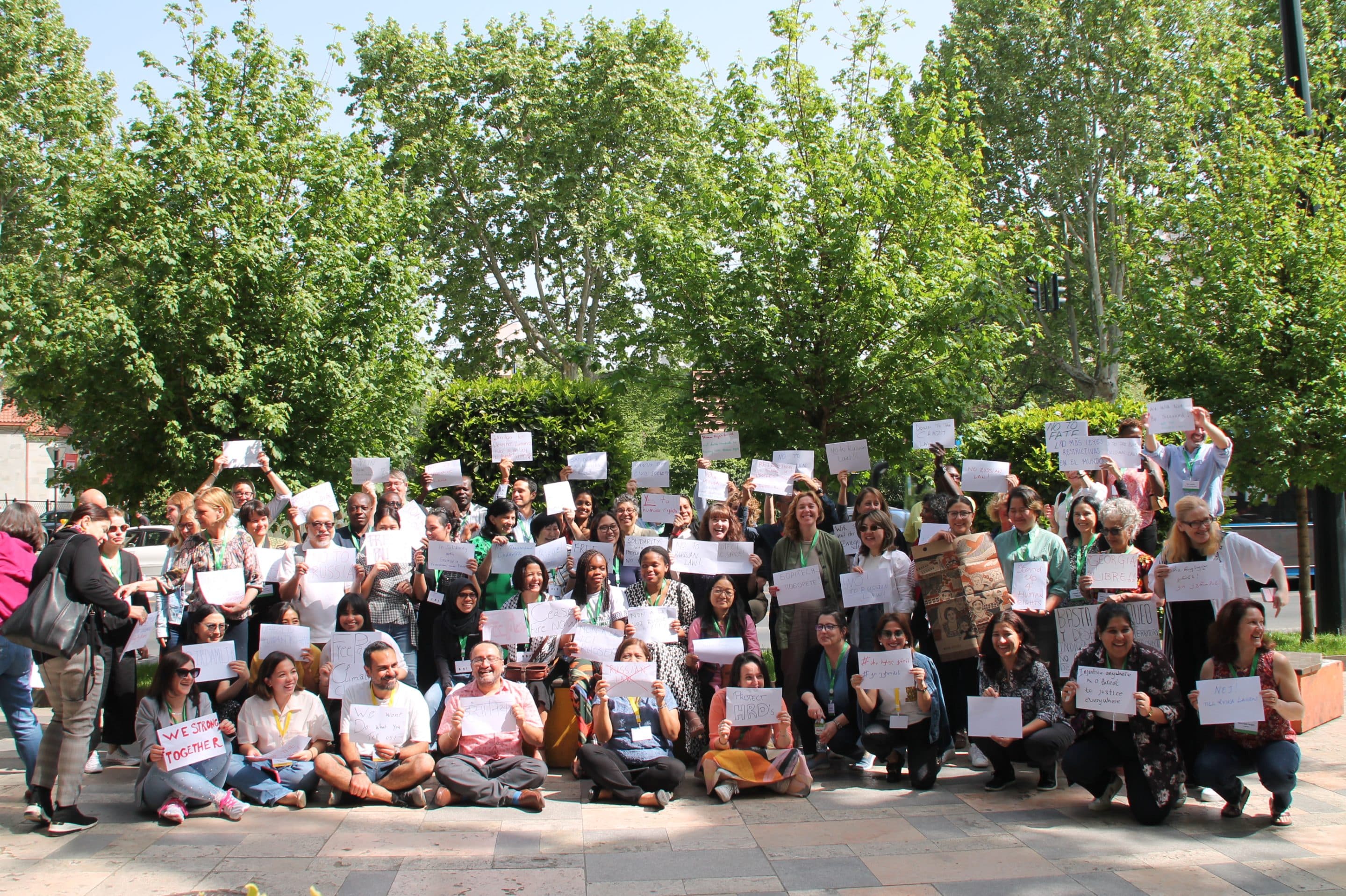 Solidarity action during the Defenders in Development campaign gathering in Tbilisi, Georgia (May 2024).
Challenging development and energy transition narratives
Hiding behind the language of progress, innovation and crisis response, development banks are pushing forward exploitative projects such as critical mineral mining, while bypassing due diligence and excluding affected communities from decision-making. They are promoting false solutions, such as green hydrogen, while downplaying their negative effect on local water resources. And to dismiss critical opposition, they are labeling human rights defenders as “anti-development”.
Despite these challenges, grassroots movements and communities are countering these narratives. In Kenya, a local community, in collaboration with journalists, has exposed Bambouri Portland Cement (a subsidiary of Holcim) and its security services, G4S, for committing torture, rape and assault.
In addition to exposing human rights abuses, there is growing momentum for proposing inclusive, rights-based alternatives to the dominant economic growth model. In Latin America, the Just Energy Transition Working Group and its Gender Committee are advocating for feminist, inclusive approaches to the energy transition that respect the environment, communities, and diverse ways of life, while challenging the mainstream definitions of terms such as ‘progress’ and ‘development’.
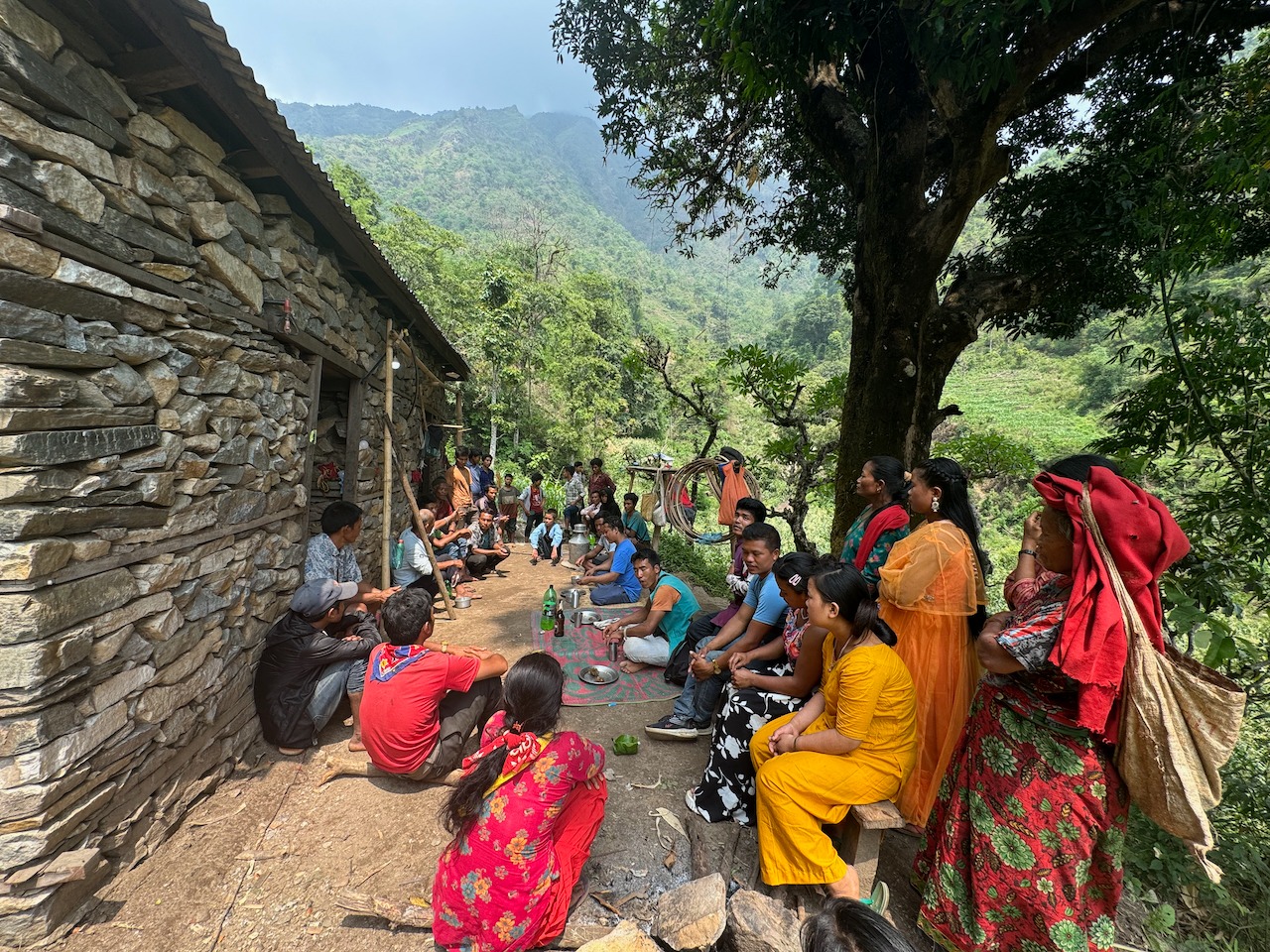
Community-led energy project in Nepal. Credit: CEMSOJ
Alternatives to exploitative development models are also taking root. For example, a group of Indigenous communities in Nepal – with the support of our Coalition member CEMSOJ – have adopted micro-hydropower projects that provide energy while respecting ecological and social realities.
In several countries, a shifting narrative is challenging the idea that nature is just a space to extract resources from, asserting instead that it is a subject of rights. In Chile and Peru, for example, the campaigns led by local civil society groups have succeeded in gaining legal recognition of the rights of two rivers (the Biobío and Marañón) through landmark judicial cases. In both cases, the Indigenous communities were acknowledged as their guardians because of their role in protecting these precious ecosystems and their indissoluble link with the rivers.
Battling for civic spaces
These efforts are unfolding in an increasingly hostile environment. The repression of environmental and human rights defenders has intensified globally, particularly where they challenge state and corporate interests. Governments and companies employ legal harassment, criminalization, and violence to silence dissent.
We have noted a rise in reprisals in the context of energy transition projects, disproportionately impacting Indigenous Peoples and women. In Kyrgyzstan and Georgia, foreign agent laws have stifled civil society. In countries like Tajikistan, where development banks are pushing harmful mega-projects such as the Rogun dam, people are so afraid of reprisals that they don’t even dare to speak up. In El Salvador, defenders opposing mining and advocating for water protection face fabricated charges and unjust legal processes. Activists in Uganda and Zambia resisting harmful extractive and infrastructure projects face harassment, criminalization, and being framed as “anti-development.”
Yet, amidst this challenging environment, we are also seeing stronger solidarity movements, peer-to-peer support between human rights defenders, and greater coordination between allies providing support to at-risk defenders. For example, the joint letter addressed to the World Bank raising concerns on the criminalization of Cambodian civil society groups and another regarding the foreign agents law in Georgia quickly gathered over 100 signatures, helping put pressure on the banks.
What gives us hope
Despite this grim picture, in 2024 our members and allies celebrated some important victories.
- In October, a group of Honduran farmers managed to reach a settlement and close a class action lawsuit against the International Finance Corporation (IFC), the World Bank’s private arm. In 2009, the IFC had approved a $30 million loan to the palm oil company Dinant, which was responsible for torture, harassement, displacement and murder in the Bajo Aguán Valley.
- Thanks to the campaigning efforts of local civil society, in August the Asian Infrastructure and Investment Bank (AIIB) withdrew its support for China Everbright, a company financing harmful Waste-to-Energy incineration projects in the Philippines, Singapore, Thailand, Vietnam, and China.
- In Guinea, a community forcibly displaced by AngloGold Ashanti’s Siguiri gold mine reached a significant financial settlement and remediation package with the company, after a mediation process facilitated by the Compliance Advisor Ombudsman (the accountability mechanism of the International Finance Corporation). The community was supported by our member Inclusive Development International and its Guinean partners CECIDE and MDT.
- In March, the Independent Recourse Mechanism (IRM) of the African Development Bank Group (AfDB) released two groundbreaking reports, finding the Bank non-compliant with its own safeguards in the context of two projects in Uganda: the water and fishery management LEAF II project and the Wadelai irrigation system. In both cases, the IRM reports are an important step towards justice, as the AfDB was required to develop a management action plan and to address IRM recommendations.
In the media
In 2024, we supported our members and partners to produce blogs and op-eds, to engage with the media, and to shape their own narrative to counter the predominant top-down development discourse. Some media highlights include:
- “Why we cannot celebrate the World Bank’s 80-year anniversary”, July 2024, Devex
- “A tale of a defender in development”, September 2024, co-published by Uganda Report and Telegraph Uganda.
- “In Financing ‘Infrastructure for Tomorrow,’ the AIIB Refuses to Learn From Its Past”, October 2024, The Diplomat
- “EU is turning a blind eye to deteriorating situation in Kyrgyzstan”, October 2024, EU Observer
- “Kenya: nightmare at Bamburi farm”, November 2024, co-published by: Follow the Money (Netherlands); WOZ Magazine (Switzerland); The Nation (Kenya); ZAM Magazine and The Africa Report.
- “The World Bank should reconsider its mega dam project in Tajikistan”, December 2024, Al Jazeera
- “As Reprisals Rise in Asia and the Caucasus, Development Banks Must Uphold Human Rights”, December 2024, Triple Pundit
What’s next
As we celebrate our 10th anniversary, 2025 is a key moment to reflect on how we can keep fostering our collaborative culture, build on our collective achievements so far, and strengthen our movement.
A key priority this year will be finalizing the strategic process that we initiated last year. We will be guided by our new Steering Committee, our highest governing body, which our members appointed through our first election process in March 2024, while ensuring diversity in gender, geography and indigenous identity.
Last year, we started a series of robust conversations to set the Coalition’s overall strategic priorities for 2026 to 2030. In parallel, we facilitated a series of targeted strategy-setting processes also for the collective work in the different regions (Asia, Africa and Latin America), for the Defenders in Development campaign, and for the Community Resource Exchange (which is finalizing its participatory evaluation of the program and transitioning into its new phase).
In July 2025, to finalize this collective strategy-setting process, we will hold our Members Gathering in Kenya: the third in our history, and the first since the pandemic. Over four days, we will discuss how we can reclaim our power to ensure dignity, justice and equal rights for all.
We are hoping to mobilize resources to bring over 50 grassroots activists and civil society groups who are members of our Coalition. We’re deliberately choosing to host this gathering in Africa: by centering this space in the Global South, we are asserting that regions and communities historically exploited and excluded from decision-making are central to re-imagining how their own development should be.
Many of our members are at the forefront of climate justice struggles in their respective territories and this gathering will provide a unique opportunity to exchange experiences and identify new synergies. The raison d’etre of the Coalition is that local communities and human rights defenders are the real experts; our job is to facilitate spaces where they can take the lead and set the direction of intersectional movements for dignity in development. We hope that all our allies will work with us in creating this important space for grassroots-led global mobilization.
 In 2024, the Coalition for Human Rights in Development received funding from the Brot für die Welt, Charles Stewart Mott Foundation, Ford Foundation, Open Society Foundations and the Wellspring Philanthropic Fund.
We are extremely grateful for their invaluable support, which has enabled us to strengthen our Coalition and for more communities and human rights defenders around the world to speak their truth to power.
We are committed to strengthening our existing relationships and building new ones with funding partners who share our vision of a human rights-based, community-led approach to development. If you are interested in collaborating with us to build a strong ecosystem that fosters systemic change in development, please contact Rebeka Gluhbegovic (Fundraising Coordinator) at rgluhbegovic@rightsindevelopment.org.