

Welcome to the new edition of our quarterly newsletter, “The power of collective struggles”, where you can find updates from the members and partners of the Coalition for Human Rights in Development, their inspiring stories, and plenty of useful resources!
Africa

Reclaiming rights in the context of geothermal expansion in Kenya
In Kenya, steam rising from the Rift Valley has become a symbol of national ambition, energy security, and low-carbon development. International financiers, such as the African Development Bank (AfDB), often praise the country’s geothermal expansion as a model for Africa’s clean energy future. However, the situation on the ground is far more complicated.
As part of a broader research project examining just energy transition projects, their impacts, and the demands of affected communities, this year we have published three blogs about the struggles and aspirations of communities living near geothermal fields in Kenya.
In the first blog post in this series, published ahead of the AfDB Annual Meetings, we highlight a significant gap in AfDB-funded geothermal projects, showing how meaningful participation is often merely a commitment on paper rather than a reality.
In the second blog, we share some examples of community-led development. From community-managed conservation areas, locally-designed water systems and livelihood initiatives in Mount Suswa to family farms in Menengai and women’s craft markets in Olkaria, these stories reveal a vision of development rooted in stewardship, self-determination, and the ability of communities to shape their own futures.
In the third blog, we tell the stories of two women at the forefront of the struggles in the context of geothermal projects. Penina Nailantei Koilel and Agnes Koilel, despite not being biological siblings, call themselves sisters. They are both Kenyan Maasai women leaders challenging patriarchal norms and protecting their territories threatened by geothermal expansion.
Check out these blogs and stay tuned for more!
Lost in translation: reflections from the AfDB Annual Meetings
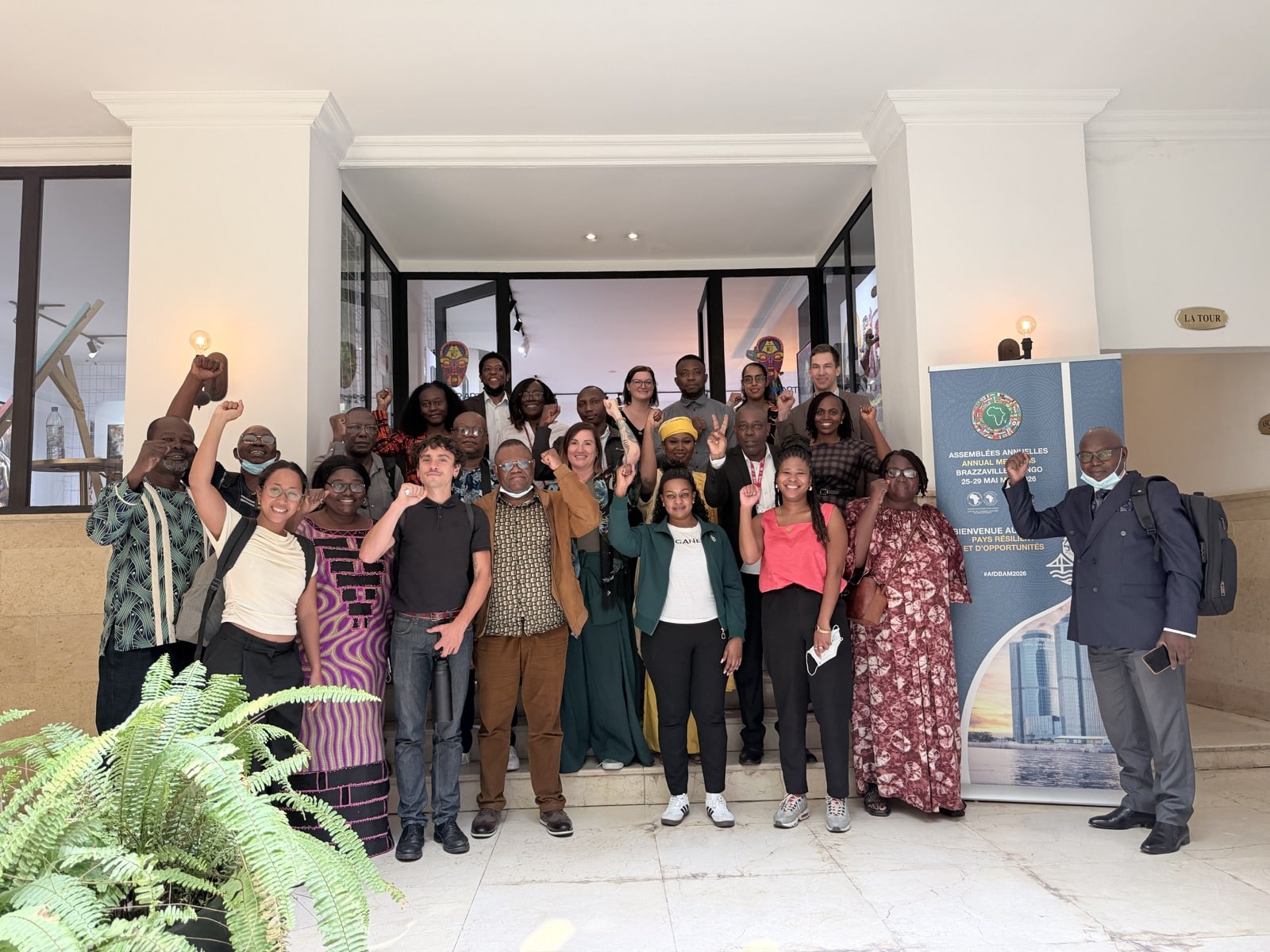
From 25 to 29 May 2026, with dozens of members and partners we joined the African Development Bank’s 61st Annual Meetings in Brazzaville, Republic of the Congo, to demand accountability, stronger safeguards and meaningful participation. Once again, however, the Annual Meetings showed the wide gap between the Bank’s commitment to CSOs engagement and the realities of participation in practice.
For the first time, this year’s Annual Meetings featured two events where CSOs could engage the Bank’s senior management. However, both sessions confirmed that the Bank and civil society are often speaking different languages, and that much of the meaning is lost in translation. While the Bank speaks in the language of policies, safeguards and the normative value of participation, civil society speaks in the language of lived experience, shrinking civic space, broken promises, and communities struggling to secure a meaningful say over decisions that shape their futures.
Sierra Leone: UN experts raise alarm over violations in UNDP-funded project
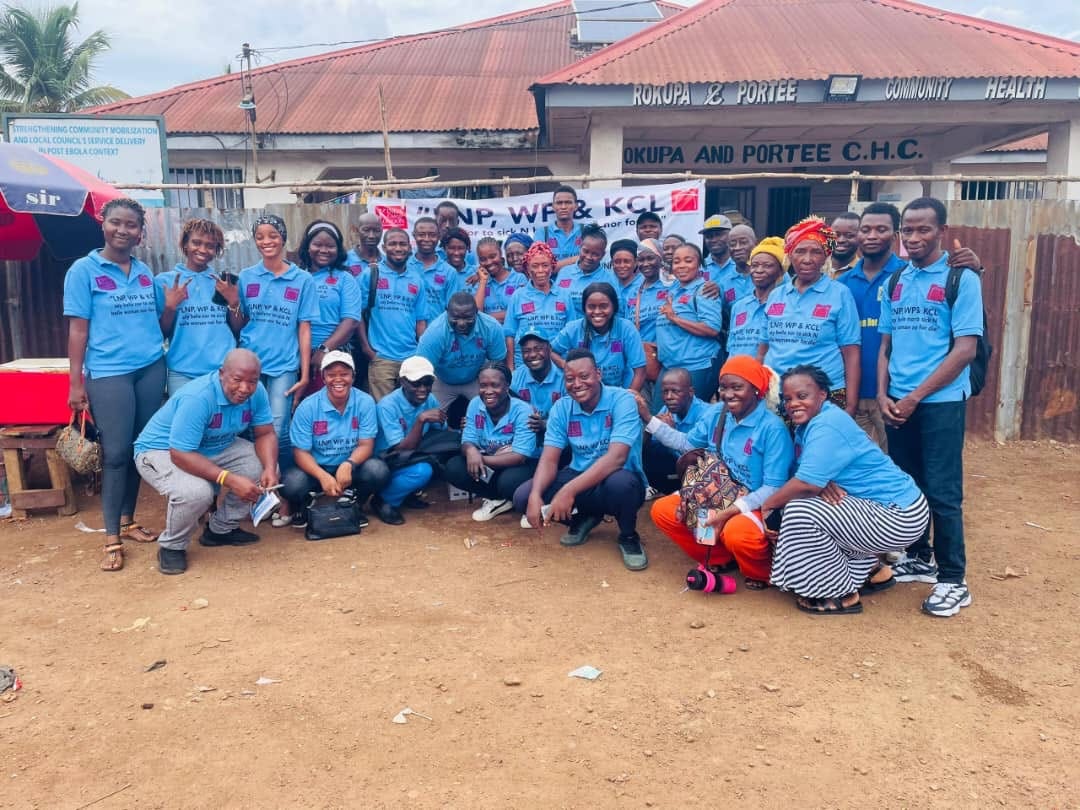
UN experts have formally raised concerns with the Government of Sierra Leone over the arbitrary detention, judicial harassment, and intimidation of the Executive and Finance Directors of Lifeline Nehemiah Projects (LNP), a civil society organization based in eastern Freetown. The reprisals are taking place in the context of a project funded by the United Nations Development Programme (UNDP) and the government of India.
Since the beginning, this project has been plagued by controversies and human rights violations. Sierra Leone’s authorities have been trying to violently force LNP off their land under the pretext of creating a rehabilitation center for people with disabilities. The situation escalated in October 2025, when police officers arrested several LNP staff members and beneficiaries, beat two young people with metal chains, and fired tear gas indiscriminately into the compound. The family of a two-day-old baby begged the police to stop, but their pleas were ignored and the baby choked to death as a result of the tear gas.
Latin America
Santa Marta: advocating for a truly just transition
At the end of April, we took part in the First Conference on Transitioning Away from Fossil Fuels, held in Santa Marta, Colombia. With several Coalition members, we joined civil society and social movement spaces alongside communities to exchange ideas and help shape discussions on climate justice and a just energy transition. The technocratic, top-down discourse promoted by state actors, financiers, and corporate representatives, which continues to advance new sacrifice zones for so-called “critical” minerals, only reinforced what our members and allies have long argued: a truly just energy transition cannot be built without community visions and leadership. The networks and alliances strengthened in Santa Marta will help us continue amplifying and advancing the alternatives that communities are already building.
Workshop with Quilombola Communities in Brazil
In April 2026, the CRE supported a three-day gathering in Minas Gerais, Brazil, organized by our member Instituto Maíra. The gathering brought together quilombola communities to strengthen collective strategies in response to the expansion of eucalyptus monoculture and lithium mining projects across their territories. A number of these projects receive funding by development banks like the International Finance Corporation (IFC).
The gathering was led by COQUIVALE (the Commission of Quilombola Communities of the Jequitinhonha Valley), which represents Afro-Brazilian communities descended from formerly enslaved people, who established autonomous territories and have preserved distinct cultural identities and ancestral traditions.

Latin America is already green: communities impacted by green hydrogen projects meet in Chile
From May 13-15, members of the Latin American Green Hydrogen Action Group met in Santiago to exchange experiences, strengthen relationships, and develop joint strategies in response to the expansion of green hydrogen projects across the region. Organised by the CRE with logistical assistance by Sustentarse, the meeting brought together representatives of organizations and communities from Argentina, Chile, Mexico, and Uruguay who are facing similar challenges as large-scale projects promoted under the banner of the energy transition continue to advance.
Asia
The Reko Diq mine in Balochistan:
a recipe for disaster
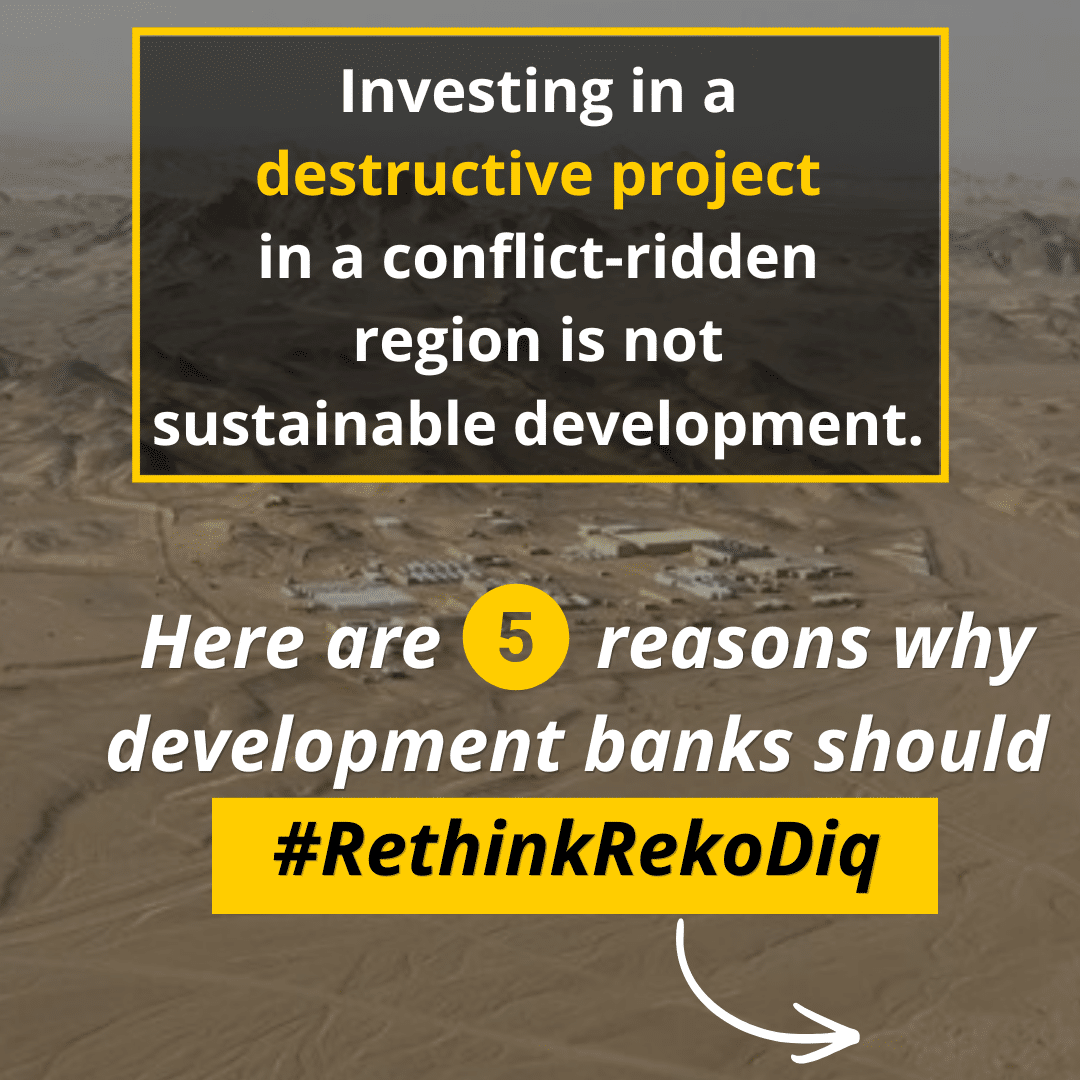
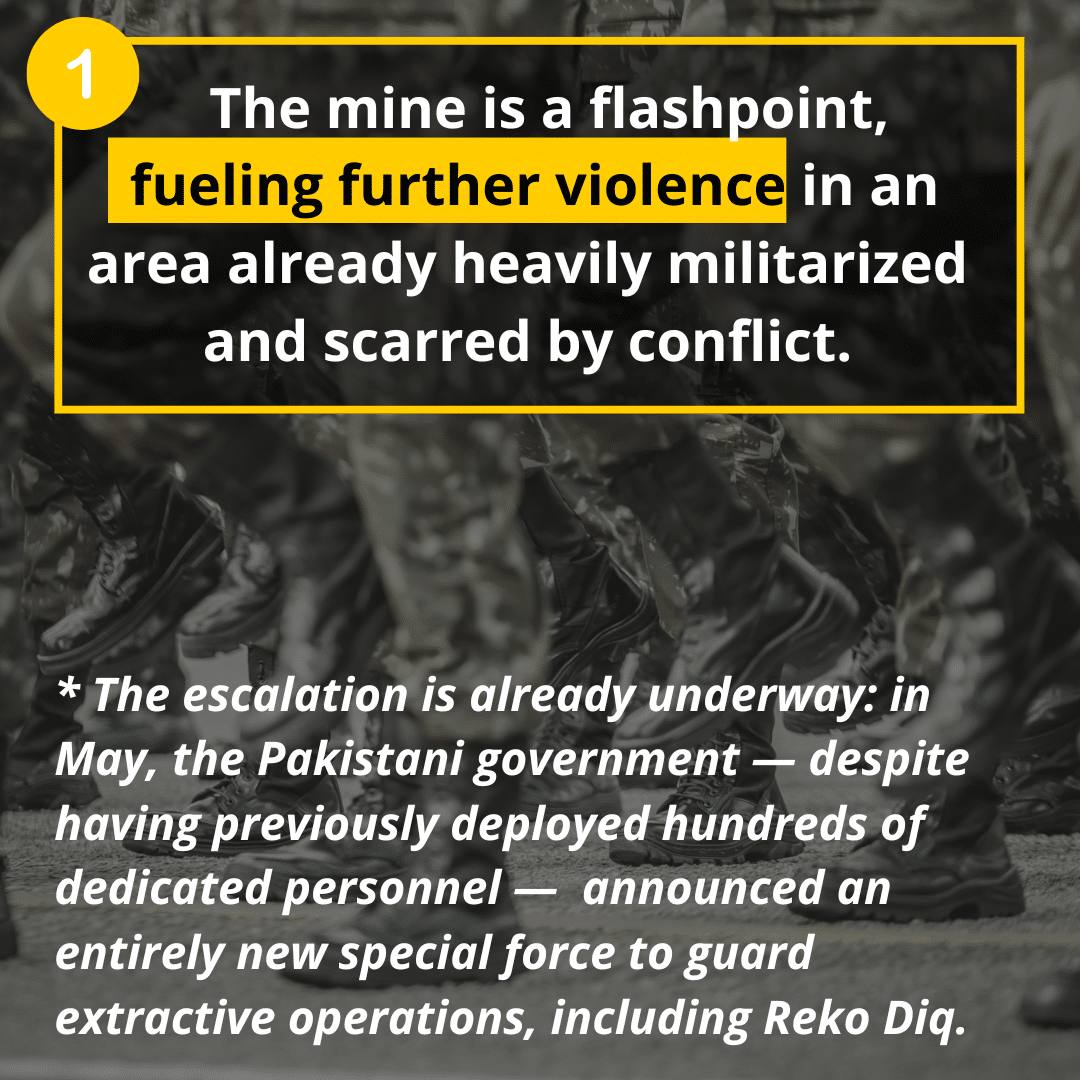
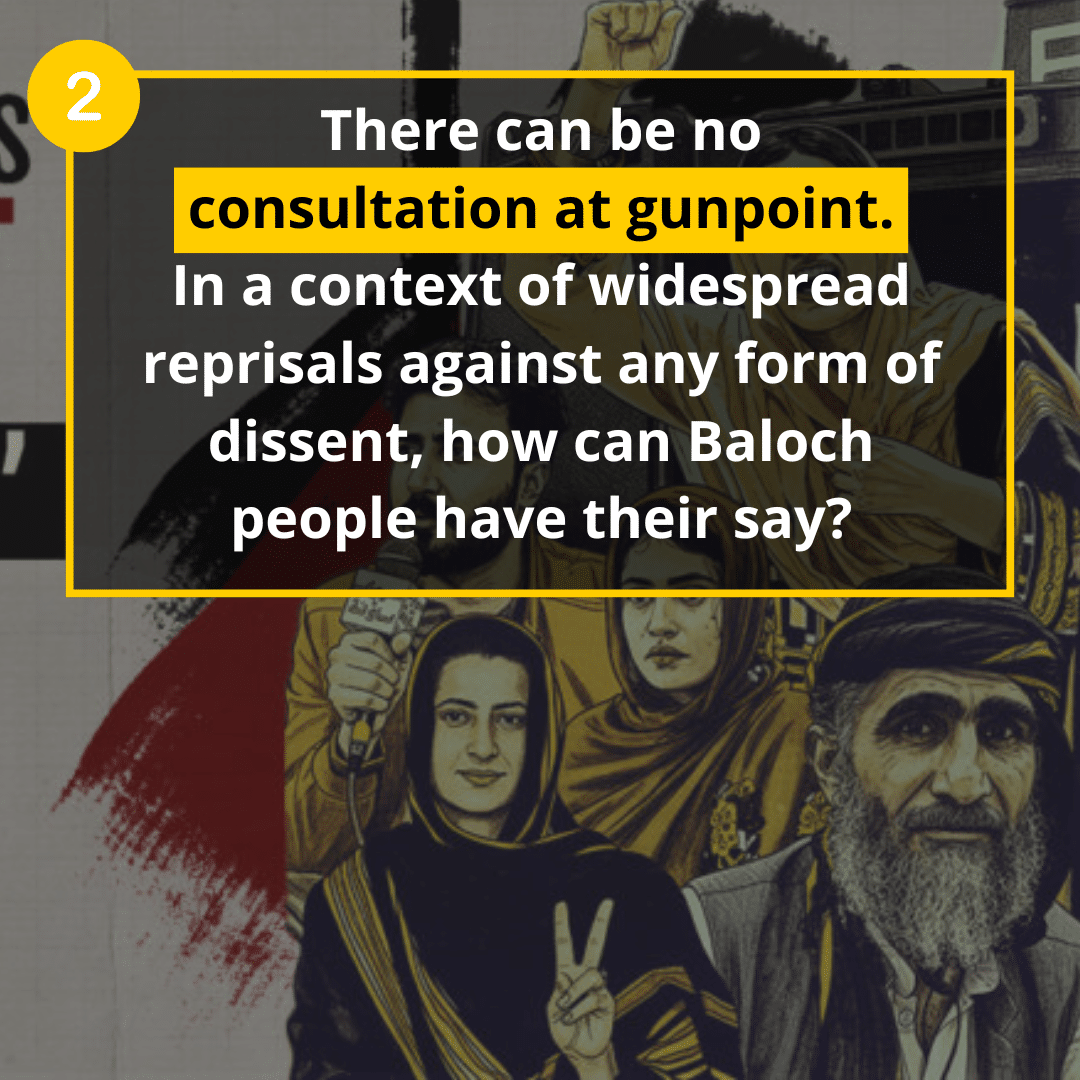
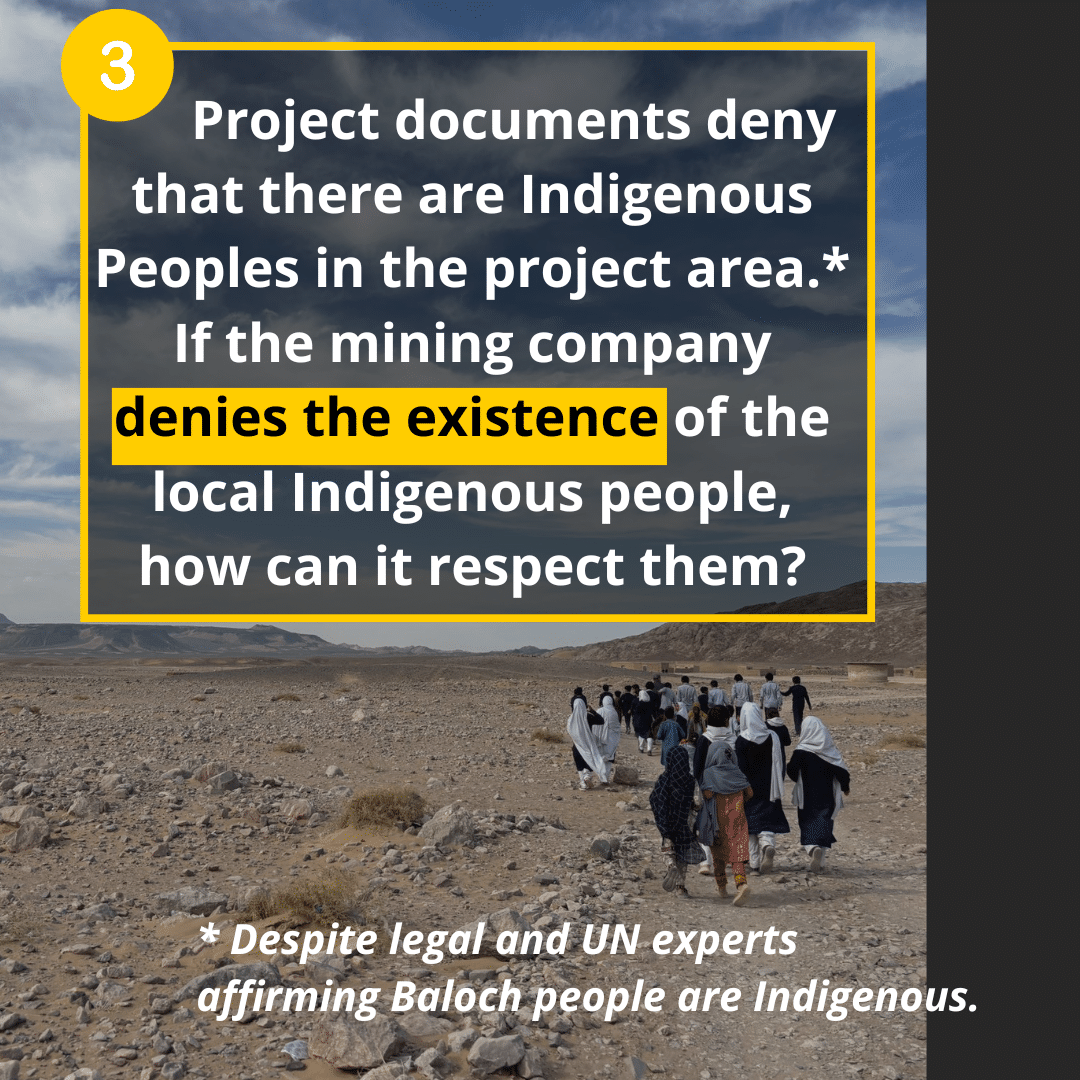
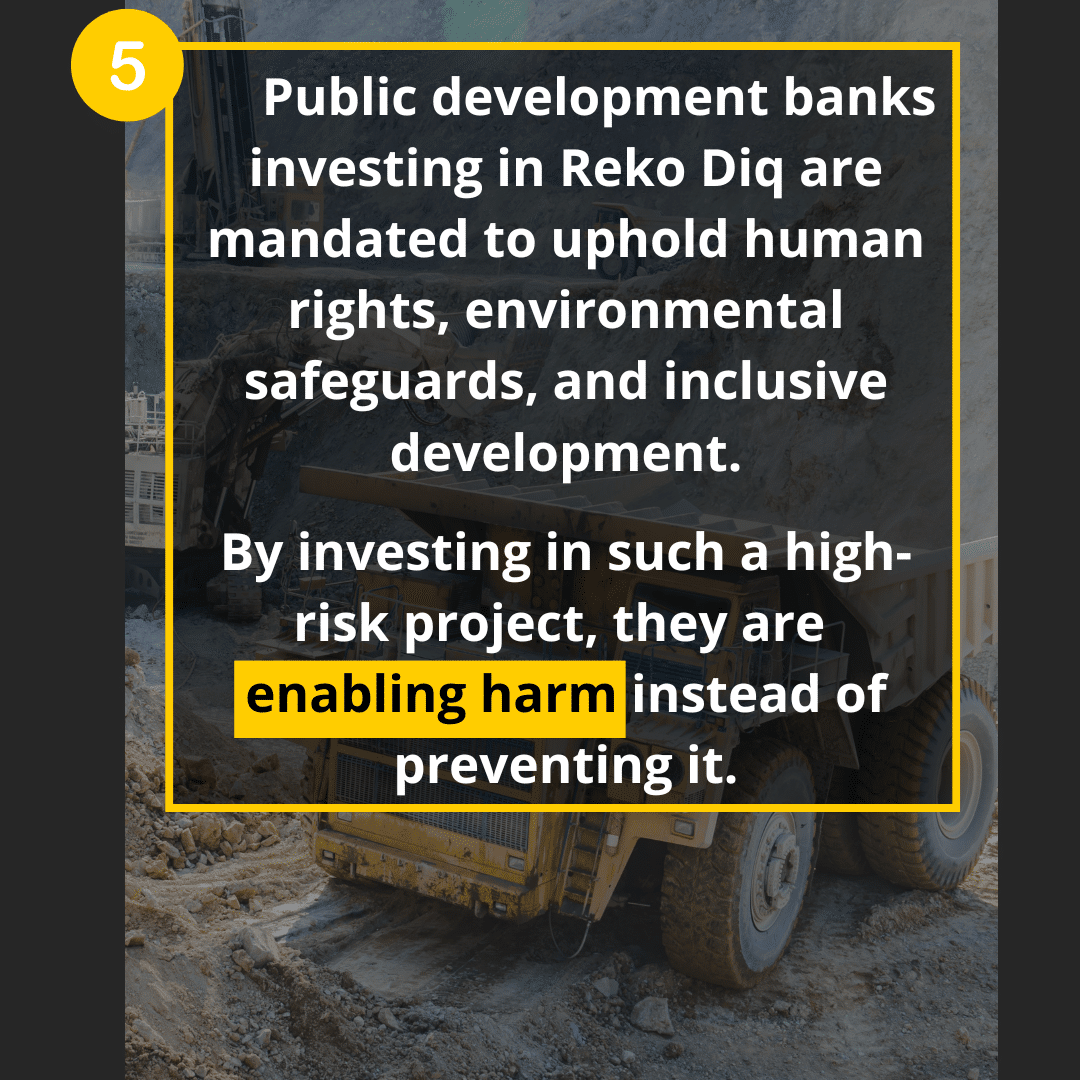
Some of the world’s biggest public development banks — including the International Finance Corporation (IFC) and the Asian Development Bank (ADB) — are backing a destructive copper and gold mining project in Chagai district, Balochistan, a conflict-ridden region in Pakistan.
As copper is a key material for renewable energy technology, the Reko Diq mine is being promoted as a project that will drive the clean energy transition. However, the project is all but sustainable. Located in an intensely militarised region, where civic space is extremely closed and where reprisals against civil society actors are systematic, the Reko Diq mine risks exacerbating social tensions, attacks against peaceful activists, water scarcity, and severe environmental and social harm (read more on this page).
This is why a group of organizations (Human Rights Council of Balochistan, MiningWatch Canada, Recourse, International Accountability Project and the Defenders in Development campaign) are launching the #RethinkRekoDiq campaign. Join us!


The EIB should think twice before funding the Rogun dam in Tajikistan
On 15 June 2026, eight civil society organizations called on the European Investment Bank (EIB) to reconsider funding the Rogun hydropower dam in Tajikistan. This is a disastrous project that risks displacing 60,000 people, harming biodiversity, and threatening downstream water security across Central Asia – all in one of the most restrictive countries in terms of civic freedoms, where meaningful community engagement is barely possible.
Transforming challenges into strategies
“The Summit helped us create connections, build solidarity among women human rights defenders, and find new inspiration to continue our collective struggle for land, water and climate justice.”
In this new blog, our Community Resource Exchange (CRE) partner Nukila Evanty (Executive Director at Inisiasi Masyarakat Adat) shares her reflections about the 2026 Women Environmental Human Rights Defenders Summit in Bali (Indonesia), that last month brought together over 150 women defenders.
ADB Annual Meetings
In May, together with several members and partners, we attended the Asian Development Bank (ADB) Annual Meetings in Samarkand, Uzbekistan. It had been over a decade since the bank last held its Annual Meeting in Central Asia, and a lot has changed since then. During bilateral meetings and official sessions, we focus on these key areas:
- ADB’s new Energy Policy, which gives the green light to the extraction of critical minerals, supports so-called false solutions (such as nuclear and waste-to-energy projects), and fails to phase out fossil fuels;
- The implementation of ADB’s commitment to zero tolerance to reprisals (see short clip from the session here and read more in this op-ed by Umida Niyazova from Uzbek Forum for Human Rights);
- The Central Asia Regional Economic Corridor (CAREC) project, a major partnership focused on large-scale infrastructure projects, which is advancing without engaging local communities and civil society organizations.

What does EBRD’s commitment
to civil society really mean?
At the European Bank for Reconstruction and Development (EBRD) Annual Meetings in Riga, the Bank’s leadership repeatedly stressed the importance of civil society. But how does this commitment translate into action as civic space shrinks more and more?
What does partnership mean for activists in Uzbekistan, who face harassment for monitoring development projects? And for journalists in Tajikistan, imprisoned for researching development finance? Or for civil society groups in Georgia, Kyrgzstan and elsewhere, facing increasingly restrictive laws?
In a new blog, Mark Fodor (coordinator of the Defenders in Development campaign) reflects on what this commitment means in practice when civic space is restricted across many of the countries where the Bank operates.
Global
World Bank’s accountability crisis
In June 2026, the World Bank Group’s Board of Directors overruled its own independent accountability mechanism, the Compliance Advisor Ombudsman (CAO), allowing the International Finance Corporation (IFC) to eschew accountability for the debt crisis it contributed to in Cambodia. In response, CAO Director General Janine Ferretti resigned.
CAO’s investigation confirmed that the IFC had violated its own sustainability standards by investing in six banks providing microfinance that were promoting predatory lending practices. As reported by our Coalition’s member Inclusive Development International, this led to “loss of land and livelihoods, hunger, increased suicide risks, and threats of retaliation against the very communities that are supposed to benefit from microfinance programs”.
The World Bank was already under scrutiny, with experts raising serious concerns about prioritizing efficiency over accountability in the recent merger of the institution’s public sector and private sector accountability mechanisms.
Bad judgement Banga
In late June, a leaked draft resolution revealed that the Board of Peace – whose executive board includes World Bank president, Ajay Banga – is seeking legal immunity for its members, forces and contractors. This kind of sovereign immunity is straight out of the World Bank’s playbook, which cannot be sued in its countries of operation, and consistently tries to resist accountability. The leaked draft also included a proposal to seize public property in Gaza without offering any compensation, again building on the World Bank’s long legacy of landgrabbing across the Global South.
Little is known about the Board of Peace’s actual implementation plan and whether the leaked draft was discussed or dismissed when representatives recently met in Cyprus. But one thing is clear: behind the pretext of reconstructing Gaza, the Board of Peace – and the complicit, supporting institutions such as the World Bank – are entrenching Israel’s occupation, while eschewing accountability and crushing Palestinians’ right to self-determination.
Banga showed bad judgement by joining the Board of Peace in November, and by continuing to stand by his decision even after Trump threatened to kill an entire civilization in Iran. The World Bank board and general counsel must intervene to rein in him, or risk exposing the Bank to corruption, war crimes and crimes against humanity, at a time when it is already in an accountability crisis.

KfW Development Bank approves new Complaints Mechanism Policy
In July, KfW Development Bank approved a new Complaints Mechanism Policy for its Complaints Office (CCO) following a public consultation with civil society organizations (including the Defenders in Development campaign). The policy has incorporated several of our recommendations and introduced several improvements, including:
- greater transparency through publication of all complaints
- more accessible and flexible complaint submission procedures
- stronger safeguards against reprisals
- an explicit commitment to access to remedy.
It also refines admissibility rules and requires the complainant’s consent before using the Prior Resolution process. However, the policy does not resolve longstanding concerns about the mechanism’s structural independence, as the office continues to report within KfW’s Executive Board rather than to an independent oversight body.
You can read more about KfW’s policies and practices shortcomings in our report “KfW: Irresponsible Banking“.
Good news
A landmark victory for mining-affected community in Thailand
After a decade-long struggle, in March 2026 communities in Thailand’s Phichit and Phetchabun provinces secured a landmark victory in the country’s first-ever environmental class action lawsuit. A court found Akara Resources (a subsidiary of Australia-based Kingsgate Consolidated) liable for environmental contamination and related harms caused by its mining operations at the Chatree Gold Mine, in central Thailand. Since operations began in 2001, more than 6,000 people have suffered from water and soil contamination, health problems, and loss of livelihoods caused by the mine’s activities.
The judge ordered compensation for nearly 400 affected villagers and environmental rehabilitation measures, setting a historical precedent for corporate accountability and environmental justice in the country and the wider region. However, the court reduced the level of compensation sought by the villagers and the fight for full and adequate remedy still continues.
The community was accompanied in this struggle by our Coalition member Manushya Foundation, a Thai feminist organization, who collaborated with the CRE to conduct field missions and collect evidence to build the legal case.
Read more
- #JusticeForPhichit: Fighting for corporate accountability – Manushya Foundation
- Timeline of the case – Business and Human Rights Resource Centre
- UN letter to Akara Resources
Vietnam: human rights defender Dang Dinh Bach released from jail
On June 24, Vietnamese environmental lawyer Dang Dinh Bach was released from prison after serving a five-year unjust sentence for charges of tax evasion, that according to human rights groups were a pretext to silence his activism.
Bach is the founder and former director of the Law and Policy of Sustainable Development Research Center. He had contributed to shaping Vietnam’s Environmental Protection Law and the Just Energy Transition Partnership (JETP). His story was also featured in our report “Financing Repression“.
Uganda: the community struggle that stopped a forest from becoming a city
In January 2026, communities in Uganda celebrated a landmark victory: thanks to their successful mobilization, supported by our member Youth for Green Communities, the president ordered the immediate cancellation of all land titles issued in the Kitubulu Central Forest Reserve and prevented the construction of a city within the reserve.
New report out: Financing the Transition,
Silencing Defenders
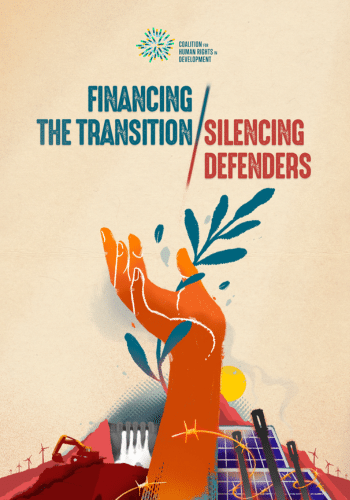
Across Asia, the rush towards new energy projects — from renewables to “false solutions” — is increasing risks for communities and defenders who speak out against the harmful impacts of these projects. In our new report launched last month, “Financing the Transition, Silencing Defenders”, we
- analyse 12 case studies from seven Asian countries, examining reprisals in the context of renewable energy projects, their impacts, and who is behind;
- present the affected communities’ key concerns;
- highlight the role and responsibilities of development banks, and their (in)action when reprisals occur;
- provide recommendations for development banks on how to safely and meaningfully include communities in the design and implementation of energy transition projects.
“Financing the Transition, Silencing Defenders” was published together with our members and partners Aksi! for Gender, Social and Ecological Justice, Asia Pacific Network of Environmental Defenders, Darya-e Swat Bachau Tehreek, FORUM-ASIA, GAIA Asia Pacific, International Accountability Project, Jalaur River for the People’s Movement, NGO Forum on ADB, People Ecology Network, and Rivers & Rights.
Resources
Reports
- Business & Human Rights Centre – “Navigating a global crossroads: Human rights defenders and business in 2025”
- Business & Human Rights Centre – “Transition Minerals Tracker 2026 from the Business & Human Rights Centre”
- Earth Insights – “How EACOP’s Final Stages Threaten East Africa’s Freshwater Lifelines”
Guides and tools
- International Accountability Project – “Transition Minerals Finance Tracker”
- OECD Watch – “Civil society guide to leveraging the OECD’s guidance on a just transition“
- International Service for Human Rights (ISHR) – “Advocacy for Environmental Human Rights Defenders“
- The Radical Communicators Network & The Rising Majority – “Rising Narratives for Radical Futures”
- Mapas Falsas Soluciones – “Guía de metodologías de educación popular para la Justicia Climática” (Spanish only)
Articles and videos
- “Los estándares del Banco Mundial están fallando a las comunidades” (Julia Nobre, Open Society Foundations | Efe Verde)
- “When development is planned without communities” (Ivahanna Larrosa, in Spanish only)
- “Amazon villages build autonomous energy systems after mega-dam failed pledges“ (Jorge C. Carrasco, Mongabay)
- “Topolobampo: el dinero alemán detrás del amoníaco“ (Viola Traeder, DW News)
- “New allegations of killing and torture by security forces at African gold mine as 30 people join legal claim against the London Bullion Market Association over “clean gold” certification” (RAID)
- Short documentary “What a Just Transition Means on the Ground: Community Experiences from Kandaskira graphite mining in Tanzania“
What’s next

Useful resources
Check out our website to access:
- a curated list of toolkits and guides, that you can filter by topic and language
- a glossary, explaining key words about development finance
- infographics explaining what we do and our organigram
- our regular newsletters, with updates from Coalition members and partners
- a new map amplifying the stories of our community partners
- a calendar with key events
We thank everyone who contributed to the newsletter, and we hope that it can continue to be an interactive space where communities and allies can learn from each other. If you want to collaborate in a future edition, please email us at: lcotza@rightsindevelopment.org
Follow us on social media and subscribe here to this newsletter!